

Starting in 2019, Softbank became one of the most active investors in Latin America. With large checks and an aggressive growth thesis, the Japanese group helped fuel a generation of unicorns in Brazil and the region, investing in companies such as Wellhub, Rappi, QuintoAndar, Kavak, Unico, MadeiraMadeira, Creditas, Ualá, Petlove, Merama, Omie, Olist, Blip, and Asaas, among others.
Between 2020 and 2021, the fund was a key player in billion-dollar funding rounds and helped redefine the venture capital market in the region. It built a portfolio of over 70 startups. This pace, however, has changed. In recent years, Softbank has reduced the volume of new investments in Latin America. This slowdown reflects a structural shift in strategy, both globally and locally.
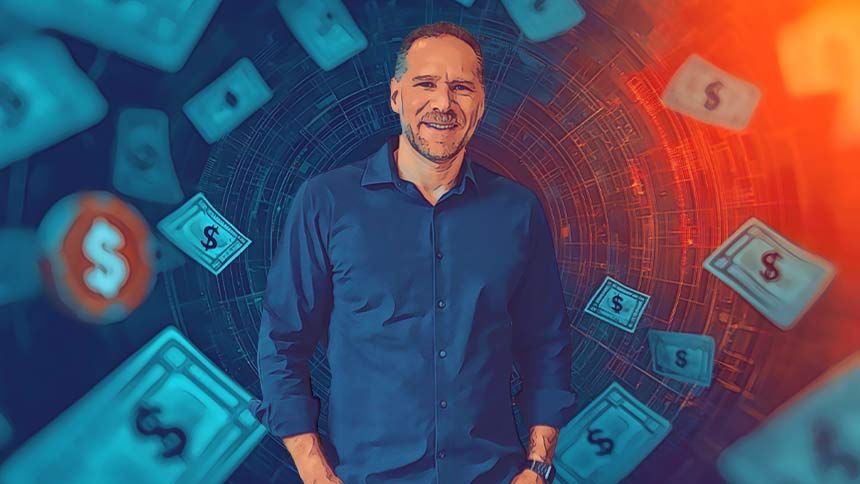
“The question is what does it mean to continue investing,” says Alex Szapiro, head of Brazil and managing partner of Softbank for Latin America, who is participating in the South Summit Brazil, an event for which NeoFeed is a media partner. “If it means continuing to look at companies, building pipelines and understanding new businesses, the answer is yes. But we haven’t allocated capital for several months because we simply haven’t found any.”
The main reason for this slowdown lies in the size of the investment and the stage of the companies, according to Szapiro. Softbank currently operates with investments of US$20 million to US$30 million, which are incompatible with most startups that are still in the early stages .
“It’s no use showing up with the size of the check we have at a very early-stage company. I’ll dilute the founder too much,” says Szapiro. According to him, the market is going through a period of “off-season,” in which many companies still need to mature before becoming “investable” for a growth fund in Latin America.
Furthermore, the macroeconomic context has changed radically. The end of cheap money has buried the logic of growth at any cost. "Grow first and adjust later is a thing of the past," says Szapiro. The focus now is on cash generation, predictability, and financial discipline. Today, according to him, 96% of the companies in the portfolio have the capacity to generate cash and a runway (the period of time a startup can survive and operate with its current cash) of more than 18 months, a significant leap compared to 2021.
Because of this, Softbank is now more focused on managing its current portfolio, follow-on rounds, and secondary transactions. There is also a more rigorous filter for new investments. "It has to have a very strong AI bias, a product that is difficult to copy, and a clear demonstration of cash generation," says Szapiro.
The obsession with unicorns, he says, is a thing of the past. “Nobody wakes up and goes to sleep thinking about a $1 billion valuation . Everyone wants a good ARR, a strong team, and a sustainable business.”
Below are the main excerpts from the interview:
After allocating the two regional funds, which totaled US$8 billion, the capital began to come directly from Softbank globally. What changes with this strategy?
We've had this strategy for over a year and a half now. In reality, nothing changes. The money is available for the United States, Asia, and Latin America in the same way. Logically, what you should be seeing is that the largest allocation of capital today is going to the major pillars of AI.
Masa ( Masayoshi Son, founder of Softbank ) is looking closely at OpenAI; silicon, with ARM and other businesses; robotics, with the latest deal being ABB Robotics for approximately US$6 billion; and data centers, where DigitalBridge was a deal worth over US$5 billion. So, if you consider energy, data centers, silicon, and LLMs, these are the major areas where Masa is allocating the fund's capital.
Analyzing these moves you mentioned, Softbank has a clear focus on AI. Do you believe there is room for this type of investment in Latin America?
I would say that, in terms of infrastructure, it's a bit unlikely. We continue to look at the application layer . It's a challenge because many companies today are in the early stage (in Latin America). It's no use arriving with the size of the check we have, which is US$20 million, US$30 million, in an early-stage company. I would dilute the founder's stake considerably.
We're talking to a lot of people, but I believe we have to wait for these companies to flourish and reach a size compatible with our budget, which is for growth . Logically, if we find opportunities like we did in the past with Asaas and Blip, that's our sweet spot.
What areas are of interest to SoftBank in Latin America today?
From the application layer onwards, we remain agnostic. Anything we think has a lot of data in logistics, education, e-commerce, we're very open to. But, as I told you, we're in a transitional phase, waiting for many companies to reach a size that makes sense for us.
"We are in a period of transition, waiting for many companies to reach a size that makes sense for us."
In 2020 and 2021, Softbank made several investments in Latin America. Today, I don't see any more investments from the fund in the region. Are you investing?
The answer here is: what does it mean to continue investing? Does it mean continuing to look at companies, building pipelines , looking at origination, understanding new businesses? If that's your question, my answer is yes. Have we not allocated capital for a few months? The answer is also yes, because we haven't found any.
On the other hand, let's remember this: we have a portfolio with over 70 companies. And a lot is happening, from new funding rounds that we've participated in but that aren't publicly announced. That's the second part. Investment isn't necessarily about allocating capital to new companies. It's also about continuing to support the companies already in our portfolio.
And then there's the other side of the coin, which is secondary companies. We have very good companies that we really like and that other funds also really like. What does that mean? You own 15%, 17% of that company. Does it make sense to sell 10% to 15% of my stake, keep a significant portion, and bring another partner into that company's cap table ? That's what we've been doing in recent semesters.
Can you give some examples?
Regarding partial exits, I can mention Omie and CRMBonus . As for follow-on offerings, we did Kavak , Merama, and two follow-ons in Ualá. I confess that many people have been knocking on our door in recent months interested in building positions.
It's a good time to engage in secondary transactions, especially with this dry market, isn't it?
I believe you are correct. However, this doesn't apply much to SoftBank, as we don't have LPs ( limited partners, external investors who invest in the fund ). Although we have a term for the fund, which runs until 2029 and is extendable for a few years, we are not in a hurry to return money to investors. The LatAm funds and the global fund have two LPs: Masa and SoftBank.
SoftBank helped create many unicorns in Brazil and Latin America. Today, they are rare in the region. Is the obsession with unicorns over?
Let me tell you something: I hate this topic. Nobody wakes up and goes to sleep in an investment fund thinking about this. Everyone wants a good ARR (Annual Recurring Revenue), a company with a good chance of liquidity, a good team, and a business that grows sustainably.
"No one wakes up and goes to sleep in an investment fund thinking about that (unicorns)."
The word "unicorn," which was all the rage in 2019, 2020, and 2021, I never liked it. Because nobody said, "I need to find a company worth $1 billion." Tell me, what's better: a company worth $1 billion, growing 10% annually, and with negative EBITDA, or a company worth $300 million, growing 35% annually, and generating EBITDA?
Perhaps that word sounded very appealing in that frenzied moment, when capital was readily available. I don't know if I answered your question directly, but we haven't had this discussion about unicorns here in years.
Let me put the question another way: what has changed?
What we saw in 2022 and 2023, when interest rates were zero, has changed. It was a time of exuberance where the focus was on growth first and then adjusting unit economics . We haven't seen that in years. Today, for example, we have a metric that looked at how many companies in the portfolio had an infinite runway . It was 70% in 2021. Today, 96% have the capacity to generate cash and have a runway of more than 18 months. This is the result of work over the last four years that has allowed us to get where we are today.
Is the current phase focused on managing the existing portfolio?
I would say yes. The proportion of time the team spends today on portfolio management compared to making new investments has shifted towards portfolio management , given the current reality. We continue to talk to a lot of people in the market, but the company is small, it's not looking for a $30 million check, and we don't do early-stage investments . It's a good time to build a pipeline .
Is that pipeline very big?
Last year, we spoke with over 100 companies.
What is important today for a company to receive a check from Softbank?
First, there needs to be a very strong AI bias from the perspective of the team and how AI will make the company more productive, in addition to selling a product that is very difficult to copy. Second, the company needs to have a demonstration—let's remember we are a growth stage company —of very solid cash generation. We didn't invest in a business that started yesterday. Of all the truths that existed before, such as a good team and a very large market, that remains the same. It can't be a gamble, but logically we can be wrong. In fact, it's not that it changed. We had moments, between 2018, 2021, and 2022, that were moments of change. We returned to where history dictates we should be.
"If I go back four or five years, we were much more optimistic about the number of IPOs in our portfolio than we are today."
Softbank has over 70 companies in its portfolio, and the vast majority are large. Some of them could potentially go public. Are you long or short on tech IPOs?
If I go back four or five years, we were much more optimistic about the number of IPOs in our portfolio than we are today. But it's good to remember that there are many cases of companies that went public in 2020 and 2021 and became ghost stocks because they lacked liquidity, had a small shareholder base, and the price plummeted.
That being said, I'm optimistic because we have very strong names in our portfolio. Every year, we take the top 30 companies in our portfolio, which represent 85% to 90% of our fair market value , and we make business projections. We take the 2026 budget and project it for 2029 and 2030. And I break it down into two things. What would happen to my portfolio if all exits—not IPOs, possibly sales to a strategic investor—happened in December 2028? And what is our best estimate of when each of these companies would go public? There are companies in 2027, others in 2028, and even some in 2030.
This is to tell you that I don't know if I'm long or short on IPOs. What I do know is that our scenario in 2019 and 2020 was very optimistic, more biased towards IPOs. But today, many of the exits we will have will be a mix between IPOs and strategic options.
And if companies choose to have an IPO, where is it better: in Brazil or in the United States?
What defines an IPO in Brazil or the United States? Is it the size of the IPO, the company's growth, or whether the company has global aspirations? Let me give you an example—and I'm not saying it's preparing for an IPO: Wellhub (formerly Gympass). It was born in Brazil with a new business model but became a multinational. Is this IPO more Brazilian or US-centric? I imagine that, when it happens, if it happens, it will be much more US-centric than Brazilian. It will depend a lot on the business. There's no set rule.
Which companies in your portfolio have a chance of going public at some point?
We have several. Among them Wellhub, Rappi, QuintoAndar, Kavak, Unico, MadeiraMadeira, Creditas, Ualá, Petlove, Merama, Incode, Omie, Olist, Blip and Asaas.
There is a history of revaluations of startups in Latin America during market adjustment periods, across the portfolios of all venture capital funds. What past decisions would SoftBank not repeat?
I wouldn't say I wouldn't repeat it, because at some point, we had to do it to learn. For example, the early stage . We tested the early stage and saw that we weren't good at it. We made eight or nine investments, allocating between US$5 million and US$10 million to each one. But, given the focus and size of the team, the tendency is to allocate time to the large investments. We're not good at early stage .
The second variable, as I've already mentioned, is that at that time in 2019 and 2020, we were very focused on the theme of growth at any cost. And, by the way , we can do that again. But the market was very much in line with the idea that growth was what mattered most. And I don't disagree: a company that grows 40%, 50% a year is different from one that grows 15%. But it needs to have a path to profitability , a growth path with positive unit economics . Perhaps in the past, we weren't so disciplined in this path to profitability .
At South Summit, you'll participate in a panel discussion about the relationship between investors and founders. What should that relationship be like?
The relationship should be like a marriage. I've been married for many years, I love my marriage, but it's not always perfect. And sometimes, a serious discussion is necessary to correct things. The relationship between founder and fund is about helping and growing together, a win-win situation. But there are times, as in any relationship, when disagreements can arise. It's very similar to any marriage.