

Safe Superintelligence (SSI) is being called a "secret" artificial intelligence startup. Its founder, Ilya Sutskever , formerly of OpenAI , claims to have found an alternative path to current artificial intelligence (although no one yet knows exactly what it is). And he has managed to attract major investors to his project.
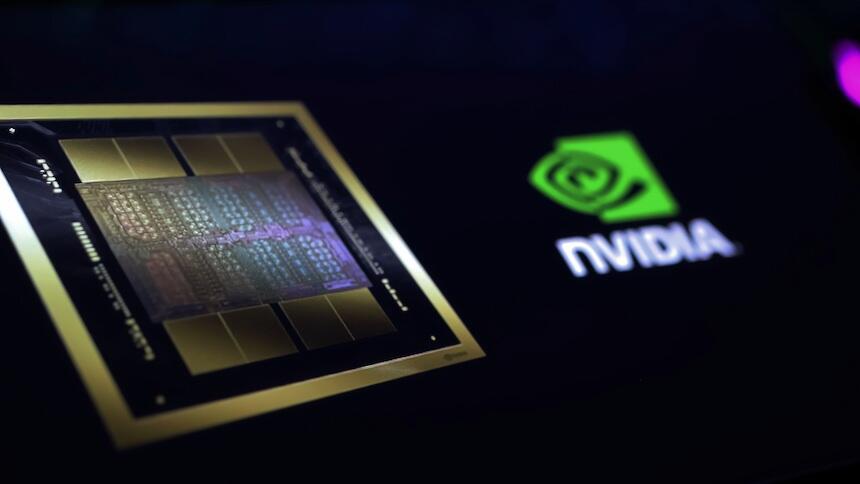
Nvidia reached an agreement on Monday, July 27, to increase its investment in SSI, deepening the chipmaker's ties with one of Silicon Valley's most closely watched companies.
Last year, the "secretive startup" was valued at US$32 billion, after raising US$2 billion from investors such as Greenoaks, Lightspeed Venture Partners, and Andreessen Horowitz – Nvidia was already a shareholder in the company before this new investment.
According to Bloomberg 's reporting, the new investment is around US$5 billion and is described as a "long-term deal" that will give the startup access to the Vera Rubin platform, Nvidia's latest generation of hardware (the companies have not confirmed the value).
"We have research that deserves to be scaled up, and having access to a large Nvidia computer will allow us to do that," Sutskever said on Monday, July 27, according to the Financial Times (FT) .
The idea is that the investment will help SSI expand its computing capacity to explore what the company describes as a significant discovery in its research area.
According to the company, the investment should increase its available computing capacity tenfold over the next 12 months.
With just a few dozen employees, SSI works on an AI approach that breaks with the large language models (LLMs) adopted by OpenAI, Google, and Anthropic.
Despite its billion-dollar private valuation , little is known about what SSI actually develops. The company has yet to launch any products or publish any research.
In a 2024 interview with the Financial Times , Sutskever said he had identified "a new mountain to climb, a little different from what I had been working on previously."
Jensen Huang, CEO of Nvidia, stated that Sutskever had already "advanced fundamental principles in the foundation of modern AI" during his time at OpenAI and said he was excited to see "what new discoveries SSI will make with the Vera Rubin platform."
Considered one of the most influential AI researchers of his generation, Sutskever played a central role in developing the technology that led to the launch of ChatGPT in 2022.
He founded SSI in 2024, months after being directly involved in the attempted ouster of then-CEO of OpenAI, Sam Altman, who was eventually reinstated, leading to Sutskever's departure from the company six months later.
Sutskever was one of the first to identify the so-called "scaling law," according to which LLMs become more capable as they receive more data and computing power.
Circular financing
This Nvidia deal is yet another in a series of agreements that have raised questions in the market about the artificial intelligence lifecycle: AI chip manufacturers investing directly in developers of models that, in the end, use that capital to buy hardware from the very investors.
When Nvidia invested $40 billion in OpenAI and Anthropic, a significant portion of that capital went directly back to Huang's company in the form of GPU purchases – the two companies accounted for 15% to 20% of Nvidia's data center revenue in fiscal year 2026.
Last week, AMD, Nvidia's rival, announced an investment of up to US$5 billion in Anthropic. And Nvidia itself had already closed similar deals with other major clients, such as OpenAI and Mira Murati's Thinking Machines Lab.
Interestingly, in March of this year, Huang signaled that the investments in OpenAI and Anthropic would likely be Nvidia's last major equity checks in the two companies, justifying this by stating that both are expected to go public later this year, a sign that the window for private investment was closing.
But recent moves are changing that dynamic. Nvidia is also close to supporting a $250 billion data center project by OpenAI in Ohio.