













When announcing the closing of the acquisition of Vital in the first half of June, Orizon drew attention to a figure that goes beyond a combined revenue exceeding R$ 4 billion.
The company is scaling up, operating 30 landfills, expanding its presence to 15 states, and serving a population equivalent to about 35% of Brazilians.
Furthermore, it challenges the sector's traditional logic, which begins with waste and ends in the landfill. Orizon is creating its own path, with the landfill as the starting point of a chain that begins with waste reception and transforms it into biogas, biomethane, energy, and carbon credits. The final stage of this process is generating new revenue.
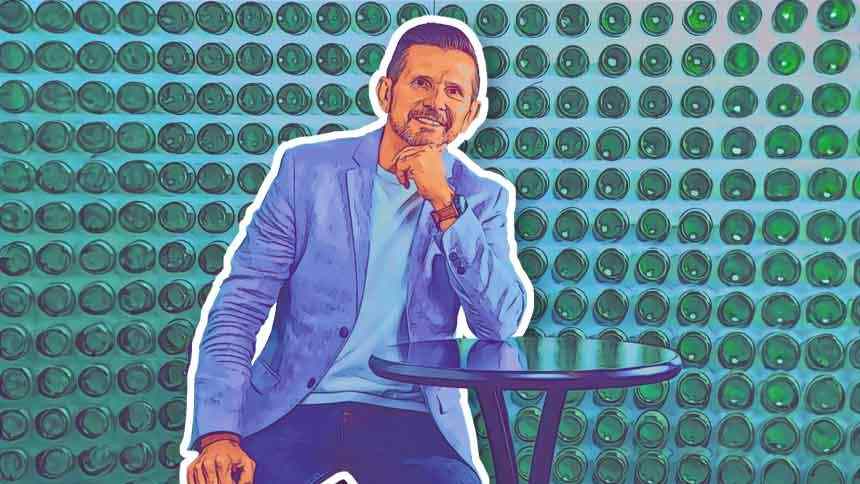
"The landfill remains the cornerstone. But it is around it that we add various services," says Milton Pilão Júnior, CEO of Orizon, on the program Números Falam, a partnership between NeoFeed and CNN Brasil .
This move represents something bigger than market expansion. The goal is to transform Orizon from a landfill operator into an environmental and energy infrastructure platform capable of monetizing the same asset multiple times.
"In four or five years, the revenue and margin contribution from renewable energy could be greater than that from waste," he states on the program that airs bi-weekly on CNN Money .
Following Orizon's logic, the company receives waste, charges for its proper disposal, and from there extracts new sources of revenue. The biogas generated by the decomposition of waste becomes biomethane. The captured methane generates carbon credits. The gas can also be transformed into electricity.
The main symbol of this transformation is biomethane. The two plants that started operating this year are already producing around 300,000 cubic meters per day. But the total potential of the company's assets, after the incorporation of Vital, reaches 2 million cubic meters per day.
In Pilão's view, this number is not yet fully understood by the market. "It's not that people don't look at this number. They can't grasp its importance in the country's energy transition," he says.
Biomethane also appears to be the company's main driver of organic growth in the coming years. Orizon estimates that it will put a new plant into operation every quarter over the next two years.
With the heaviest investments already made, the expectation is that these units will make an increasing contribution to revenue and profitability.
Investors received their first indication in the financial report published in the first quarter of this year. Even in the initial operational phase, the biomethane units delivered a gross margin of 65%.
Today, Orizon's investment thesis is linked to the gradual closure of Brazilian landfills, the consolidation of the sector, and the expansion of proper waste disposal – Brazil still disposes of about 40% of its waste improperly and maintains thousands of landfills in operation.
"When a landfill closes, the waste needs to go somewhere. And whoever is best positioned geographically captures that flow," says Pilão.
Orizon's journey to becoming a national leader through a buy-and-build strategy gained momentum in 2025, when eB Capital joined the company's controlling block after a capitalization of approximately R$ 1.3 billion.
The fund manager found a company that had already been developing biogas, biomethane, and carbon credit projects since its IPO in 2021, but was still operating on a much smaller scale.
The entry of the new partner brought both financial resources and a consolidation vision typical of funds specializing in building national leaders in fragmented markets.
In about a year, the results began to appear. Orizon put new biomethane units into operation, expanded its geographic presence, and completed the incorporation of Vital, which elevated the company to a new level of scale.
On the B3 stock exchange, ORVR3 shares have accumulated a 13.13% increase this year. The company's market capitalization is R$ 10.8 billion.


