





In recent years, bank branches have gradually lost ground to mobile apps. With digitalization, financial transactions that previously required queues and in-person service can now be resolved with just a few clicks in the palm of your hand.
Now, according to Banco Inter, the next transformation in the financial sector could even reduce the need to navigate through the apps themselves. The institution is betting on conversational artificial intelligence.
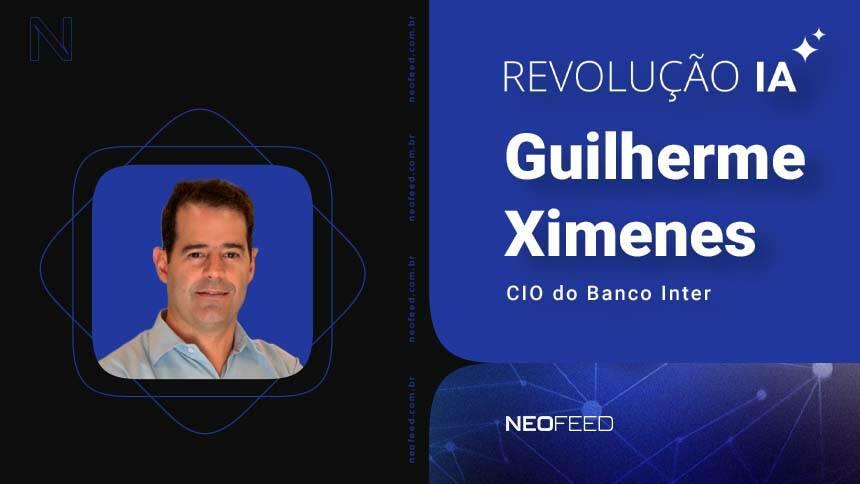
In an interview with Revolução IA, a NeoFeed program, Guilherme Ximenes, CIO of Inter, stated that the bank already operates with more than 400 AI agents spread across areas such as credit, fraud prevention, customer service, software development, and back office.
According to him, the advancement gained momentum after the launch of ChatGPT, when conversational interfaces began to become popular both inside and outside companies. "It became very clear to everyone that AI is here to stay," he stated.
At the heart of this strategy is "Seven," an artificial intelligence platform developed by Inter to function as a kind of conversational financial assistant. The tool already allows customers to perform transactions directly via text, without needing to navigate through different screens of the app.
The bank's vision is that, in the future, these interactions will also happen via voice. According to the executive, Inter has already developed integrations to connect its services to external artificial intelligence platforms, including Alexa and ChatGPT.
“Until 2015, the engagement model was a bank branch. The app, back then, transformed that engagement model. From now on, our strategy is to be present in multiple applications, whether it's Alexa, the car's voice, conversational interfaces, or connected to ChatGPT. We want to be where the customer is.”
In practice, Inter believes that AI can become the main interface between customers and financial services, reducing operational steps and increasing convenience.
The expectation is that the change could also increase the conversion of more complex products, such as credit, investments, and consortiums. "The technology backlog is endless. We want to do more things, with higher quality and greater speed," he stated.