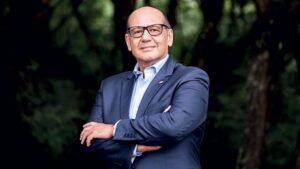



The crisis in multi-market funds is causing a profound restructuring at SPX Capital , with the departure of key partners and a review of the London office of Rogério Xavier 's asset management firm.
Marcelo Castro, a key partner at SPX Capital and one of the leading figures at the asset management firm in London, announced his departure after six years. The announcement was made by the executive himself in a LinkedIn post, in which he thanked the founding partners, the team, the investors, and the banks he worked with during his tenure.
“It was an intense journey. I already feel empty without the daily buzz of my team and the dialogue with dealers and investors,” Castro wrote.
In the text, the manager stated that he intends to take a break to spend more time with his family, recharge his batteries, and dedicate himself to learning new skills, especially in light of the changes brought about by artificial intelligence in the investment industry .
The departure, however, comes at a time of broader reorganization at SPX, which has R$ 54.7 billion under management. According to information obtained by NeoFeed , the asset manager had been discussing a structural review of its multi-market funds after a period of weaker performance, which reignited internal debate about governance, risk allocation, and the degree of autonomy of managers.
SPX 's main funds have underperformed the CDI (Brazilian interbank deposit rate) over the last 12 months: Raptor has accumulated a 5.97% return and Nimitz, 9.46%, compared to a CDI of 14.8%. And the asset manager has been one of the biggest losers in total assets under management in recent years, as shown by NeoFeed .
The central point of this reorganization would have been the creation of a chief investment officer (CIO) role, designed to strengthen aggregate control of the funds, reduce dispersion among the portfolios , and bring more discipline to risk allocation. Castro was considered for this role, but the discussion stalled due to a disagreement over the design of the new structure.
On one side, there was a vision more inclined towards centralization, with risk, economics , and portfolio decisions more integrated. On the other, there was the idea of creating a CIO figure capable of looking at the whole picture, distributing more or less risk among managers, and better coordinating the portfolio, while preserving the operational independence of the books .
The second proposal was the winning one, and Castro reportedly did not accept this design, hence his decision to leave the asset management firm. With his departure, Bruno Pandolfi, one of the founders of SPX, is expected to assume the new role of CIO and play a central part in the reorganization of the multi-market funds .
Pandolfi's mission will be to rethink textbooks , review which strategies still make sense, redistribute risk, and bring managers closer to a more coordinated dynamic.
Castro's public reflection contrasts with the internal interpretation that his departure precipitated decisions that were already underway. In addition to him, Marcella Libardoni, a long-time partner at the firm and linked to Xavier's fixed income portfolio , also left the asset manager in a move described as part of a performance and structural adjustment, although it was overtaken by the timing of Castro's departure.
According to sources consulted by NeoFeed , the asset manager decided to reduce the risk of Xavier's portfolio , which had been growing but underperforming. The new arrangement suggests a smaller team for greater efficiency. The risk is expected to be transferred to the equities portfolio .
Within SPX, the orientation is described as a return to what the company has always done well, with closer relationships between teams, more operational synergy, and discipline in risk-taking.
The discussion gained momentum after a period of underperformance. According to NeoFeed 's investigation, the asset manager had already been reassessing strategies that did not justify capital, studying a leaner structure and discussing a reduction in total risk, with reallocation to remaining assets under management.
The internal diagnosis was that the model of multiple independent "boxes" preserved specialization, but left a coordination gap at the bottom level.
Feedback from the firm's major allocators pointed in this direction: the autonomy of the managers made sense, but there was a lack of someone looking at the big picture, especially to contain large drawdowns .
Castro held approximately 15% of the risk in multi-market strategies. With his departure, SPX began to close out positions associated with its order book and is still evaluating how it will redistribute them. According to sources familiar with the matter, the trend is that equities will receive more risk than before, currency will remain a key focus, and interest rate investments will see some downward adjustment.
Castro's departure also accelerates discussions about the London office, which has become expensive to maintain due to tax issues. He was the main partner still remaining in the English capital, after other important figures returned to Brazil or moved to other locations. SPX's international presence is not expected to disappear, but it is likely to become more selective.
Singapore should remain strategic due to the importance of the Asian team and the local operation. London, on the other hand, has lost attractiveness due to a combination of cost, taxation, and lower operational needs. The office lease expires at the beginning of next year, and non-renewal is a possibility under discussion. The remaining staff in London should be relocated over the next six months, if it makes sense to keep them.
The decision also depends on individual willingness to return to Brazil, since the new leadership and operational preferences are concentrated in the country.
Contacted by NeoFeed , SPX Capital has not yet responded to requests for an interview.