


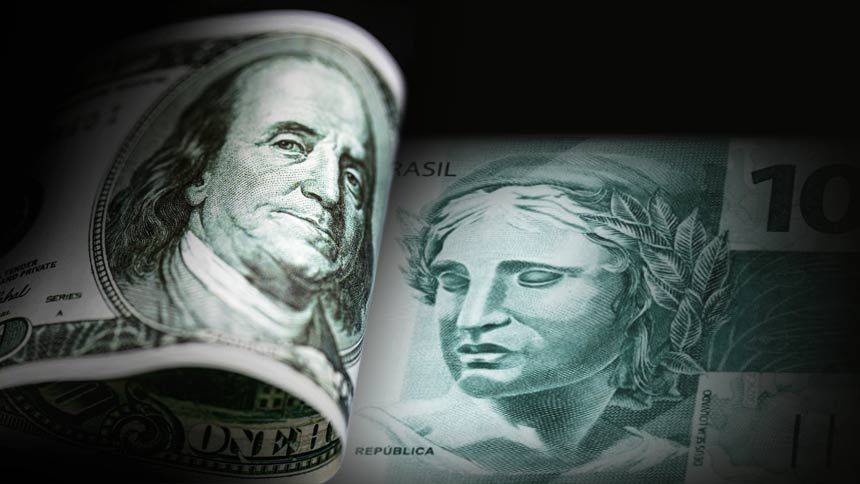
The uncertainties surrounding the first year of Donald Trump's return to the White House triggered the biggest global drop in the dollar since 2017. The currency fell about 10% against the world's major currencies, as investors sought greater diversification outside the United States.
After last year's declines, Goldman Sachs economists still see the US dollar about 15% above its fair value. However, the bank believes this weakening trend is likely to lose momentum going forward.
According to the bank, the dollar has already passed through the most intense correction phase after the recent peak and, in the absence of a more severe macroeconomic shock or an aggressive monetary easing cycle in the United States, the currency tends to show more contained movements.
One of the bank's arguments for greater dollar support in 2026 is the outlook for the American economy, for which Goldman Sachs is working with a growth projection above the market consensus. The firm expects GDP to grow by 2.8% this year, compared to a consensus of 2.5%.
“This increased strength in the American economy should put a floor for the dollar,” says Goldman Sachs in a report. The economists add that, depending on the performance of American assets, the currency could gain new momentum.
Part of this resilience in the United States, according to the bank, is related to the increased productivity generated by advances in artificial intelligence, which have also contributed to the rise in the American market.
"A sufficiently strong performance from the US economy to maintain a high dollar valuation would not be far from our base-case scenario." Still, Goldman Sachs emphasizes that the base-case scenario does not point to a reversal of the trend observed in recent years, but rather to a more gradual adjustment.
Even with a more resilient dollar, Goldman Sachs remains relatively optimistic about the real, a currency that, according to the bank, should benefit from greater global risk appetite in 2026 and the still high interest rate differential.
Among the risks mapped by the bank is the possibility of an election result less favorable to the market . According to the bank, however, a significant portion of this is already priced in, generating a positive asymmetry in favor of the real.
Goldman Sachs also highlights that part of the real's appreciation in 2025 was related to more favorable fundamentals, such as improved terms of trade . "This contributes to the real continuing to have a healthy valuation cushion."
For the euro, which was among the biggest gainers last year, Goldman Sachs sees a likelihood of another significant appreciation this year. Even so, economists say the euro should continue to benefit from expectations of a cyclical recovery in Europe, driven by increased fiscal spending, especially in Germany.