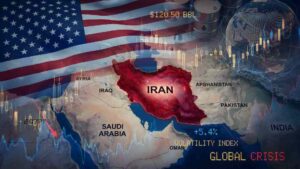


Miami - If there were a compass to guide global capital in 2026, it would be pointing in conflicting directions: a new world map is taking shape.
With the geopolitical instability influencing investment decisions since last year's tariff hikes under Donald Trump, the new global currency is called security.
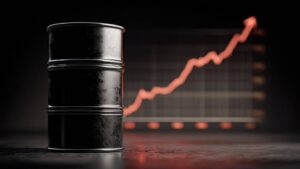
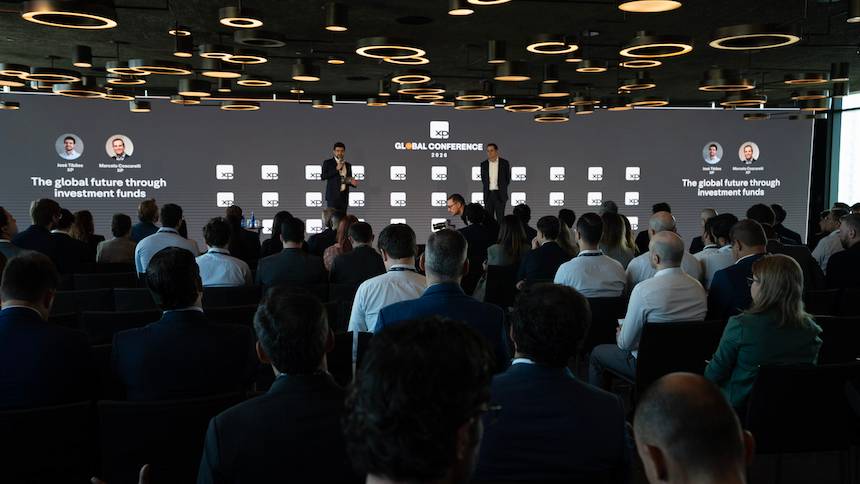
The morning session of the first edition of the XP Global Conference outside of Brazil presented a macroeconomic perspective, where the immediate risk is the repricing of assets in the face of an energy shock, and the challenge is accepting that the era of maximum efficiency has given way to sovereign resilience.
For capital allocators, the challenge is to build a good – and diversified – asset portfolio to emerge alive on the other side, without improvising in the midst of stress.
Economists Paulo Leme , chairman of the global allocation committee at XP Private Banking; Thomas Mucha, geopolitical strategist at Wellington Asset Management; and Thiago Ferreira, from Vanguard, shared some thoughts on these uncertain times.
Interest rates and war
In the week of the Federal Reserve (Fed) meeting, still under the leadership of Jerome Powell, the decision of the American monetary policy committee is in a minefield of geopolitical volatility.
According to Paulo Leme, economist and chairman of the global allocation committee at XP Private Banking, there are two points to consider:
Stagflation on the radar: If the crisis in the Strait of Hormuz lasts more than 30 days, cost-push inflation could force the Fed to halt its cycle of interest rate cuts.
The pass-through dilemma: With the energy shock (oil and gas), central banks around the world must choose between combating persistent inflation or avoiding a deep recession.
The "McDonald's Indicator"
Amidst the asset volatility, Leme highlighted the instability and speed with which the portfolio's "star" changes in the current scenario. And with a warning sign: "When McDonald's is the star, the scenario becomes really worrying," he joked.
The economist observed that the market has been changing direction in a matter of days: one week it's software, the next it's chips, then cyclical or stable consumption.
This means that those who try to chase the day's performance, selling technology to buy banks or McDonald's simply because they went up during the month, are making the dangerous move of "buying and selling" positions.
The strategic knot of the West
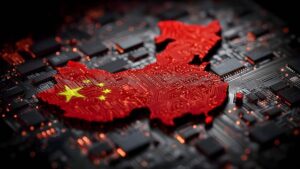
Thomas Mucha, geopolitical strategist at Wellington Asset Management, which manages over $1.3 trillion, stated that Latin America is moving from the periphery to the center of the chessboard due to the US need to reduce its dependence on China.
Brazil and other countries in the region are seen as "central hubs" for the supply of essential minerals. And, according to Mucha, American support will come with a clear request: "Please reduce your dependence on China."
The end of "economic efficiency"
According to Mucha, the world has ended an 80-year cycle of stability and entered a dangerous transition. The major paradigm shift is that governments are no longer seeking the lowest cost, but the greatest protection.
"What I see in policymakers today is a shift away from integration. There is a much greater focus on national security at the expense of economic efficiency," he said.
The number of active conflicts in the world has doubled in the last five years, jumping to 65, according to calculations by Wellington.
Global "fracture"
Wellington's geopolitical strategist rejects the term "Cold War" for the dispute between the US and China because, unlike the Soviet Union, the economies are now integrated.
What we are seeing is a surgical "fracture" in strategic sectors. The dispute now centers around eight to ten vital sectors, including semiconductors, critical minerals, robotics, and aerospace.
According to Mucha, although the dollar will not lose its position as the immediate reserve currency, China is already preparing the ground with currency swaps to diversify the global scenario.
X-ray of 800 professions
To understand the impact of artificial intelligence on employment, Vanguard analyzed 800 professions and each individual task within them.
Although Anthropic CEO Dario Amodei painted a pessimistic picture for jobs, the base scenario of the world's second-largest ETF provider, with over $9.3 trillion under management, is different.
Senior economist Thiago Ferreira says that this scenario "does not call for immediate mass layoffs, but for a healthy productivity gain of 2%".
The manager believes that "it takes time" for technology to completely eliminate a job, as the reallocation of human tasks is still necessary to "tell the story" behind the data.
It's not a bubble, it's history.
Vanguard also sees AI not as an isolated event, but as the fourth major infrastructure cycle of the last 200 years.
According to the manager's calculations, current investment in AI follows the same pattern as the railway expansion (1840), post-World War II manufacturing, and the telecommunications era.
"An AI-based economy doesn't necessarily translate into an immediately successful financial market. American exceptionalism may diminish even with the US leading the technological revolution," says Ferreira.
For this year, the asset manager projects a 17% growth in technology capital expenditure. If the cycle behaves like that of Telecom, the US GDP could surprise with a growth of 3%.