

The international oil market crisis due to the conflict in the Middle East continued intensely on Wednesday, March 4th: barrel prices were still rising, which placed American shale oil producers in a controversy involving the International Energy Agency ( IEA ) – an intergovernmental organization that acts as one of the main global references on energy security.
Following an emergency meeting held the previous day, the IEA released a document stating that American shale would be the "most significant" source of production in the short term to offset any shortfall, mainly from recently drilled wells that had not yet begun producing.
These wells could add "another 400,000 barrels per day" in the second half of the year, according to the IEA, with 240,000 barrels per day already in May.
Shale oil drilling and production in the U.S. became competitive starting in the late 2000s, when the combination of hydraulic fracturing and horizontal drilling drastically reduced extraction costs. This period marks the beginning of the so-called shale boom in the United States, which transformed the country into the world's largest oil producer.
The IEA's suggestion, however, came as a bombshell to the shale sector. Producers argue that a large increase in drilling and extraction would take months to materialize and, in addition to the high costs, the sale of the oil would occur when the price per barrel will likely already be back to pre-crisis levels in the Middle East.
“It’s too early for people to take the initiative to invest,” said Kirk Edwards, president of Latigo Petroleum, an independent producer based in the Permian Basin of Texas. “What producers in the Permian Basin need, in my opinion, is a stable price of $75 over the next 12 months.”
Edwards echoed the argument of many shale producers: the current price increase can only be explained by an atypical factor, such as the war in the Middle East. "If we have somewhat high oil prices for a while, as soon as that's over, those prices will fall, I believe to even lower levels than before."
Scott Sheffield, a veteran of the shale industry, also criticized the IEA proposal. According to him, the lack of good drilling prospects would also harm companies, which have cut spending, shut down platforms, and laid off workers in the last 12 months during a period of low oil prices.
Therefore, at this moment, Sheffield indicated that the shale sector prefers to take advantage of the high price of oil to create a cushion for oil companies. "This will simply give them extra cash flow, they can reduce debt, buy back shares and pay dividends," he said, regarding this week's price increase.
Other factors also reinforce the arguments of American producers. Volumes to be added in the short term by shale oil, as suggested by the IEA, are small compared to the 20 million barrels per day exported from the Gulf.
The most recent forecast from the U.S. government's own Energy Information Administration is that American production, currently at a record high of about 13.6 million barrels per day, will fall this year.
Furthermore, the difference in exploration costs between Gulf countries – such as Saudi Arabia, Kuwait, the Emirates, and Qatar – and US shale oil is significant. While in the Middle East the average cost for new projects ranges from US$20 to US$30 per barrel, American shale oil has an average breakeven point of US$45 to US$48 per barrel for new onshore projects.
In other words, many American drilling companies need much higher prices to make a profit. Therefore, American shale oil acts as a "market buffer": it grows when the price rises and slows down when it falls.
Neck
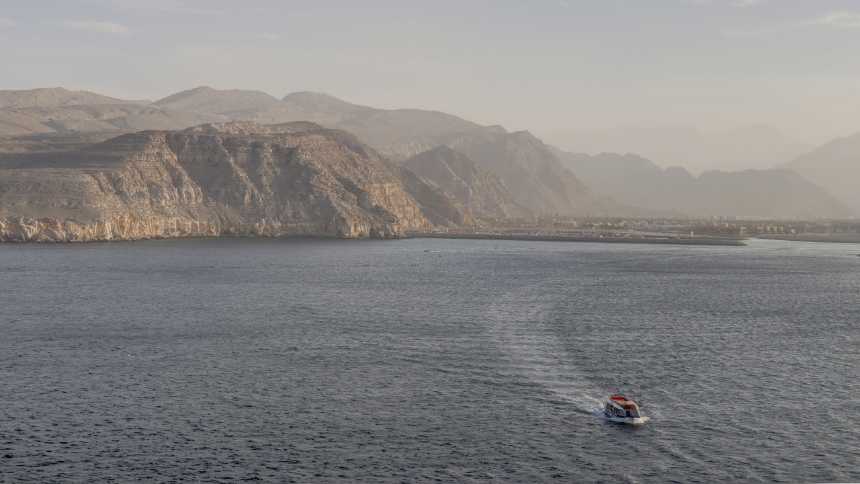
The international oil market remains tense due to the closure of the Strait of Hormuz , through which between 20% and 30% of global production passes, especially from the Gulf countries. President Donald Trump's promise to use military ships to escort tankers crossing the Strait has encouraged Gulf governments, but has been met with distrust by traders.
Oil prices are around $82 a barrel, 13% above the benchmark price recorded on the eve of the war. The cost of chartering tankers to transport oil from the Persian Gulf has skyrocketed and now amounts to 20% of the price of a crude oil cargo, compared to 3% in normal times, according to analysts at Argus Media.
The market is now concerned about the delay in reopening the Strait of Hormuz. This is because the closure is already affecting oil shipments. The worst-case scenario is that storage tanks will begin to fill to maximum capacity, as countries are unable to transport fuel, which could lead to a halt in oil production.
For now, the biggest bottleneck is in Iraq, the world's fifth-largest producer – production has fallen to less than half due to the inability to transport the oil.
The certainty that the price of a barrel of oil should return to a lower level once the crisis in the Middle East subsides reinforces the certainty that the world economy needs less oil now than in 1979, when the price of a barrel rose 165% after the Islamic Revolution in Iran.
In an article, Paul Krugman – winner of the 2008 Nobel Prize in Economics – observes that the US today, the world's largest oil producer, is no longer as dependent on the commodity. And Iran's share of global production has also decreased.
“The U.S. economy has tripled in size over the last half-century, yet oil consumption has barely grown,” wrote Krugman, pointing out that the “oil intensity” of the economy – which analyzes the relationship between oil consumption and U.S. GDP growth – has decreased by more than 70% since 1979.
"Cars are much more fuel-efficient these days, cheap natural gas has replaced oil in areas like residential heating, and renewable energy is starting to make a difference," Krugman said.