

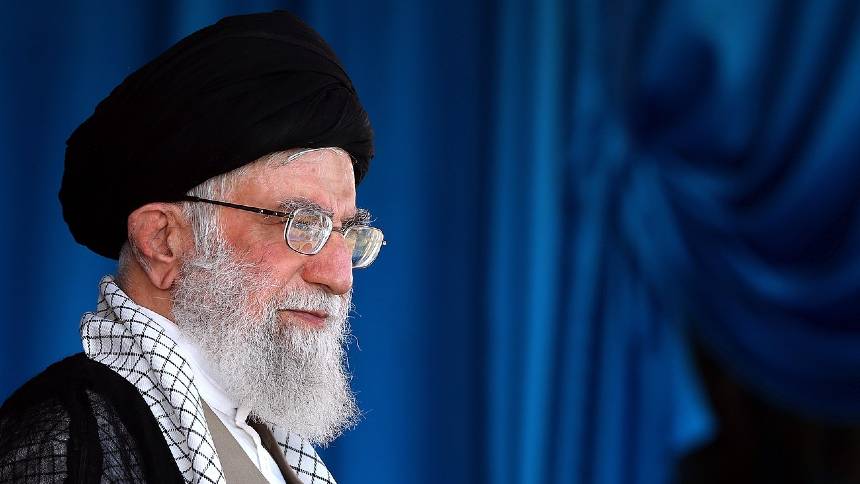

US President Donald Trump said on his social media account Truth Social that Iran's Supreme Leader Ali Khamenei was killed on Saturday, February 28, in the offensive against the country. This information was confirmed by the Islamic Republic News Agency.
"Khamenei, one of the most wicked people in history, is dead. This is not only justice for the people of Iran, but for all the great Americans and for the people around the world who were killed or maimed by Khamenei and his gang of bloodthirsty criminals," Trump wrote on Truth Social.
His death, however, does not immediately signify regime change, one of the objectives of the United States' offensive against Iran. "The assassination of the Iranian supreme leader does not represent regime change. We are far from that, at least for now," wrote Ian Bremmer, president of Eurasia X.
Bremmer , in a video posted on YouTube, had warned that the Iranian political system does not depend solely on individual figures. Even with leaders dead or incapacitated, the regime can quickly reorganize. "Eliminating the leadership does not mean eliminating the power structure," Bremmer said.
According to the president of Eurasia, the Islamic Revolutionary Guard Corps, a central pillar of the Iranian state, remains a force capable of maintaining internal control, administering the country, and absorbing losses in command. “Regime change is the most difficult objective there is,” said Bremmer. “And when it fails, the cost is usually high.”
In any case, Khamenei's death brings an end to a leader who centralized decisions, emptied elected positions, and strengthened a coercive apparatus that made dissent a life-threatening risk.
Ali Hosseini Khamenei was born in 1939 in the city of Mashhad, one of the main religious centers of Shiism in Iran. He was the second of eight children in a modest family, headed by his father, a local cleric.
From childhood, he received a traditional religious education, studying the Quran and, later, Islamic jurisprudence in seminaries in Mashhad, Najaf (Iraq) and Qom, the main centers of the Shiite clergy.
During the 1960s and 1970s, while Iran was ruled by Shah Mohammad Reza Pahlavi—an ally of the United States and engaged in a pro-Western modernization project—Khamenei grew closer to the circle of Ayatollah Ruhollah Khomeini, then the main religious leader opposed to the regime.
Khamenei participated in clandestine activities against the monarchy, which led to repeated arrests by SAVAK, the Shah's secret police, and periods of internal and external exile. This involvement placed him at the heart of the movement that would culminate in the 1979 Islamic Revolution, which overthrew the monarchical regime and established the Islamic Republic of Iran.
After the victory of the revolution, Khamenei went on to occupy important positions in the new revolutionary state. He became a member of the Revolutionary Council, Deputy Minister of Defense, and in 1980, he was appointed Imam of Friday prayers in Tehran, a position of great political and symbolic visibility.
In 1981, Khamenei survived a bomb attack attributed to armed opposition groups. The attack left permanent damage to his right arm, but reinforced his image as a central figure in the regime.
Shortly after, still in 1981, he was elected president of Iran, following the assassination of then-president Mohammad Ali Rajai. He governed until 1989, spanning virtually the entire period of the Iran-Iraq War (1980–1988), always under the direct supervision of Khomeini, who held supreme authority.
During his presidency, Khamenei was not the most powerful figure in the system—that role belonged to the supreme leader—but he gained institutional experience, built alliances, and strengthened ties with the clergy and state security agencies.
With the death of Ruhollah Khomeini in June 1989, Iran faced an unprecedented succession. The natural heir, Ayatollah Hussein-Ali Montazeri, had been removed shortly before due to political disagreements.
In an emergency session, the Assembly of Experts, the constitutional body responsible for choosing the supreme leader, elected Ali Khamenei as the new leader, even though he did not possess, at the time, the highest religious rank originally required by the Constitution.
To make the election possible, the system itself promoted constitutional changes that reduced the formal requirements for the position. Thus, on June 4, 1989, Khamenei assumed the position of second supreme leader of the Islamic Republic of Iran, a lifetime position above all elected institutions.
Khamenei, a long-serving and authoritarian leader.
As the supreme leader of Iran, Khamenei built one of the longest-lasting and most power-concentrated reigns in the contemporary world.
At the helm of Iran since 1989 as supreme leader, he was not merely the successor to Ruhollah Khomeini. He was the architect of a system that replaced revolutionary fervor with a model of permanent control: political, military, judicial, and symbolic.
The protests were not political crises to be managed, but existential threats to be crushed. This logic has been repeated every time the population has taken to the streets — in 2009, 2019, 2022 and, even more brutally, in the recent waves of protest.
The script was predictable: demonstrations gained momentum, Khamenei broke the silence with a harsh speech, and soon after came the mass arrests, lethal violence, and revolutionary courts expediting sentences. When the leader called protesters "enemies" or "seditious," the State interpreted it as authorization.
The human cost of this model is the darkest aspect of its legacy. International organizations have documented thousands of deaths, tens of thousands of imprisonments, recurring reports of torture, and the systematic use of the death penalty as an instrument of political intimidation.
Young people, women, and even minors have become part of the statistics of a judicial system that, under his tutelage, has confused justice with revenge.
Khamenei never commanded troops on the battlefield, but his authority lay behind a state that treated part of its own population as enemy territory. While he preached about morality, faith, and resistance, he authorized one of the most severe repressive apparatuses in operation in the world today.
Internationally, he cultivated the image of an inflexible leader, averse to the West and willing to sustain conflicts through regional allies. Domestically, however, his greatest war was domestic: against any movement that threatened the regime's permanence. The rhetoric of sovereignty and independence often served to justify the closure of public space and the criminalization of criticism.
The paradox of Ali Khamenei is that he survived politically for decades precisely at the cost of eroding the legitimacy of the system he claimed to protect. By trading consensus for coercion, stability for fear, he left behind a deeply fractured, socially exhausted, economically pressured, and politically repressed country.
On the economic front, Khamenei leaves behind a severe economic crisis, marked by the devaluation of the rial by about 50% in just six months and annual inflation of around 40%.
The sanctions imposed by the United States since withdrawing from the nuclear agreement in 2018 have stifled the Iranian economy, isolating the country from the international financial system and preventing regular access to foreign currencies.
As a result, the state lost effective control over its own currency and foreign exchange reserves, and began operating through a parallel financial system accessible only to groups linked to the regime.
Despite Iran possessing enormous oil reserves and being one of the largest producers in OPEC, this wealth does not translate into well-being for the population.
The economy is functioning in a distorted way. Most citizens face food shortages, rationing of water, electricity and fuel, in addition to wages eroded by inflation.
Members of the regime, however, benefit from subsidies, smuggling, and corruption, especially in the energy market. Food prices exceed family incomes, forcing reduced consumption and depleting savings.
This economic collapse has affected all social classes, including traditional merchants of Tehran's Grand Bazaar, historically allied with the regime, giving the protests an unprecedented dimension.
Unlike previous uprisings, the current demonstrations brought together the poor, the middle class, young people, the elderly, and different ethnic groups, reflecting the widespread perception that the Iranian economy has reached its breaking point and that the regime has lost the ability to govern the country and guarantee minimum living conditions for the population.
(Updated report with confirmation of Ali Khamenei's death by the Islamic Republic News Agency)