

Navigating the week of the January-to-February "turnaround" will require heightened attention due to the weight of the scheduled events and the diversity of the agenda. Meanwhile, pre-scheduled economic indicators, routinely released at the beginning of the month, tend to have their importance diminished in this mid-semester period where politics and economics – far removed from spreadsheets – will be vying for ground.
At the same time, Brazilian banks and companies will replicate the international calendar, beginning the release of fourth-quarter and 2025 earnings reports. This earnings season could even be an additional pretext to further boost the Ibovespa index, already driven by a strong inflow of capital fleeing US assets and turbocharging emerging markets. Between February 2nd and 6th, the three largest private banks in the country – Itaú Unibanco, Bradesco, and Santander Brasil – will present their data.
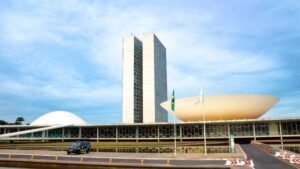
The resumption of work in Congress on Monday, February 2nd, will further highlight the " Master Case ," which did not go into "recess" like the parliamentarians. On the contrary, it fueled headlines in specialized and traditional media, crossing borders, throughout January, fueled by the billion-dollar fraud and the alleged involvement of politicians and judicial authorities with the institution or with Daniel Vorcaro , the controller of Master.
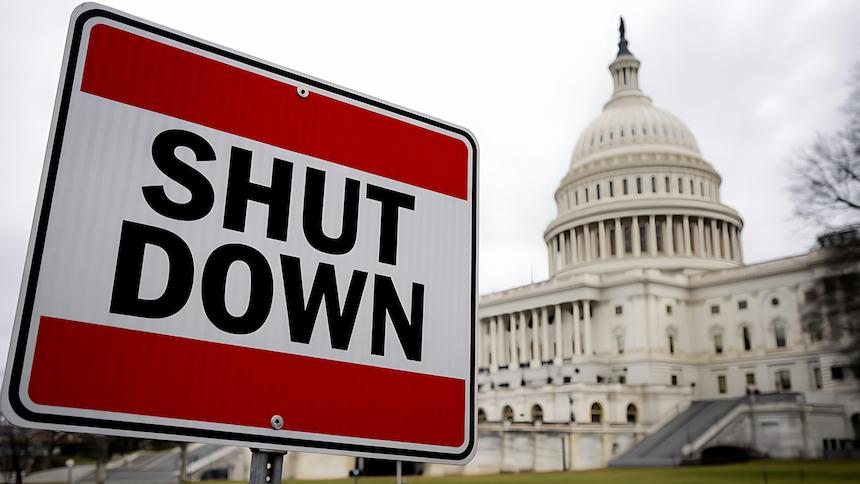
Abroad, in addition to the demonstrations and unpredictable decisions by Donald Trump, the US could enter a "shutdown" at the turn of the month, which means a government shutdown due to uncertainty over the budget, should Congress not approve the bill by midnight on Friday, January 30th.
The point of contention is the funding allocated to the Department of Homeland Security, responsible for Immigration and Customs Enforcement (ICE), which, days ago, led to the deaths of American citizens and an uprising in Minneapolis. Trump is trying to broker a deal with the Democrats.
On Thursday, January 29th, negotiations continued, but Democratic senators and a small group of more conservative Republicans rejected a package of six bills that could have prevented the shutdown. Negotiations then resumed. However, even if the Senate approves the budget, a short shutdown may be inevitable because the House, which needs to ratify the decision, is not expected to return until the first week of February, according to international press reports.
In October 2025, due to a lack of consensus on the budget, the US faced an administrative and statistical shutdown lasting 43 days. The longest shutdown in the country's history destabilized financial assets and undermined benchmark indicators that impact economies worldwide, while the Trump administration announced mass layoffs of public employees.
Now, four months later, geopolitical risks persist, with Iran currently in the spotlight, and the economic environment is suffering from Trump's renewed flirtation with trade tariffs . The focus is on South Korea, due to its failure to enact an agreement signed in 2025 that foresees substantial Korean investments in the US, and Canada, subject to a 100% tariff increase due to its closer ties with China.
INSS, Master and Security on the front line
Here, the return of Congress to work, the resumption of the evaluation of pending agendas for 2025, and a series of initiatives that are on the verge of being launched, suggest economic repercussions with popular appeal that could overshadow the routine emphasis given to economic statistics that interest the market.
Aside from the pressure to resume the INSS Parliamentary Commission of Inquiry and the eventual establishment of the Master CPI, or the possibility of the "Master Case" being included in the investigation being conducted by the Organized Crime CPI, Congress may approve on Monday, the 2nd, the Provisional Measure that extended the People's Gas program, which expires on the 11th, and accelerate the regulation of the bill dealing with app-based work.
The relevant and also popular reduction of the workday or the end of the 6 x 1 work schedule is on the legislative agenda, where the Security Amendment and the Anti-Faction Bill await their turn. Under study at the Finance Ministry and still without a date to land in Congress is the proposal for free bus, train, and subway fares throughout the national territory, at a fiscal cost of R$ 90 billion per year – a flagship policy of President Lula in his reelection campaign.
Of great interest to the financial system, the proposed constitutional amendment (PEC) that grants budgetary autonomy to the Central Bank is in the Senate, should also have an accelerated process, and could include authorization for the institution to oversee investment funds, as suggested by Minister Fernando Haddad in the wake of the Banco Master scandal and a sign of the fragility of the Securities and Exchange Commission (CVM) .
Considering that the second half of the year will be compromised by the election campaign, Senate committees will have to expedite the confirmation hearing of Otto Lobo, nominated by Lula to head the CVM (Brazilian Securities and Exchange Commission), while awaiting the formal presentation – also by Lula – of Jorge Messias for a vacancy on the Supreme Federal Court. The president is "owing" his candidates for two director positions at the Central Bank.
In the conventional economic calendar, the publication of the Copom minutes on Tuesday, February 3rd, is a significant event. Despite maintaining the Selic rate at 15% at the meeting on Wednesday, January 28th, the committee took the rare and positive step of explicitly stating that the interest rate cuts will begin in March.
The stability of the rate was expected, but the transparency of the communication – undoubtedly efficient – in curbing market speculation surrounding monetary policy and pressure from the government itself for lower interest rates was surprising.
The Copom minutes gain relevance because they could reinforce the signaling of the monetary easing cycle that some economic agents believe will begin with a 0.50 percentage point reduction in the Selic rate, while others expect a 0.25 percentage point cut on March 18 – this variation being considered more appropriate to the "serenity" in decision-making advocated by the committee.
On the international agenda, the highlight of the coming days will be the publication of the US labor market survey on Friday, February 6th. The survey includes the number of formal jobs created in January, the unemployment rate, and the average hourly earnings.
A collection of data relevant to Fed decisions, which also kept interest rates stable on Wednesday. Regarding interest rates, on Thursday, February 5th, the European Central Bank (ECB) will set its rate – and the main rate is expected to remain at 2%.