



The IBGE (Brazilian Institute of Geography and Statistics) will "formally" close 2025 on Tuesday, March 3rd, by announcing the Gross Domestic Product ( GDP ) for the fourth quarter and the previous year. No surprises. The statistics are a snapshot of the past, as usual, and will confirm the economic slowdown. But all is not lost. Brazil has a "safe passage" in 2026.
Measures taken by the government in recent months to stimulate income and credit are expected to inject R$ 122.20 billion into the economy and guarantee 0.90% of this year's GDP – almost half of what the market predicted. This calculation comes from Rodolfo Margato, partner and economist at XP.
He reports that this will be the combined result of previously announced income transfer initiatives and programs: income tax exemption for those earning up to R$ 5,000/month, private payroll loans, Casa Brasil Reform, Move Brasil, expansion of Minha Casa Minha Vida, Luz do Povo and Gás do Povo .
No less than R$ 88 billion, 72% of the total estimated, will come from the income tax reform, the payroll loan reform, and the Housing Reform Brazil program. And this will support economic activity, according to Margato, who predicts the economy will grow by 2.3% in 2025 and 2% this year.
For months, banks and consultancies have been paying particular attention to 2026 and 2027, the final year of Lula's 3.0 administration and the first year of the next government, but without ruling out "populist" innovations in the coming months – such as the reduction of the 6x1 work schedule, which could be "compensated" by payroll tax exemptions , and free public transportation at an estimated cost of R$ 90 billion per year, according to the National Confederation of Transport (CNT).
The inclusion of 2027 in economic scenarios is invariably accompanied by a warning about fiscal policy , which, under the current framework, will not prosper. This is the concise, yet insistent, message from the financial market to President Lula and his competitors for the Planalto Palace in October.
Despite the message, there are minimal bets on a change of course regarding public finances or any indication – even during the election campaign – that the “future” ruler will address stabilizing the debt as a proportion of GDP. And for a reason: stabilizing the debt will require achieving a primary surplus of around 2% of GDP, which, if pursued, will demand spending cuts from the next administration.
This context necessitates a thorny measure: a review of the minimum wage policy, a measure that has had the greatest impact on expenditure trends, given the linkage of pensions and social benefits, such as the Continuous Benefit Payment (BPC), salary bonus, and unemployment insurance.
Despite criticism, Lula 3.0 is meeting the fiscal target anchored in tax collection and extraordinary revenues. Spending cuts are out of the question. But the "comfort" ensured by meeting targets will be compromised if the slowdown in economic activity intensifies.
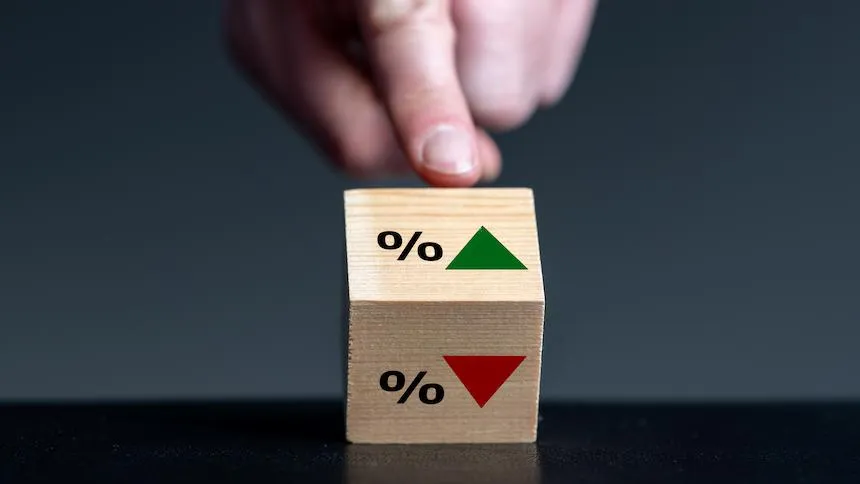
Brazil is not "taking off" due to interest rates.
The government met its fiscal targets for 2024 and 2025, but the "success" of the undertaking was achieved by using the tolerance margin that allows a deficit of 0.25% of GDP and by excluding expenses from the calculation of results. Without the use of fiscal exceptions, even if foreseen, growth makes a difference.
In 2023, GDP grew by 3.2%, and in 2024, by 3.4%. For 2025, expectations point to expansion between 2.1% and 2.3%; for 2026, from 1.5% to 2%; and for 2027, from 1% to 2%. For the fourth quarter, projections range from a 0.1% decrease to a 0.1% increase compared to the previous period when GDP grew by 0.1%.
The quarterly data should therefore confirm the stagnation of activity in the second half of the year, a period in which the restriction imposed by the Selic rate at 15% reached its peak. And it is an illusion to expect that, now at the forefront, the interest rate cut cycle will be sufficient to promote consistent growth. However, more damage may occur.
Interest rates aimed at containing inflation and related expectations are the central reason why the economy did not "take off" in 2025, according to Coface Brasil – the Brazilian arm of the French company Coface, a global leader in credit insurance with a presence in over 100 countries.
“Interest rates have limited and continue to limit the expansion of consumption, which is more dependent on credit conditions, and also have an effect on investments due to the high cost of capital,” notes Patrícia Krause, chief economist for Latin America , who forecasts Brazilian GDP growth of 2.2% in 2025 and 1.9% in 2026, in an interview with NeoFeed .
For 2027, the expectation is not about economic activity, but about fiscal policy. "Regardless of who takes over the government in 2027, the dynamics of public finances need to be revisited to contain the growth of public debt," says Krause.
The projected growth for Brazil is in line with the average projection for the region. However, the expansion will have a different pace in 2025. In Mexico, the economist cites, growth was much weaker, at 0.8%, mainly due to uncertainties related to US trade policy, which affected investments. In Argentina, GDP is expected to have advanced 4.4%, driven by a depressed comparison base after the 2023/2024 recession, and by improvements in household consumption and investments.
According to Krause, Brazil did not suffer a significant negative impact from Trump's trade policy: the reach of Brazilian exports to the US represents only 1.7% of GDP, and this is due to the country's ability to redirect its sales to other markets.
Keeping an eye on the cost of money in local markets, Coface warns that the deterioration of payment capacity and increased credit risk are the main areas of focus for 2026. Pressure on small and medium-sized enterprises suggests insolvency rates will exceed pre-pandemic levels.