

Contrary to expectations, the measures announced in recent months by the federal government have not yet led to a surge in presidential popularity, although they are hindering the Central Bank 's monetary policy efforts, which are reducing the Selic rate in dribs and drabs.
And it will be difficult to increase the dosage, given the inflationary pressure spreading across the world, and it will not spare Brazil, even if the measures stimulate demand – a likely scenario.
It is important to consider that measures classified as populist by the market do not necessarily mean spending or fiscal stimulus, explains Alexandre Seijas de Andrade, director of the Independent Fiscal Institution (IFI) linked to the Federal Senate, to NeoFeed .
“The IFI does not estimate the impact of the measures. But a survey based on information released by the government or the press totals R$ 295.29 billion,” explains Andrade, who warns that some initiatives are credit-based and/or have only a financial impact.
“Fiscal stimulus,” he recalls, “involves events in revenues and/or expenditures that impact the primary result. Not all government decisions have these effects. Undoubtedly, however, the measures stimulate aggregate demand with inflationary consequences.”
The director of the IFI clarifies that the income tax exemption for those earning up to R$ 5,000 per month could have a primary impact and, therefore, represent a fiscal boost.
“In this example, the government fails to collect primary revenue – income tax collection falls – and the impact, if compensation does not occur, will be a worsening of the primary deficit. A 'thermometer' of the country's fiscal health.”
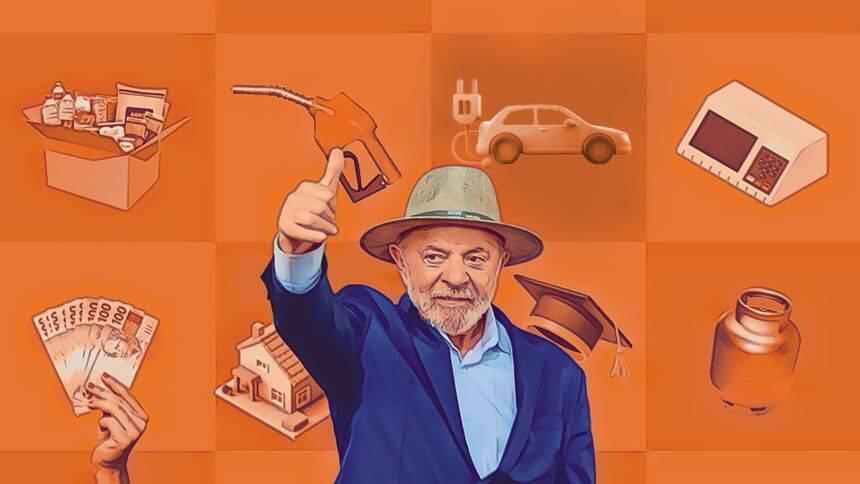
Other examples of decisions with fiscal impact, as listed by Andrade, include: the repeal of the blouse tax , since it will imply a loss of revenue; the suspension of fines for free-flow tolls ; and the subsidy for diesel and gasoline . In this case, it is an expense that can keep the demand for fuels higher.
A survey conducted by BTG Pactual and presented in the May Macro Scenario list lists 10 advanced or already implemented measures involving R$ 139.4 billion that should help expand GDP by 1.9% this year and 1.6% next year.
Among the measures listed by BTG are: income tax exemption up to R$ 5,000; Move Brasil 1 and 2; Payroll Loan, New Real Estate Credit Model, Desenrola 2 debt renegotiation program with FGTS (Brazilian employee severance fund); Luz do Povo (People's Light program); and Gás do Povo (People's Gas program ). And there's more.
Considered a “risk” by BTG are 11 other initiatives under study – six of them with values already estimated at R$ 199 billion. Among the proposals: Reduction of IPVA (Vehicle Property Tax); Free Buses; MEI (Individual Microentrepreneur) and Simples (Simplified Tax Regime) with an increase in the revenue limit; Reinforcement of the Climate Fund; Redata ( Tax Refinancing Program); and Retirement for Health Agents. If all the “items,” already underway or under study, are confirmed, the amount of resources involved could reach R$ 340 billion.
XP reinforced in a note distributed on Wednesday, May 20th, that the government accelerated stimulus measures, with four announcements in one month. And it issued an important warning: the understanding within the Ministries is that the main actions need to be implemented by July 4th, when the rules of conduct for the electoral period come into effect.
Including more recent measures, such as credit for ride-hailing drivers and taxi drivers, XP calculates that credit, subsidies, and income measures will have a potential impact in 2026 of up to 1.4 percentage points of GDP, almost R$190 billion. But it could be less because credit operations are not expected to use the entire volume of available resources.
An accelerating GDP
IBGE closes May with the first quarter's Gross Domestic Product (GDP) result highlighted in a busy agenda of data on activity, employment, and public accounts. A typical last week of the month, were it not for politics undermining the economy with expectations and speculation.
But the release of the GDP figures on Friday, May 29th, should bring some relief to the government. The outlook is for growth between 0.9% and 1.1% compared to the fourth quarter of last year, when Brazil had a meager growth of 0.1% that gave a boost to the 2025 GDP target of 2.3% - still a slip compared to the 3.4% observed in the previous year.
Considered "previews" of GDP – the Central Bank's IBC-Br and the Ibre FGV's GDP Monitor – they nevertheless allow for the expectation that the official data will positively surprise banks and consultancies. Published on Monday and Tuesday, May 18 and 19, these indicators fell in March, but advanced 1.3% and 1.5% respectively in the quarter. A good sign.
According to Focus, GDP will grow by 1.85% in 2026. However, some institutions do not rule out 2% or more. If the Central Bank's survey forecast is confirmed, Lula will end his third term with the economy exhibiting an average annual growth of 2.7%, despite programs launched over time, not just in recent weeks, that could further stimulate activity and/or increase Lula's and the government's popularity. Recent polls showed the president's approval rating between 46% and 48% and disapproval between 49% and 53%.
Upcoming polls could alter this picture, but political scientists are not yet betting on a turnaround. They point out that there is a difference between promising billions of reais to stimulate the economy and actually transforming measures into general well-being that is being undermined by high inflation, especially in food and transportation.
The end of the 6 x 1 system , currently in transit in Congress, could improve the scenario for Lula, who holds an advantage in voting intentions for both the first and second rounds of the election, according to Vox Brasil on May 20th, against his main opponent.
For now, Flávio Bolsonaro , since the senator, son of former president Jair Bolsonaro, fell from grace due to the leak of an audio recording in which he asks Daniel Vorcaro, owner of Banco Master , for money to finance a biopic of his father. This revelation was aggravated by his in-person visit to the "banker" while the latter was under house arrest.