

Three weeks before Brazil's World Cup debut against Morocco on June 13th at 7 PM in New Jersey, Heineken and Ambev are already seeing opportunities for growth in beverage consumption in the national market following the start of the competition.
A survey conducted by Citi polled 1,800 people in seven countries, including Brazil, the United States, Mexico, and the United Kingdom. Among Brazilian sports fans, the most frequently mentioned beer option was Heineken, with 40%, followed by Amstel, with 14%, and Brahma, with 10%.
When the analysis focuses on brand owners, the Dutch group leads in preference with 56%. Ambev appears with 40%, and the owner of Itaipava, 4%. According to the research conducted by the bank, Brazilian fans are the leading group in those who intend to increase their beverage consumption during matches.
“Brazilians stand out globally in their intention to increase alcohol consumption, with 58% of consumers predicting an increase in their intake of alcoholic beverages during the tournament (compared to 50% globally), while 26% plan to drink significantly more, the highest percentage among the markets surveyed,” says the report signed by analysts Renata Cabral and Luiz Felipe Terzariol.
Another relevant piece of data is that, among those who say they will drink more, 73% say they will increase their beer consumption. The global average is 64%. When the question is "drinking significantly more," Brazilians appear with 26%, followed by Mexicans with 15%, and Americans with 14%.
In this sense, the Brazilian multinational is already pricing in the importance of the World Cup for the company's financial results between the end of the second quarter and the beginning of the third. In its balance sheet for the first three months of the year, Ambev is already projecting actions to capture this market, especially those who will be watching from their sofas.
“As we approach the World Cup, our digital ecosystem will continue to play a key role in driving demand, leveraging the broader set of opportunities generated by the event. Together, the Bees and Zé Delivery apps continue to strengthen our execution, improve resource allocation, and support the scalability of our growth strategy,” says the company's report.
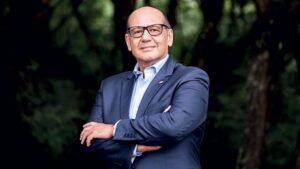
In the earnings call, Ambev CEO Carlos Lisboa expressed optimism regarding Brazil's matches and the holidays this year, even though the beer industry recorded a decline in the first months of the year.
Nevertheless, Ambev reported 1.2% growth in volume for the quarter. In the premium segment, precisely the area where there has always been greater competition with Heineken and which the Brazilian multinational took the lead in after 10 years, starting in the third quarter of 2025, Ambev showed growth close to 20%.
The company's revenue in the first quarter was R$ 22.46 billion, a decrease of 0.1%. Net income, at R$ 3.88 billion, was 2.1% higher than the same period of the previous year.
Heineken closed the first quarter with a drop in volume, between 1% and 3%, influenced precisely by the lower sales level. Even so, revenue in Brazil increased by a mid-single digit, according to the company. The Dutch group does not disclose results by country.
As a strategy, Heineken launched its lower-alcohol, 30% lower-calorie version, called Heineken Ultimate, globally, first in Brazil. Distribution in the country begins this month in São Paulo and Minas Gerais.
In Citi's research, 83% of Brazilians surveyed said they intend to watch the games at home with friends and family, compared to 48% in the United States. On the other hand, 43% of Brazilian fans want to watch in bars or restaurants, well above the global average of 35%.
Citi analysts see factors contributing to increased consumption in Brazil, in addition to the World Cup, such as the higher number of holidays falling on weekdays in 2026 compared to last year. There will be a total of 14 holidays, compared to 11 in 2025.
Most of it occurs during long weekends, which, in Citi's view, amplifies the opportunity for consumption.
But the analysts' thesis also presents risks, including the on-field performance of the group called up by the Italian coach, such as the expectation surrounding Neymar's announcement.
“An early elimination from Brazil could reduce the consumption momentum. Consumer spending may also be limited by high household default rates, and demand for premium beer may suffer from accessibility/price pressures,” the report states.