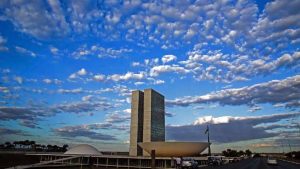



The Brazilian market is subject to a "blackout" or a significant contraction in operations between April 20 and 24, due to holidays that paralyze the country's main financial trading centers: the national holiday of Tiradentes Day, Tuesday the 21st, and the state celebration of Saint George's Day, on Thursday the 23rd, patron saint of Rio de Janeiro.
Holidays are conducive to long weekends – a characteristic of this year's calendar that could, ultimately, interfere with retail, service, and price statistics due to changes in consumer behavior. For investors, the mismatch in the calendar with global financial negotiations imposes additional risk. Not necessarily losses.
The Brazilian stock exchange, B3 , based in São Paulo, will be closed on Tuesday the 21st. However, the Rio de Janeiro stock exchange's two-day break should not be disregarded, given the significant presence of asset management firms in that city. This shorter week, with fewer local economic indicators, could be dedicated to addressing other issues that directly or indirectly affect asset prices.
Among them are the negotiations between the US and Iran regarding the conflict in the Middle East, with the ceasefire ending on Tuesday the 21st; the Senate hearing, also on Tuesday, of Kevin Warsh , nominated by Donald Trump to replace Jerome Powell as chairman of the Federal Reserve; the formalization, by Wednesday the 22nd, of the adherence of state governments to the measure subsidizing diesel imported by Brazil; and the possible announcement of measures for renegotiating debts that the Lula government has been releasing piecemeal.
The agenda may still give way to the repercussions of debates held between April 13 and 18 at the International Monetary Fund and the World Bank. These debates, in short, concluded that war and high oil prices conspire to lower growth and higher inflation worldwide – a context in which Brazil is less negatively affected because it is a net exporter of oil.
In the government, the week should also be concise, since President Lula and the delegation that accompanied him on a trip to Spain, Germany, and Portugal, which began on April 16, are expected to conclude their journey on Tuesday the 21st. In Brasília, the week will begin on Wednesday.
Lula's visit to Europe for political and commercial events and meetings with business leaders involved 14 ministers and presidents of state-owned companies – BNDES and Petrobras being prominent examples. On the agenda were discussions and/or agreements on critical minerals, Defense, Transportation, Energy, Infrastructure, Finance, and the Mercosur-European Union agreement , which will provisionally begin on May 1st.
Oil "helps" Brazil, but the bill is coming due.
For the government and the private sector, the assessment that Brazil is in a better situation than several countries affected by the oil price war is comforting. "The statement is true, but it should be analyzed with caution," notes Étore Sanchez, chief economist at Ativa Investimentos.
Speaking to NeoFeed , the economist observed that Brazil's net oil exports are also reflected in exporting companies, increasing the value of their shares. However, he says, in a sectoral analysis, especially of companies that use oil and its derivatives as inputs, the rise in oil prices increases production costs. And the difficulty in passing on the price increase lowers productivity and raises the cost of the economy as a whole.
Sanchez agrees that tax revenue is rising, but inflation will take its toll. For example, with pressure for salary adjustments. A process that, he recalls, the country experienced in the 1980s. The rise in oil prices does more: it also exposes Brazil's weaknesses.
One of them is the dependence on fertilizers, which can increase the cost of food for Brazilians, especially for products that involve a long production chain. Another weakness is macroeconomic and fiscal. "And in the current scenario, the fiscal issue gains relevance. Agents become more hesitant to invest in the face of a conflict of unimaginable magnitude. Investment and consumption decisions are postponed, which can even affect government revenue."
According to Sanchez, the greater the external shock, the greater the fiscal impact. "And if it also requires spending, as is happening with diesel, it's even worse. Of course, while there's a smokescreen of war, fiscal policy takes a backseat. But eventually that smokescreen comes down and reality appears," he warns.
The October elections in Brazil are relevant for investors, says Sanchez. “In the past, information had a more restricted reach. There was even a language barrier. Investments occurred in an institutional sense. Today, however, with virtually instantaneous access to information, investors are cautious, especially because the return on investments depends on the direction the country will take.”
“In the current scenario, if we talk about Flávio Bolsonaro or Lula, we are talking about fiscal projects and a concept of nation that are absolutely distinct. If one tends to favor private initiative, the other defends greater state participation. So, how can we invest, for example, in Construction or Education stocks, based on the platforms of one or the other? And how can we invest in sectors that promote development and long-term returns, sometimes 15, 20, or 50 years, as in the case of Infrastructure? What kind of Brazil will we have in the future?”
Regarding the strength of the stock market and the ample supply of foreign capital, which might suggest that Brazil has moved to a higher level for foreign investors, the chief economist at Ativa believes that if anything had changed, Brazil's risk rating should not be aligned with its peers.
He explains that there is confusion regarding the flow of resources destined for the Stock Exchange and for Brazil. “I don’t see ‘new’ foreign capital entering the Stock Exchange. But we have foreign capital here that was, for example, invested in Treasury bonds that matured. In February, R$ 350 billion worth of these bonds were redeemed. In March, R$ 170 billion.”
The stock market is benefiting from this rotation. But was all this money reinvested in bonds, or did some of it take advantage of the good market conditions and current liquidity and switch markets?