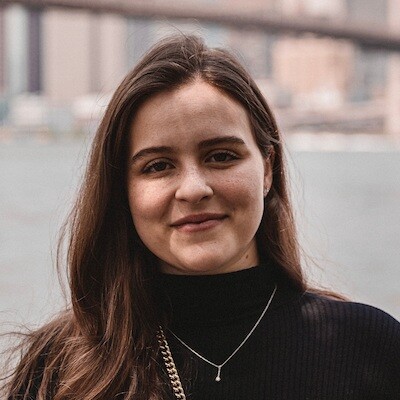


When analyzing Gabriel Bortoleto's debut season in Formula 1, the numbers might suggest it was disappointing. The young Brazilian driver, just 21 years old, finished the championship in 19th place with only 19 points – his best result being 6th place in the Hungarian Grand Prix.
But for a rookie dealing with the pressure of being the first Brazilian in seven years to be on the F1 grid, statistics aren't enough to classify Bortoleto's performance. Suffice it to say that he rivaled his teammate, the experienced German driver Nico Hulkenberg, and was praised by Jonathan Wheatley, head of the Kick Sauber team.
“We had high points, with great results, and some slightly scarier moments, like the Brazilian GP, where I had a hard crash. But, if I'm being completely honest, it was a very, very good year,” says Bortoleto, in an interview with NeoFeed .
The outlook for 2026 is completely different. Bortoleto's team will no longer be called Kick Sauber and will simply be Audi, after the team was acquired by the German manufacturer from the Volkswagen group in early 2025.
And, no less importantly, F1 is undergoing a transformation rarely seen in the history of the category. With smaller, more agile cars and a hybrid engine, where 50% of the power comes from the battery and 50% from fuel combustion, the game will become even more competitive – which is positive for Bortoleto, who will now be playing on an equal footing.
“Audi has been victorious in every sport it has decided to enter, and I know that Formula 1 will be no different, but we have a lot of work ahead of us,” says Bortoleto. “It’s the first time they’re building a car and I don’t think we’ll be winning races from the start, but I believe we’ll get there.”
In this interview, which you can read below, Bortoleto talks about his career path (he started in 2011 in the junior karting categories and won in categories such as Formula 4, 3 and 2), assesses his debut season and discusses his prospects for 2026:
Many drivers try, but almost none make it to Formula 1. What made you achieve this milestone?
I believe that many times it's about being in the right place. In the Formula 3 and Formula 2 categories, I had great opportunities with the teams, I did a good job, I was consistent, and I had a good championship. And that caught the attention of the Formula 1 teams.
I know these past two years were crucial in getting me to where I am today, but the entire journey also made a big difference. I went to Europe at age 11 hoping to pursue this dream, and even with impressive results in karting, I went through very difficult times to progress in the sport. But I don't regret it. I think those moments made me a stronger driver and a stronger person, enabling me to achieve even greater results.
What did you have to give up?
Look, I believe it's obviously from my childhood. Leaving my family and friends behind to live alone in Italy, going months without seeing them, was a huge challenge. For an 11-year-old, that's very difficult. But I had so much ambition to reach Formula 1, and it was such a big dream for me, that I never felt that longing so much. And when I did feel it, I remembered why I was doing it, and everything became easier.
2025 was your first year as an official Formula 1 driver. How would you rate your season?
It was a special season. We had some highs, some great results, and some slightly scarier moments like the Brazilian GP, where I had a hard crash. But to be completely honest, it was a very, very good year.
Going head-to-head with my teammate, who is an extremely experienced Formula 1 driver, in my very first year, was something I perhaps didn't expect right away. But we went neck and neck throughout the year, which was great. And having the team recognize that we're doing a good job, despite the car's limitations, is very rewarding.
"We will have more responsibilities from now on, with the expectation of developing a good car that can compete for titles at some point."
You are considered one of the most promising newcomers in the competition. Do you see yourself that way?
I believe so. I understand what we went through this year, the car we had, and the results we achieved, so this title makes sense.
Now with Audi and a new car model, what are your expectations for 2026?
Audi has been victorious in every sport it has decided to enter, and I know that Formula 1 will be no different, but we have a lot of work ahead of us. It's their first time building a car, and I don't think we'll be winning races from the start, but I believe we'll get there. It's a process of building, without a doubt.
I still have a lot to learn in this next year, my second in Formula 1. And, as a team, we will have more responsibilities from now on, with the expectation of developing a good car that can fight for titles at some point. It will be a big challenge, but I am very excited to participate in this new project and be part of this new phase.
What do you believe is missing for us to have more Brazilian drivers reaching the elite of motorsport?
I believe the scenario is different today. We see many large companies supporting young talent, something that didn't happen as often in the past. And this is very important because the euro is becoming increasingly expensive, and if you depend on your own money, it's very difficult to get to Europe, where you can really start to stand out.
Throughout my journey, this has been essential. I've had the support of major companies like Qualcomm, Snapdragon, and Motorola, and today I have many other partnerships that help me go further. Without this support, I probably wouldn't be here talking about my journey. I've never set limits for myself, and I'm not going to start now. This was just my first year, and I want to go much, much further.