

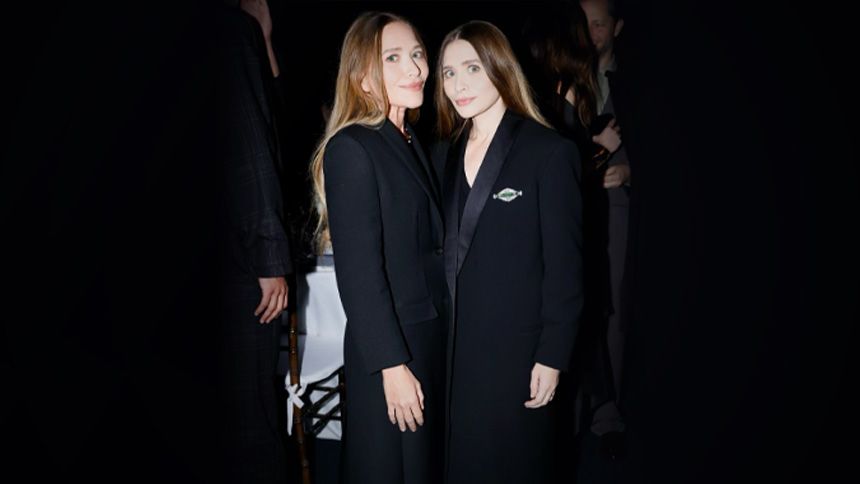
The exclusive club of high-end fashion has always seemed reserved for centuries-old fashion houses like Chanel , Hermès , and Louis Vuitton . The American brand The Row, however, subverted this dominant logic. Founded in 2006 by twins Mary-Kate and Ashley Olsen, the brand has built, over two decades, a prestige that usually takes generations to consolidate.
With minimalist design, perfect cuts, impeccable finishes, and high prices, The Row is the contemporary star of quiet luxury : a (nearly) anonymous territory where sophistication is discreet and elegance dispenses with ostentation. Those who know, recognize—and that's enough.
To give you an idea, the Olsen sisters' brand's pieces registered the third highest appreciation in the market, reaching a 146% increase in the last 12 months, according to the annual survey by Rebag, an American luxury second-hand platform. It was only behind Hermès and Goyard, ahead of the cult brand Miu Miu, from the Prada group.
“The brand’s success is due to its positioning, focused primarily on scarcity, extremely high quality, and what we call a kind of perceived anonymity — that ‘ if you know, you know ’ attitude,” explains Lorena Borja, a specialist in behavioral, fashion, and beauty trends and owner of the Lollab consultancy, to NeoFeed . “With this strategy, The Row generates desire and curiosity for items that few can afford.”
Former child television stars in the 1990s and 2000s, the twins, now 39, have been careful from the start to never associate their celebrity status with the brand's identity. A move considered a smart one by fashion industry analysts, as it positioned The Row as a serious fashion house, not at all prone to fads.
Mary-Kate and Ashley have always remained very discreet behind the scenes, letting The Row speak for itself — and it, without fanfare, did speak.
The shows are always for a small number of guests, and the use of cell phones is prohibited. "There are no backstage interviews or glamorous parties like those of Marc Jacobs or Diane von Furstenberg, and they also don't reveal the names of their clients—although Jessica Biel, Julianne Moore, and Michelle Obama have all been seen wearing The Row," reads an article in The Wall Street Journal .
In the age of overexposure on social media, "silence" increases the air of mystery and maintains the buzz around the brand. With handbags around US$5,000, shoes at US$1,500 and virgin wool and silk coats at almost US$8,000, for example, The Row focuses on high-net-worth clients, allowing the brand to navigate the crisis affecting the global luxury market with relative ease.
“If you collect $3,000 sweaters, economic fluctuations probably won’t affect your disposable income much,” says Jess Graves, editor of the shopping newsletter The Love List, to the Business of Fashion platform. In other words, The Row positions itself as a good long-term opportunity, attracting major players in the luxury market.
In 2024, the funds Mousse Partners and Téthys, belonging to the Wertheimer family, owner of Chanel, and the Betencourt Meyers family, owner of L'Oréal , respectively, acquired a minority stake in the Olsen family's business.
Also participating in the investment were Natalie Massenet, founder of Net-a-Porter, and Lauren Santo Domingo, co-founder of Moda Operandi. At the time, The Row was valued at US$1 billion.
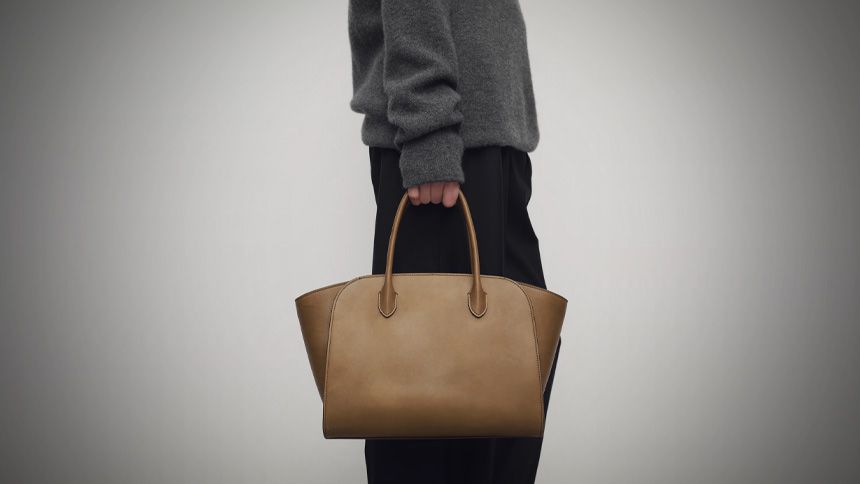
That year, searches for the brand increased by 93% in the first quarter alone, while the Margaux bag, one of the brand's most famous models, was declared the most desired product of the period — with due respect to the differences, the piece is frequently advertised as the "new Birkin," in reference to the Hermès bag, the ultimate symbol of luxury, a kind of legend in the world of high fashion.
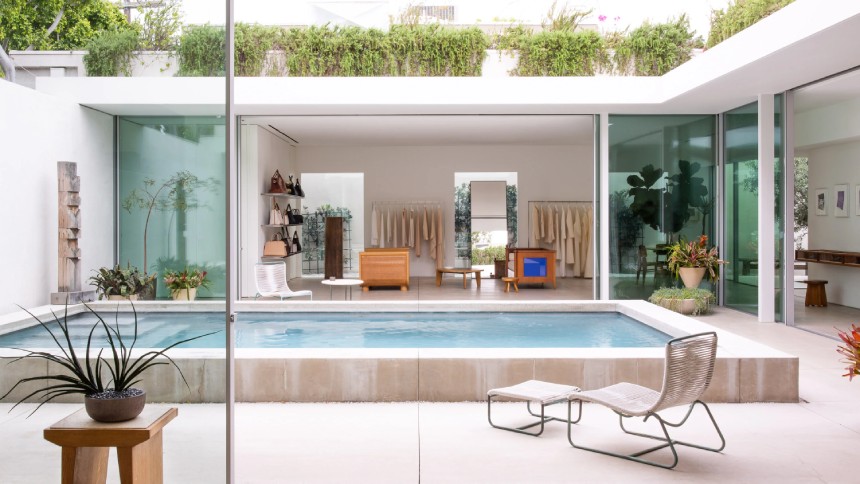
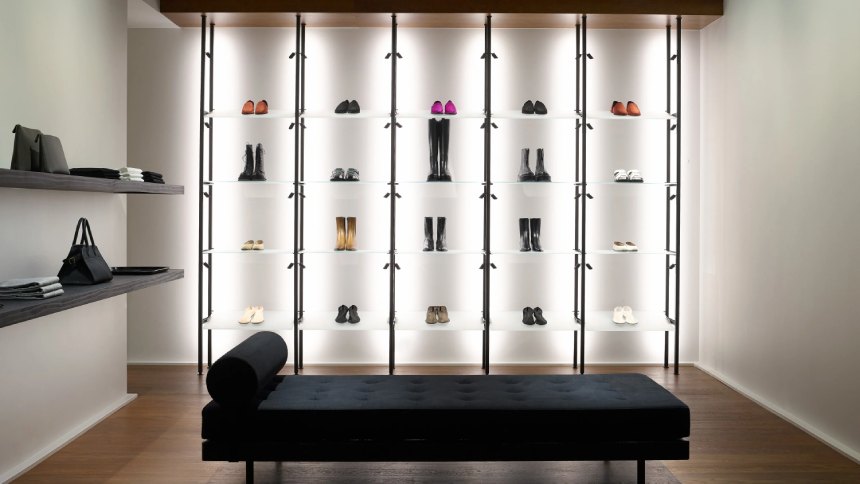

Now, The Row is experiencing a turning point. “The biggest challenge is maintaining its 'cult' status, with exclusivity and silence, while scaling globally,” says Lorena Borja. “To avoid this backlash, the brand has done a good job connecting minimalist luxury to functional and versatile pieces, creating a true uniform of discreet power.”
For many, The Row is on its way to transcending the boundaries of a fashion brand and transforming itself into a representative of a discreet and timeless lifestyle. A move very similar to that made early in his career by Giorgio Armani (1934-2025). Indeed, like the Italian designer, Mary-Kate and Ashley incorporate many of the codes of the men's wardrobe into their women's collections.
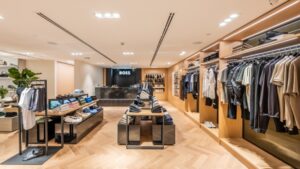
Currently, the brand only has five stores: three in the United States and two in Europe, in Paris and London. There is still room to grow without risking a loss of quality. But that, for now, doesn't seem to be the twins' plan—at least not in the short term.
According to the British newspaper Financial Times , The Row's annual sales are around US$250 million to US$300 million, with an operating profit of approximately US$60 million.
While they prefer discretion today, Mary-Kate and Ashley grew up in the Hollywood spotlight. At nine months old, they were cast as Michelle Tanner in the ABC sitcom Full House —the sisters alternated in the role. Later, other series and films would follow for the family.
Between the 1990s and early 2000s, the twins were everywhere. Through the company Dualstar, founded with their managers, they licensed a wide range of products. At age 12, they made their first foray into the fashion world, with a line developed for Walmart — “Real fashion for real girls” was the slogan.
Six years later, they traded their Los Angeles studios for New York University, where the idea for The Row was born. They began by searching for the perfect t-shirt for all body types.
Introduced in 2006, the first collection consisted of only seven pieces—including a pair of cotton satin leggings and a cashmere tank dress, in addition to that first t-shirt . The boutique Barneys New York bought them all.
"From the beginning, we saw them as designers," Tomoko Ogura, senior fashion director of the store, told The Wall Street Journal in 2012. "Just look at the integrity of the design, the quality of the materials. When we touch and feel the product, we don't think of Mary-Kate and Ashley as celebrities; we see them on the same level as some of the best designers in the world. Despite their young age, they have a very sophisticated sense of style."
And so, the Olsens retreated backstage so that The Row could shine on its own. Incidentally, the brand's name was inspired by the legendary London street Savile Row, famous since the mid-19th century for its handcrafted, bespoke tailoring.