

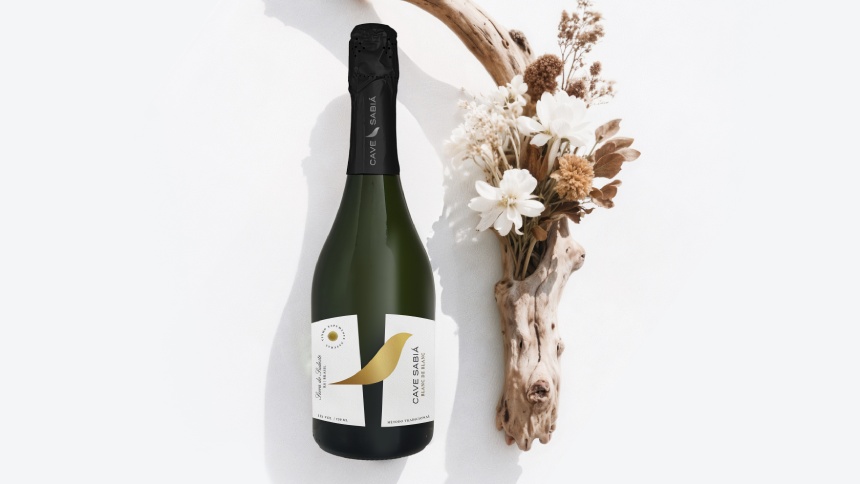
The desire to venture out, coupled with the ability to surround themselves with competent people, transformed the Sabiá name into a Brazilian luxury brand in less than five years. It was this success that encouraged the São Paulo couple Bia and Bob Costa, creators of one of the most awarded olive oils in the country, to embark on new challenges. Their most recent adventure was creating Cave Sabiá, a sparkling wine produced in Encruzilhada do Sul, Rio Grande do Sul, under the guidance of Italian winemaker Massimo Azzolini.
The product, which is expected to hit the market in February of this year, was a long-held dream of the couple. Before starting olive oil production in Santo Antônio do Pinhal, in the Serra da Mantiqueira mountain range , they considered planting grapes . Later, in Encruzilhada do Sul, alongside companies like Valduga and Lídio Carraro, they realized the time had come. There, they planted two hectares of Chardonnay and Pinot Noir grapes for the production of sparkling wine.
“The region has a very strong vocation and Brazilian sparkling wine is of exceptional quality. There's also that old saying about not putting all your eggs in one basket,” Bob tells NeoFeed .
In this new phase, winemaker Azzolini, who works in Franciacorta and Trentino, regions that produce the best Italian sparkling wines made using the traditional method (the same method used in the Champagne region of France) , came into play.
He says he was enchanted by southern Brazil and the region that welcomed Italian immigrants who brought with them the culture of wine, something that has more than two thousand years of history and tradition and that the Romans spread throughout the world.
The first label from Cave Sabiá is the Grande Cuvée - Brut and will cost around R$ 180. This year, two more will be launched: Cave Beatriz and Blanc des blancs, which will have a higher price, but not yet defined.
“I am very pleased with the result we have achieved for such a young product. We will make great sparkling wines in Encruzilhada do Sul, which will be an expression of the Chardonnay of the terroir,” says Massimo.
There's more. Next week, on January 30th, the Sabiá Olive Oil pizzeria will be inaugurated at Fazenda do Campo Alto, in Santo Antônio do Pinhal, where olive production began. In three months, a line of cosmetics made with olive oil, which have undergone a testing period, will also join the Sabiá family.
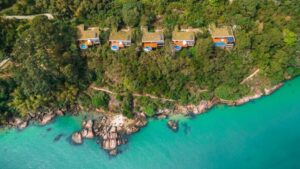
The pizzeria has contemporary architecture and is entirely glass-enclosed, integrating seamlessly into the landscape of the Serra da Mantiqueira mountain range. The style is rustic-chic: stone floors and light wood tables. The pizzaiolo, also Italian, Dani Braga, has been in Brazil for 20 years. “It will be a place to bring everything together: olive oil and sparkling wine,” summarizes Bia.
The formulas for the cosmetics made with olive oil were developed by pharmacist Bete Vicentini Rosin, who worked at Natura for several years. The fragrances were commissioned from an Austrian company. The line includes moisturizer, liquid soap, body oil, and hand cream.
Another new product in March is the arrival of Sabiá olive oil, fatto in Italia. For the second consecutive year, to avoid running out of fresh olive oil after the end of production, the entrepreneurs have created an Italian version of the brand with varieties that are practically unknown to Brazilians.
Last year it was the Itrana olive, from the Campania region. Now it's the turn of the Piscottana, harvested from centuries-old trees in the Cilento region, on the property of Nicolangelo Marsicani, Sabiá's consulting olive oil expert and an international reference on the subject. The 250 ml bottle will cost around R$ 100.
“Let’s stop here, for God’s sake. It’s too much work, we can’t handle it,” says Bob, in an informal conversation that also included Bia and Massimo, while they were presenting the first bottles of Cave Sabiá.
As if all that work wasn't enough, the couple also works in another field. Bob is a founding partner and chairman of the board of the agency Nova SA (formerly NovaSB), where Bia is the director of special projects. She started her career as a journalist, he graduated in business administration from the Getúlio Vargas Foundation, worked in the communications department of the FHC government, and ended up in advertising.
“When I was leaving Fernando Henrique's government and Lula was arriving, a director from Ambev asked me if I could take on a responsible consumption account. This was because of the work I had done against cigarettes and in favor of generic drugs. That's how the agency was born,” he says.
To handle so many activities, they spend Thursday through Sunday at the Mantiqueira farm, and sometimes longer. On Mondays and Tuesdays they run the agency, and on Wednesdays, when Bob travels to Brasília, Bia takes care of the Sabiá world. She goes to the stores, checks how the products are displayed and stored. From one week to ten days a month they spend in Rio Grande do Sul.
Looking back on their growth, Bia says they went along somewhat without thinking. “It started, we kept doing it, we enjoyed it, and it was always very enjoyable. Very challenging and difficult. But if I had known the difficulties of this path, I wouldn't have done it. I really enjoy my day-to-day work, I'm proud of what I've done, but if we didn't have financial support, we would have stopped already.”
Bob adds: “I also think that if we had rationalized things before starting, maybe we wouldn't have done it. But we were very lucky, that was the difference. We brought together very cool and competent people in this process, which brought a very good energy. Then one thing leads to another: you dive in headfirst and do everything with passion.”