

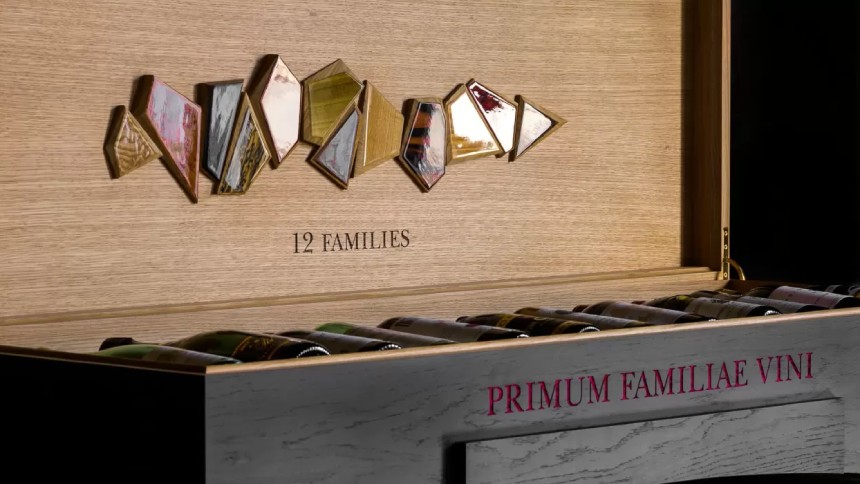
Inspired by a full wine case containing only 12 bottles, an exclusive club of family-owned wineries is battling to keep its "inner circle" of 12 wineries scattered across Europe intact.
With 2,800 years of experience in viticulture spanning 85 generations, the small group called Primum Familiae Vini (PFV) was founded in 1991 and has only one intention: to create a perennial business model capable of transcending generations by combining high standards, innovation, and responsibility.
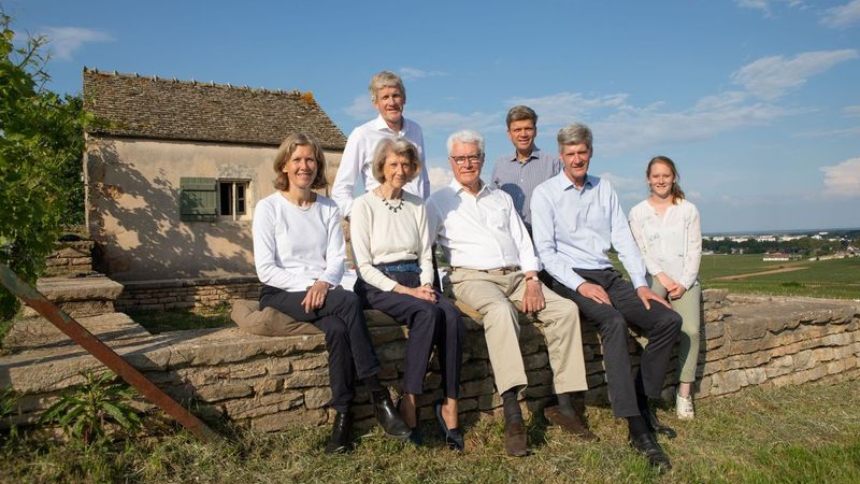
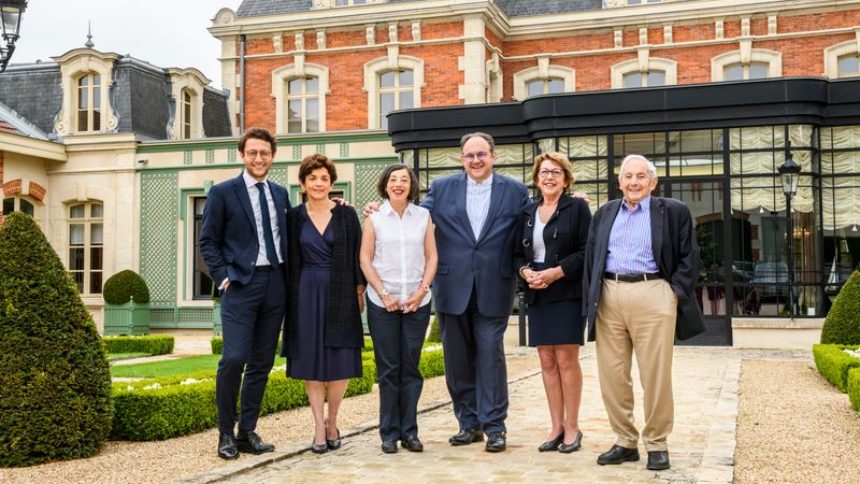
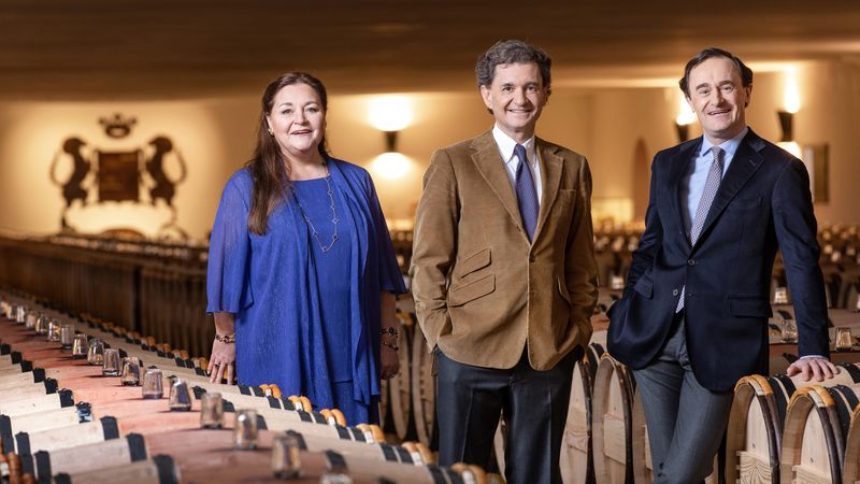
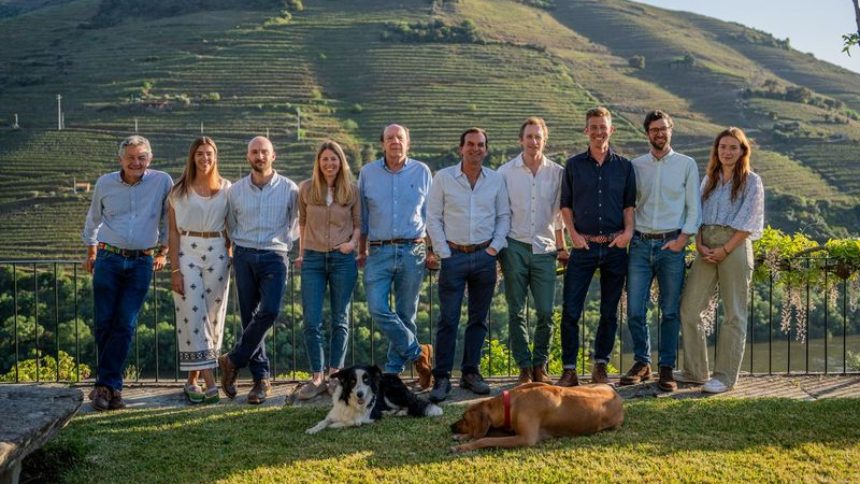
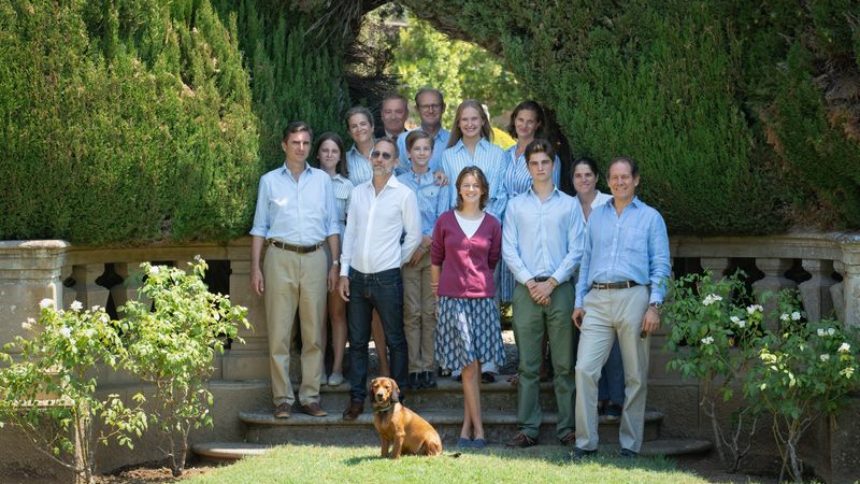
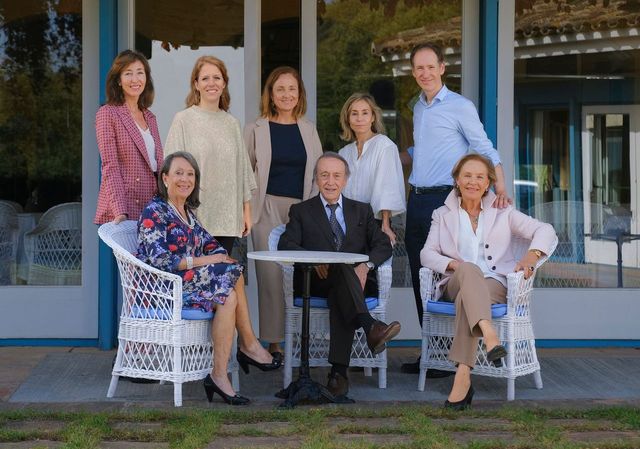
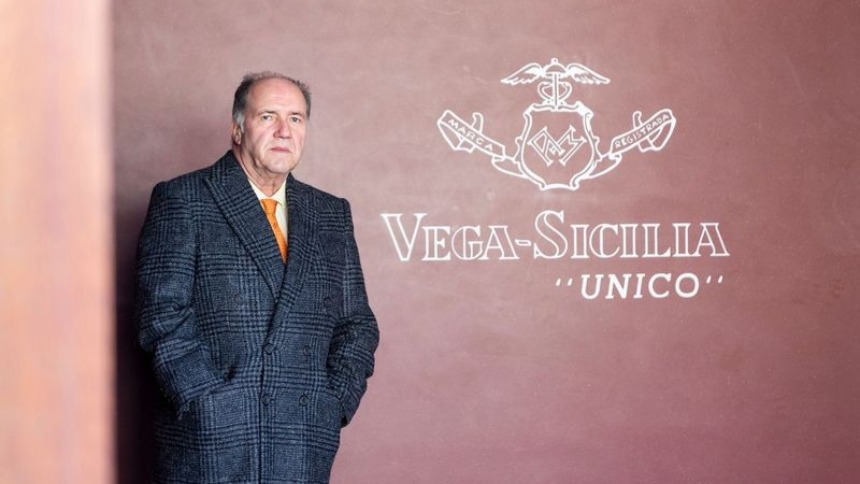
All this is achieved through the exchange of experiences and information among the members. The small committee is composed of the owners of the wineries Egon Müller Scharzhof, from Germany; Baron Philippe de Rothschild, Domaine Clarence Dillon, Hugel Family, Famille Perrin, Maison Joseph Drouhin Champagne Pol Roger, from France; Familia Torres and Tempos Vega Sicilia, from Spain; Marchesi Antinori and Tenuta San Guido, from Italy; and Symington, from Portugal.
The challenges, however, are many. They range from keeping these properties effectively in the hands of families, something that has become increasingly complex with globalization and the growth of large groups like LVMH and Pernod Ricard, to the dilemmas of climate change and technological advances.
“Since Covid-19, we’ve realized that our main asset is being a family business, you know? And we’re not, as some people imagine, ‘dinosaurs’ stuck in the past,” says Christophe Brunet, Secretary-General of Primum Familiae Vini, to NeoFeed .
"On the contrary, we are always investing a lot of money in research and development because we know exactly what it's like to go through crises and wars and come out of them alive," he adds.
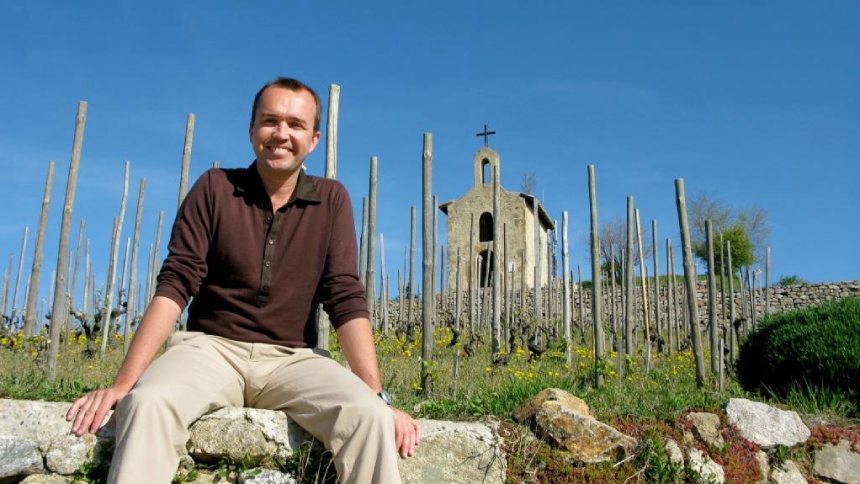
The businessman, who has held the position of administrator in the group for 16 years, has a personal background linked to food and wine. French, he watched his parents work hard in their own restaurant throughout his childhood and knew he wanted to pursue a career in something related to the industry. At 18, he discovered his love for wine and decided he would work with the beverage – becoming a sommelier.
From there, he worked at places like the famous Parisian restaurant La Tour d'Argent, which is over 440 years old, and also held a position at the restaurant of three-Michelin-starred chef Alain Ducasse. He then spent six years in London before taking a sabbatical in 1994 to explore the world of wine outside of Europe. In a short time, he fell in love with PFV.
With all his experience, the businessman talks, in the interview you will read below, about the association's next steps, the challenges to be faced, and the achievements reached over 35 years.
How was Primum Familiae Vini created?
In the summer of 1991, Miguel Torres, from the Família Torres winery, went to Burgundy to meet with Robert Drouhin, from Joseph Drouhin. They were discussing several important family matters, and from that conversation came the decision to build what is now PFV, although the project has evolved over time.
What happened?
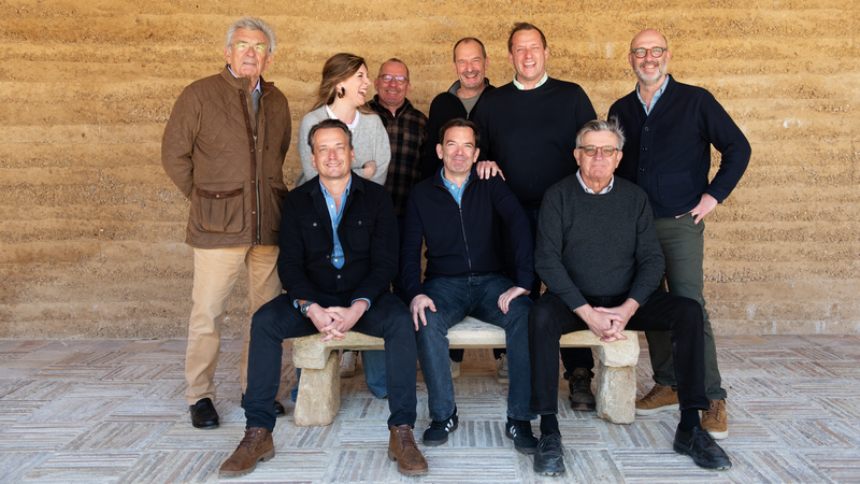
Shortly after that meeting, they contacted other families. It all started with Antinori in Italy and Mouton Rothschild in Bordeaux. In 1993, the Primum Familiae Vini association was officially founded. It has changed over the years because it is necessary to be a 100% family-owned company to be part of it. Today we are 12 families, six from France, two from Italy, two from Spain, one from Portugal and one from Germany. These 12 families together represent about 2,800 years of business history. Some of them are already in their 27th generation.
Is there any other association in the world that has the same characteristic?
There is no other wine association like this in the world. There was one that was created in New Zealand, but it ended after ten years because they couldn't coordinate it properly. It's very difficult, firstly, to keep it alive and make the association really function and act jointly, since they are all independent companies, managed very efficiently. I can say with certainty: I myself have managed this association for 16 years and this is, without a doubt, our strongest moment in the last 30 years.
"We are investing a lot of money in research and development, and we are fully aware of this because we also carry the experience of wars and crises."
Is the fact that the group is made up of family businesses a competitive advantage?
Absolutely. Since Covid-19, we've realized that our main asset is being a family business, you know? And we're not what people sometimes imagine when they think of a family business—a dinosaur. We're not simply standing still based on what we've already learned or what we already have. On the contrary, we're investing a lot of money in research and development, and we're fully aware of that because we also carry the experience of wars and crises. Imagine Antinori, Torres—they all went through the First World War, the Second World War, and much more than that. So, it's a real privilege to share this expertise among us, among the 12 families.
And what are the challenges of keeping these companies within the family?
Nowadays, there are many things in the world that work against family businesses, especially when it comes to passing on the culture. The world is changing very quickly, with all the tools we have. Therefore, it is crucial to ensure that the next generation starts from a very young age to develop the ability to understand what a family business is, because this is a very difficult aspect in the current context. There is more knowledge available, yes, but the central issue is this transmission.
But what is the main difficulty?
One of the main challenges is successfully passing the business on entirely to the next generation. This was already difficult in the past, but I believe it's even more complicated today. And this varies from country to country. In some countries, like Spain, at a certain point the government itself made the transfer of family businesses unfeasible. We observe, for example, that Italy and Japan have many more family businesses that have spanned generations than Spain or many other countries. So, our mission is to understand why and how to make this transfer in the best way.
Do you feel that younger people are interested in business?
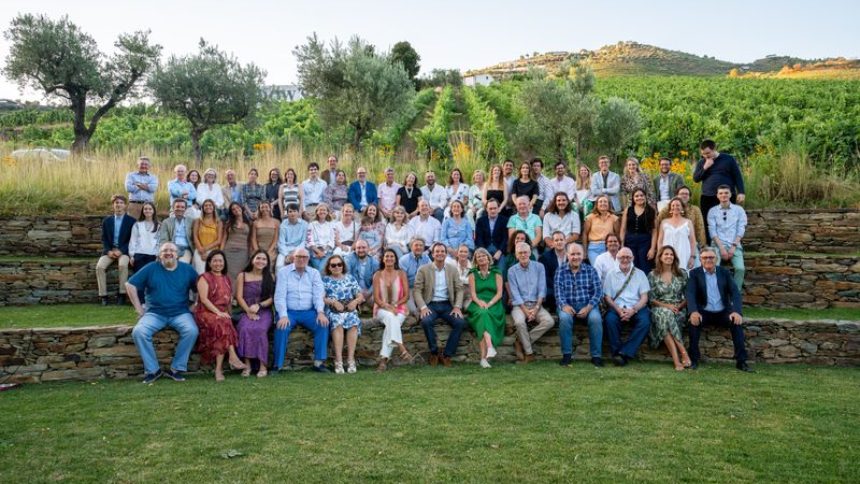
This is something very interesting. We have an annual meeting every year in July, and have been doing so for many, many years. In the beginning, about 16 years ago, there were 40 or 50 people. Today, sometimes we are 150, because they also bring their children. So, the children interact with other children, you know? And they end up asking things like: 'Oh, and how do you do it? I see that your parents travel a lot, but how do they work, how does everything work?' This really helps to involve the children as well, to get them to share experiences with each other.
When considering keeping the business in the family, does competition become a problem?
Absolutely. In our case, in the wine sector, vineyards in the 1970s had very low value. Nobody wanted to invest in wine at that time, neither in Bordeaux nor Burgundy. The land was practically worthless. Today, you see billionaires like Bernard Arnault or François Pinault, for example, acquiring properties like Château Latour and Château d'Yquem. They buy many family businesses that couldn't be passed on. These groups are there, waiting for these opportunities, and they are very happy because they built their empires from the fragility of family businesses. And we don't want to be a closed group of people. But, within PFV, we understand this: together, we are stronger, especially in exchanging information.
"Today, billionaires like Bernard Arnault or François Pinault acquire properties such as Château Latour and Château d'Yquem. They buy many family businesses that have not been successfully passed on."
Speaking of traditions, which ones are still maintained today?
For us, the question is: what can we preserve from what people have been doing for many years, and what needs to change? How do we find that balance? In recent years, we have realized that artificial intelligence can indeed help us, for example, to better understand vineyards and to better understand climate change, which is a fact. But we have also realized that AI will not be able to manage tradition or the knowledge accumulated over the years.
What can be done?
When you look at most families, they have at least 100 years of history; some even reach 700 years. They know the land, the terroir, and know exactly how to react to certain vines. This knowledge is extremely important. We are, in a way, guardians of this tradition. Today, pragmatically, the challenge is to apply this legacy in conjunction with AI and current technologies.
For you, between the climate crisis, generational changes, and lack of capital, what is the biggest challenge facing PFV right now?
Climate change is one of the greatest challenges of our time. Of course, it's an issue we've been following for about 30 years, but back then the impacts were more concentrated in the Pyrenees; today the situation is much more serious, much more relevant. The great challenge of climate change is managing to continue producing great wines in regions that are becoming drier. Countries like Portugal and, especially, Spain are being heavily affected—we see this clearly. And there's nothing better than sharing experiences between families from different regions. Now, we need to adapt, perhaps to the grape varieties, perhaps to the way we cultivate. And I hope that one day we can better communicate what we do together, as PFV, in relation to climate change, because there are very rich discussions taking place. Without a doubt, this is one of the main themes for the future.
And what about generational changes?
Generational changes are also an issue. We know that people are increasingly concerned about health, low alcohol content, and that wine shouldn't be associated solely with alcohol or major problems. We also know that wine consumption is declining. But I have high hopes that young consumers will make more conscious choices as they better understand the product and who is behind it.
"We know that people are increasingly concerned about health, about low alcohol content, and that wine should not be associated only with alcohol or major problems."
Is there a different perspective on wines when they are seen as part of the PFV (Professional Value Processing)?
This issue is very relevant because today some families already put our small logo on the back label of the bottles. We've been doing this for many, many years, but PFV is still not very well known—it's not yet a brand—but we're working on it.
In what way?
We believe that 'Primum Familiae' — the term 'primum' — means, first and foremost, family. It doesn't necessarily mean being the first; it means, above all, that we are a family. And we believe that this small logo can become something strong in the future. People could say: 'ah, this is a wine from PFV, from Primum Familiae Vini. I know this association, I know the quality standard of the work they do.' That's what we're building. We would very much like that, in 10 or 15 years, globally, people would say: 'wow, wines from Primum Familiae Vini, they work together, they work with quality, and that's a great asset.' I would say that today we haven't gotten there yet, but we are building it.
And what is the future of PFV?
Honestly, the future is very promising. I mean, I'm 56 years old myself. I've worked in the wine world since I was 18. That's 15 years of summers dedicated to it. So I've seen a lot, and I know I probably won't be here when PFV is even stronger, but I believe we're living through one of our best moments in terms of the future. An organization like ours, a family entity like PFV, has a bright future, but it needs to be very careful. Families need to talk to each other, share information, and also be very open with people. I remember that, 20 years ago, people might have thought PFV was something very closed off, very focused on internal meetings. Today, we do many things externally, so that people also understand who we are.
And how do you do that?
We have a great example. We are organizing an event on February 10th, to which we have invited around 350 people, with the aim of showcasing what PFV is today. Because PFV's DNA currently revolves around an award—the PFV Award—which we grant every two years to a company in the world, outside the wine industry. The award consists of €100,000 destined for a family-run artisanal company. It is always a family that shares the same values that we believe a family business should have. It's an initiative we've been building for six years and it still holds surprises.
What were the latest surprises?
So far, we've had three winners: one from Belgium, another from France, and most recently from Japan. Furthermore, in the coming months, we'll have many events to strengthen our brand. In March, we'll be in Asia—in Singapore, Hong Kong, and Tokyo. In February, I'll be in Stockholm and Munich. We're going to have an event in Australia, in Sydney; in Mexico; in London… In other words, many, many things are happening this year.