

The start of the year is proving to be a busy one for a group of Brazilian winemakers. Founders of six boutique wineries in Minas Gerais and Rio Grande do Sul , they are rushing to get the paperwork in order to allow their wines to be shipped to France , one of the most traditional and demanding consumer markets in the world.
The group is part of the Vin du Brésil project, spearheaded by Frenchman Benoit Mathurin, chef of the Esther Rooftop restaurant in downtown São Paulo. A fan of Brazilian wines, Mathurin partnered with Italian businessman Giovanni Montoneri and Guilherme França of Intrust Associates to create the exporting company Vin du Brésil.
After a series of tastings held in Paris , the trio concluded that there is no shortage of market demand.
"There are Brazilians who still don't believe in the quality of Brazilian wines, but it wasn't difficult to convince the French," Mathurin tells NeoFeed .
Since Vin du Brésil focuses on the luxury market , the selection assembled for the tastings was extensive – it included labels from 30 wineries, from various producing regions, styles, and price points. Because it was winter in the Northern Hemisphere, Mathurin generously included a large number of red wines.
But, to his surprise, the white wines stood out considerably, and the French revealed unexpected preferences. "It wasn't the most expensive wines that were a hit. Some entry-level labels charmed the tasters," he says.
Based in São Paulo, Mathurin built his reputation in the city's gastronomic scene before venturing into the world of wine exporting.
At the helm of Esther Rooftop, he had been observing the evolution of Brazilian winemaking and betting on national labels for his wine list. It was this experience that convinced him that Brazilian wines had the potential to surprise even the French palate – provided they reached the right hands.
The Vin du Brésil project was born precisely from this conviction, through the union of Mathurin with the Italian businessman Giovanni Montoneri, the journalist and influencer Xavier Vankerrebrouck, and Guilherme França, from Intrust Associates.
Thus, the company's partners structured an operation that goes beyond simple exporting: the quartet wants to position Brazilian wines in the premium segment of the European market, prioritizing fine dining restaurants and specialized wine bars.
The strategy worked right from the first tastings in Paris, where sommeliers and industry professionals showed interest in the Brazilian offering. The first export batch, expected to ship in February, includes 12 labels from six producers. The bottles will cost between 15 and 50 euros in local retail.
"In the middle of the year, we will promote other tastings there, already adapted to summer consumption. And we want to expand the project to Italy, Belgium and Switzerland," says Mathurin.
Brazilian identity
All the selected wines are for sale in Brazil. However, due to the size of the wineries, they don't reach the major retailers – the producers' online stores are the sales channel.
What unites these six boutique wineries is precisely the pursuit of an authentic Brazilian identity, whether through innovative techniques, specific terroirs, or experimentation with native yeasts and woods.
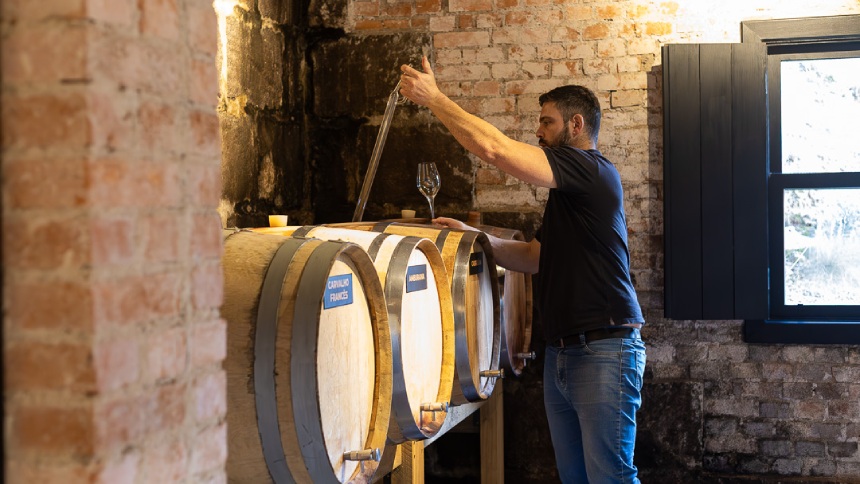
In Tuiuty, a district of Bento Gonçalves, in Rio Grande do Sul, winemaker Giovanni Ferrari produces 50,000 bottles annually at the ArteViva winery. The identity of his wines comes from barrels made of Brazilian woods: jequitibá-rosa, grápia, castanheira, cabreúva, bálsamo, and amburana.
"They add spices and a set of tannins that oak cannot provide, bringing a signature that no other wine in the world has," says Ferrari.
Two varietal white wines from the Sinônimos line are slated for export to France: the Riesling (R$ 96), whose grilled notes are reminiscent of champagne, according to the producer, and the Sauvignon Blanc (R$ 96), a wine he associates with the Old World style.
Pioneers of the Minas Gerais double pruning technique
The double pruning technique, which allows the production of winter wines in tropical regions, is the great differentiating factor of the selected wineries in Minas Gerais. Estrada Real, founded by Murillo de Albuquerque Regina, the creator of the technique, is the largest in volume among those chosen: it produces between 80,000 and 100,000 bottles annually.
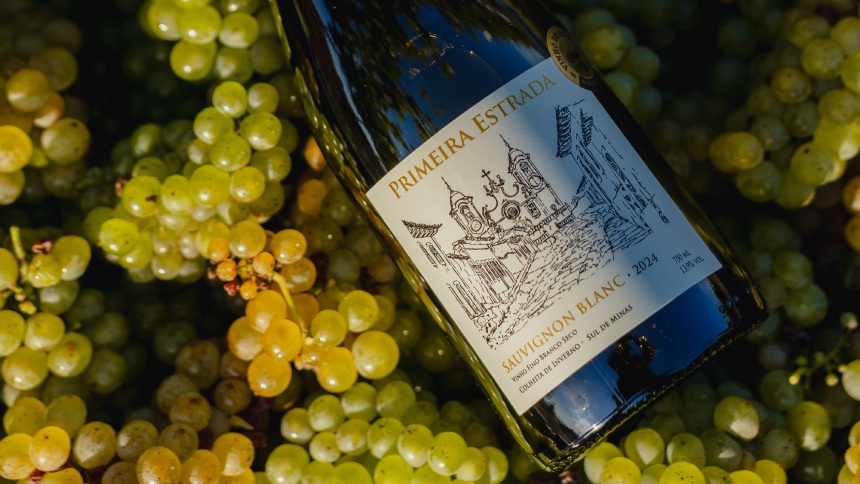
Pedro Olavo, Murillo's son, says that the two wines selected by Vin du Brésil best represent the winery's pioneering spirit: the classic Primeira Estrada Syrah (R$ 165), from the first double-pruning vineyard in Brazil, in the Minas Gerais city of Três Corações, and the Primeira Estrada Sauvignon Blanc (R$ 170), whose grapes are grown in São Gonçalo do Sapucaí, Minas Gerais, at an altitude of 900 meters.
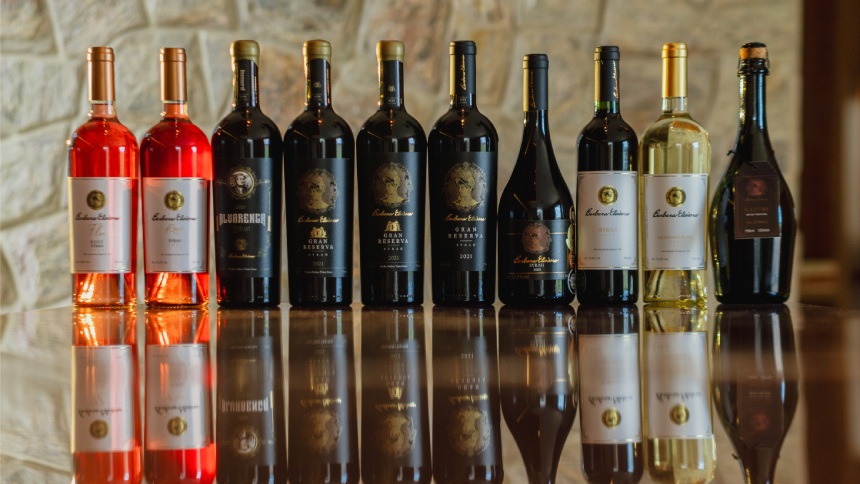
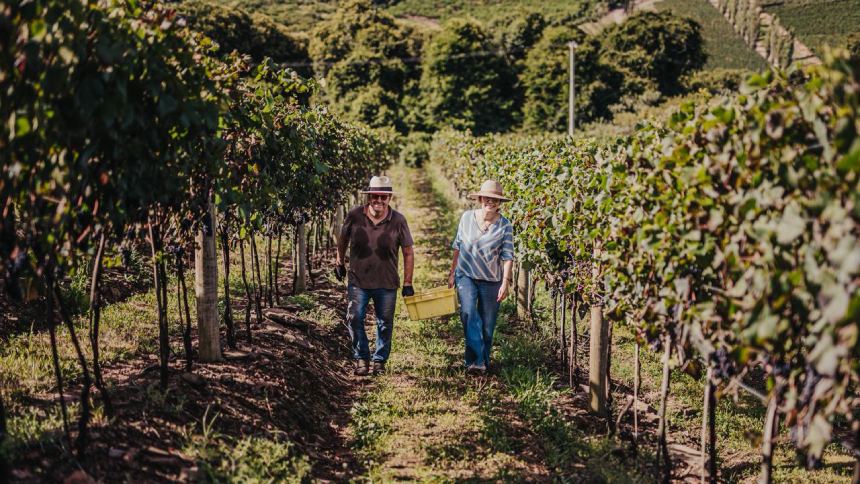
Also from São Gonçalo do Sapucaí, the Barbara Eliodora winery adopted the same technique. Guilherme Bernardes Filho, a former grain producer, switched from farming to grapes eleven years ago. With 18 hectares planted, he produces 35,000 to 40,000 bottles annually, but expects to reach 50,000 in the 2026 harvest.
The Vin du Brésil project selected two Syrah labels: the Léger (R$ 142), unoaked, to be drunk chilled, between 14ºC and 16ºC, and the Clássico (R$ 178), more complex and intense, with notes of spices.
Freshness and vibrancy in the Gaucho style.
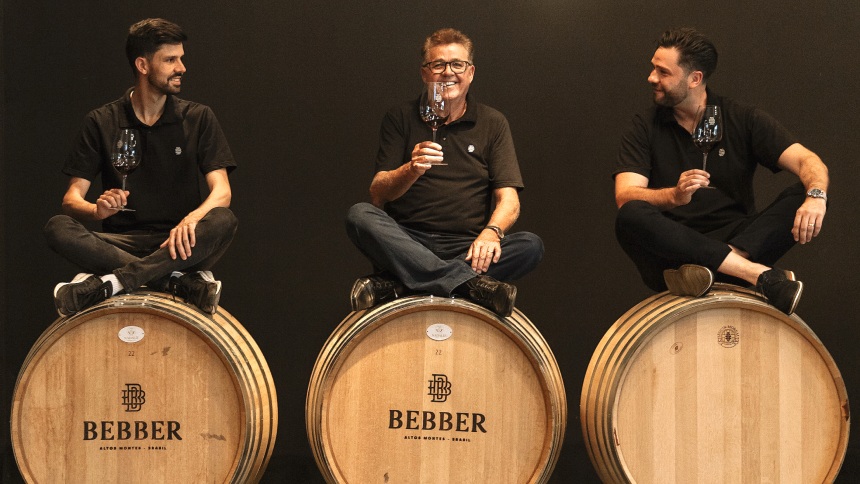
The wineries from Rio Grande do Sul that are exporting to France have opted for fresher and more vibrant profiles, exactly what has charmed French tasters. Bebber, from Flores da Cunha, emerged in 2015 when the old mansion of grandfather Bebber was transformed into a winery by his grandsons, Felipe and Rafael. The pair chose not to cultivate grapes themselves, acquiring the fruit from 20 producers spread across different regions of Rio Grande do Sul.
Two labels made it into the selection. The white Almejo (R$ 79), a blend of Chardonnay and Riesling, considered Bebber's entry-level wine, and the red Guri Pinot Noir (R$ 139), aged for six months in oak barrels.
The choices surprised the producers. "We sent other wines that sell well here, but the French preferred the fresher and more vibrant ones. For such a mature market, less is more," says Felipe Bebber.
From Pinto Bandeira, La Grande Bellezza follows the opposite path. A decade ago, the couple Rossano Biazus and Cristiana Petriz settled in the region and began planting grapes. The production, of only 16,000 bottles per year, is still vinified by partners, because the winery is still under construction.
The red wines Pipistrello (R$ 235), a blend of Merlot, Petit Verdot and Aspirant Bouschet aged for 12 months in barrels, and Madame Rara (R$ 235), a Cabernet Franc varietal aged for 18 months in French oak barrels, were chosen. "Our style is French, without excess alcohol," says Cristiana.
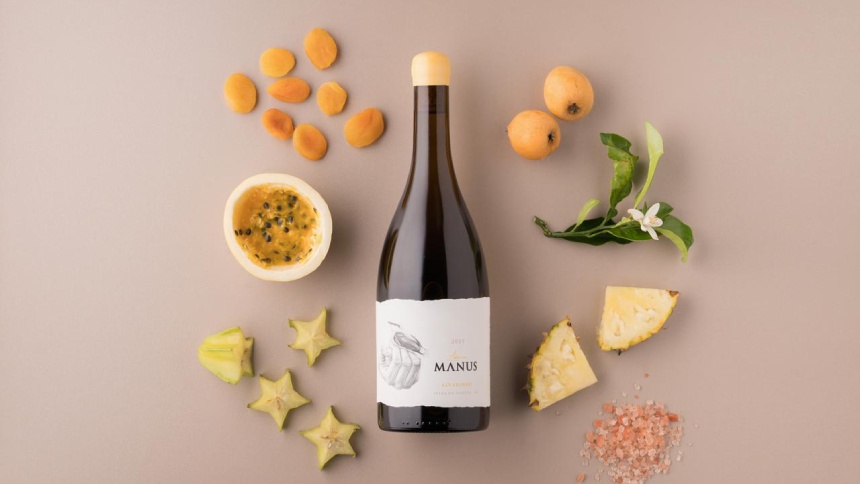
Rounding out the selection, Manus Vinhas & Vinhos represents the new generation of winemaking in Rio Grande do Sul. Located in Encruzilhada do Sul, a region that has been standing out in the production of grapes and olives, the brothers Gustavo, Francisco, and Diego Bertolini produce 10,000 to 15,000 bottles annually, focusing on wines with minimal intervention.
The winery's main focus is working with indigenous yeasts, which reinforce the distinctive identity of its wines. The Virgo Vermentino Brut sparkling wine (R$ 171) and the Liberum Alvarinho varietal white wine (R$ 189.05) are examples of this method, without barrel aging. They were chosen for the trip to France.
"The great innovation of this sparkling wine is the second fermentation with the yeasts. Almost no one works like this in South America," says Gustavo.
To conquer the demanding French market, Brazilian wines didn't need to send an extensive catalog to the Old World. They only had to select bottles with the genuine signature of the Brazilian terroir.