

The war between the United States and Iran, triggered by US President Donald Trump at the end of February, already has a winner: technology companies that invest in artificial intelligence (AI).
Just over two months after the start of the conflicts, which included the closure of the Strait of Hormuz, through which almost a third of the world's oil passes, the world's leading publicly traded companies gained US$5.6 trillion in market value, an increase of 4.2%.
And it was precisely the AI companies segment that sustained this growth during that period. The explanation is that most investors sought sectors less exposed to the war.
The significant increase in the shares of chip manufacturers such as TSMC, which grew by 150%, and Intel, which registered a 142% increase, driven by record profits in the first quarter, offset the declines recorded in other sectors.
The combined value of semiconductor companies with a market valuation exceeding US$10 billion has increased by 26%, equivalent to US$3.7 billion, since the start of the war in the Middle East.
Nearly two-thirds of large companies discussed the advancement of artificial intelligence in their first-quarter earnings conference calls, roughly double the number that talked about the conflict in the Middle East, according to data from market intelligence platform AlphaSense.
The AI boom fueled a faster stock market recovery than during a number of previous crises. Groups with publicly traded shares and a market capitalization of at least $10 billion amassed trillion-dollar gains in the first 10 weeks of the turmoil.
According to an analysis by the Financial Times , the same group of publicly traded companies had lost US$2.5 trillion during the same period as the Russian invasion of Ukraine in 2022. At the start of the Covid-19 pandemic, these companies lost more than US$9 trillion.
There is also growth in the oil segment. A 50% increase in the price of oil has boosted much of the energy sector, with Saudi Aramco, PetroChina and TotalEnergies among the companies that have shown the greatest gains in value during the war.
Each $1 increase in the price of oil means an additional $1 billion in free cash flow for Saudi Aramco, which added $144 billion in market value during the war, despite missile and drone attacks on its oil fields and refineries and the blockade of its main export route.
Companies with a smaller presence in the Middle East — such as Norway's Equinor, which saw a 24% increase — performed best, followed by companies with large trading desks that were able to capitalize on market volatility. BP and TotalEnergies registered increases of 14% and 16%, respectively.
The worst-performing companies were those where oil and gas production in the Persian Gulf was disrupted or hit by missiles. ExxonMobil and Shell face billions of dollars in expenses to repair the damage caused in Qatar. Exxon's value has fallen 4%, or US$28 billion, since the start of the conflict.
Luxury groups like LVMH and Hermès suffered from the drop in demand, while automakers were affected by disruptions in logistics and the supply chain, as well as rising prices for aluminum and other raw materials. Demand in the Middle East fell drastically for groups like Nissan, Toyota, and Stellantis.
“This puts pressure on the entire economy, and people are starting to think they might lose their jobs. So, now is not the time to buy a car,” said Håkan Samuelsson, CEO of Volvo Cars.
Consumer goods companies also suffered, as the closure of Hormuz increases costs and puts financial pressure on customers. Companies like Procter & Gamble and Kimberly-Clark warned of price increases as a consequence of the conflict.
For mining companies, the war represented a double blow: high production costs as a result of rising diesel prices, combined with the prospect of weak commodity prices due to the potential slowdown in the global economy.
The companies that benefited most from the historic high in gold prices last year, such as Agnico Eagle and Zijin Mining, were the ones that suffered the sharpest declines since the end of February.
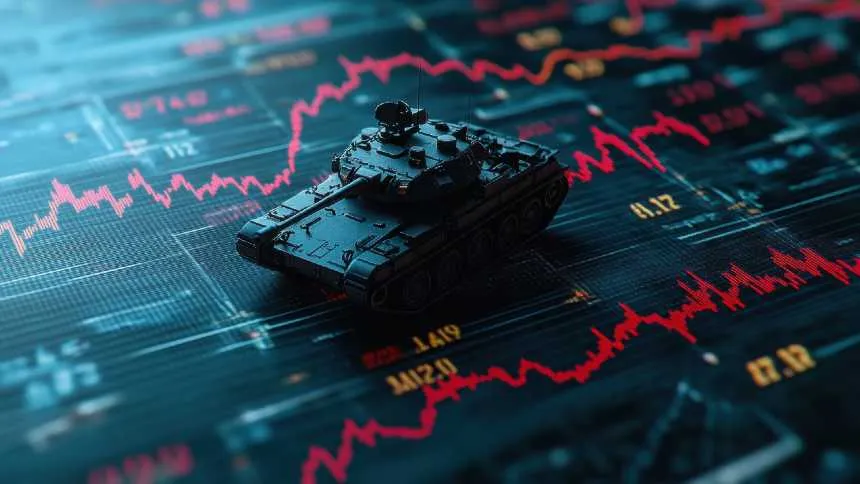
In the case of the defense sector, most American and European companies have seen a drop in market value since the beginning of the war. Analysts stated that this movement reflected investor uncertainty regarding the industry's ability to produce equipment quickly and on a large scale, considering existing bottlenecks in the supply chain.