

Patria Investimentos , one of the leading alternative asset managers in Latin America, released its 2025 financial results on February 3rd. Two indicators stood out during this period. The first was a record inflow of US$7.7 billion for the year. The second was surpassing the US$50 billion mark in assets under management – the company closed the year with US$52.6 billion.
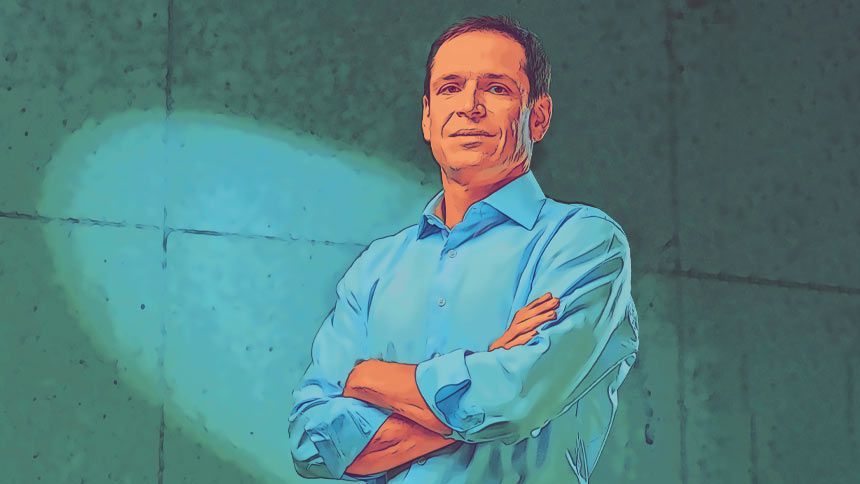
The goal of reaching that mark by 2025 had been set two years earlier, when the asset manager had just over US$27 billion in assets under management. Now, Patria has a new objective. “The ambition now is to reach US$70 billion in assets under management by 2027. And to be one of the 30 largest asset managers in the world,” says Daniel Sorrentino , managing partner and global head of clients at Patria, to NeoFeed .
Latin America will continue to be the guiding thread of this roadmap. At the same time, international operations, particularly in markets such as Europe and the United States , should gain more prominence on the asset manager's map, which is listed on Nasdaq and valued at US$2.2 billion.
"I would say that something like a third or half of this expansion should come from this international project," he states. "Every week, if not every day, some major asset manager announces a new transaction. And we want to be part of that story, with Latin roots, but being one of the major global players."
However, it hasn't all been smooth sailing. At the end of January, Patria saw its shares plummet after SnowCap Research, a British short-seller analysis firm, released an extensive report explaining why it had established a short position in the asset manager's stock.
Among other points, the report indicates that Patria is inflating the valuations of investments in its portfolio and delaying the recognition of substantial losses in its balance sheets. This also calls into question the asset manager's liquidity.
“We are a publicly traded company. We disclose our results in detail, we are subject to scrutiny from the SEC, our shareholders and investors,” says Sorrentino. “And the level of due diligence we undergo from an investor who is going to invest $100, $200, $300 million for 10, 15 years before they make a decision is brutal.”
He concludes: “What we have is our result and our message, our vision, what we believe in and are building. And, on that note, I can attest that we are very satisfied with what we reported last week.”
In the interview, Sorrentino provides more details about the firm's plans and also discusses topics such as the changing global flow of investor resource allocation. Check it out:
Patria released its 2025 financial report last week. What do the numbers say about the current situation and, more importantly, the prospects for the operation?
Without a doubt, 2025 was the best year in Patria's history. We had achievements in all business areas, but two points stood out absolutely. The first was the record-breaking fundraising of US$7.7 billion. To give you an idea of the magnitude, that's about 15% of what we have and more than 40% of what we raised the previous year. It's a very strong sign that we're on the right track. And we estimate that this volume will add approximately US$45 million to US$50 million to revenue in the coming years.
And the second highlight?
We reached a major milestone, which was $50 billion in assets under management. In fact, we've already surpassed $54 billion.
Having reached this milestone, what comes next? What is the goal for this new cycle?
This cycle is a continuation of the strategy of a local manager with global scale. The ambition now is to reach US$70 billion in assets under management by 2027, which seems a highly achievable goal. And to be one of the 30 largest asset managers in the world.
"The ambition now is to reach $70 billion in assets under management by 2027, which seems like a highly achievable goal. And to be one of the 30 largest asset managers in the world."
How much of this new goal will come from this international thesis, beyond Latin America?
I would say that something like a third or half of this expansion should come from this international project and the other half, or possibly two-thirds, from projects in Latin America. It's well balanced. We have this ambition to continue strengthening this relevant position we have in the region and, at the same time, we will continue expanding in these larger and more developed markets.
The impression is that this international project is gaining momentum. What explains this movement?
Without a doubt, space and reality. These are two major trends we see in our market today. The first is the dominance of the largest, the major asset managers gaining an increasingly larger share within their client base. And brands are starting to become relevant. So, I no longer invest in private equity, I invest in Blackstone, KKR, Apollo. And, to have a brand, you need to be big and have scale.
And what is the second trend?
The second, closely related trend is that smaller firms are starting to see the larger ones as a way to participate in this game. So, every week, if not every day, some major asset manager announces a new transaction. And we want to be part of this story, with Latin roots, but being one of the major global players. And to participate in this market, you need to have a global scale. So, that's why this international agenda is starting to gain momentum.
What are the next steps in this climb?
Europe is a very interesting path that we have been exploring. And there, today, we only have the first part of our story, which is private equity . So, we are thinking about expanding into other asset classes. Infrastructure, credit, and real estate investments are our new frontiers.
And how and when do you plan to execute this expansion in the European market?
The important thing is the ability to have local teams and partners, because we want to be recognized as a local asset manager. A Brazilian asset manager in Brazil, a Chilean asset manager in Chile, an English asset manager in England, and so on. So, this involves finding partners and people who are operating in these markets. It takes time to mature this dialogue. But we are having conversations on the strategies I mentioned. These are agendas that we would like to fill at some point.
You recently acquired the American asset management firm WP Global Partners. How does the US fit into this picture?
With WP, we more than doubled the size of our asset management firm in the US. Today, within the size of Patria, it's perhaps a small, initial step. It's about US$2.5 billion on top of US$50 billion, less than 5% of our assets. But it's strategic because it strengthens this international private equity business and brings us closer to our biggest market, which is the American market.
Are there movements in other geographical areas?
In other regions, we have offices primarily focused on exploring client relationships. In that sense, we had an office in Hong Kong and we are opening one in Beijing, which obviously aims to strengthen ties with Chinese clients. But at the same time, we see a lot of business between Chinese and Latin American companies. So, we also have a business development program and we are building a position there, where we look at all these areas, from artificial intelligence and vehicle electrification to, now, energy storage in super-scalable batteries.
And from this customer-centric perspective, are there more markets on the radar?
We also established two important partnerships this year, one in Japan and another in Australia, where we are developing products or funds with local partners that give these investors access to Patria's strategies. And there, again, other paths and possibilities open up.
"Brands are starting to become relevant. So, I no longer invest in private equity, I invest in Blackstone, KKR, and Apollo."
And what about Brazil and Latin America? Where does Patria see the most opportunities in 2026?
There are two major opportunities that are the big themes of the year. The first is all the themes related to credit , in its different currencies and formats. In the world of credit for small, medium and large enterprises, for example, you no longer need the structure that the bank carries to connect a company to an investor. That is one of the trends.
What other trends in credit would you highlight?
The capital market is increasingly involved in operations to finance companies. Today, it plays an extremely important role in financing infrastructure in Brazil, which was traditionally done by BNDES. The same is happening in the real estate market, where funding from savings accounts and FGTS (Brazilian employee severance fund) has ended. Real estate investment trusts (REITs) and real estate investment certificates (CRIs) are powerful instruments that have been financing this sector.
So, in this context, what is the rationale behind the recent acquisition of Solis?
This is one of the great opportunities that have arisen in recent years, stemming from the regulation of FIDC (Investment Funds in Credit Rights) and the technology enabling credit origination on a large scale. Today, this is a R$1 trillion market. Fifteen years ago, it wasn't even R$100 million. And it's a market that will grow from R$1 trillion to R$2 trillion in the next three to five years. So, imagine the size of the opportunity that is being created. And Solis is, in fact, one of the main players in this space, with the structuring and management of FIDCs.
And what about the other big opportunity on Patria's radar?
The second, certainly, is the issue of infrastructure , both in Latin America and in Brazil, with the concessions agenda. So, in this area, we are looking at all aspects of transportation, logistics, sanitation, telecommunications, and data centers.
Patria has also invested heavily in real estate. Recently, for example, you acquired RBR Asset's portfolio of funds. What are your next focuses in this segment?
The first step was to seek a significant market share, where it was not only important to grow, but also to have the full range of offerings from different REITs (Real Estate Investment Trusts). From now on, the goal is to gain scale within these strategies. The ideal size for a fund today would be between R$ 5 billion and R$ 10 billion in assets. We already have a logistics fund that has exceeded R$ 10 billion, and we want to reach that same size in our other strategies. At the same time, today, in our structure, we have about 30% of our funds in CRIs (Real Estate Receivables Certificates). So, real estate will continue to be important, but we also have room to grow in mortgage lending.
And in private equity, Patria's original business, which sectors and opportunities are being targeted?
The sectors we have historically believed in are healthcare, food and beverage, agribusiness, and services, particularly digital services. That is our world in private equity.
Does Patria have room for any new ideas in other areas?
There's a lot going on. Recently, we announced a very interesting deal from our Growth Equity fund, which was a partnership with Randon to explore a consortium business. This is part of the theses we're looking at, of booming markets. We also have an investment in a company called Consorciei, which acquires consortium shares in the secondary market. So, there's a lot going on. In Brazil and Latin America, in general, we can complain about everything, except the lack of investment opportunities.
"The level of scrutiny and due diligence we undergo from an investor who is going to invest $100, $200, $300 million for 10, 15 years before they make a decision is brutal."
But private equity, in particular, is going through a more restricted period. How do you see the prospects in this area?
We have very positive signs that come primarily from this global moment, with the flow of capital from the United States and American currency migrating towards diversification. And for us in Latin America, any small change in this allocation already represents a huge amount of money. So, the appreciation of the Brazilian stock market in 2025, the appreciation this year, are indicators that show we are entering a new cycle. I am optimistic about the prospect of the next two years, that the private equity market will regain dynamism.
Do you understand that this diversification of allocation beyond the United States is a short-term strategy?
This movement is not negligible. I have the opportunity to sit down with the world's biggest investors. And I was in the US with some of them on Liberation Day. There, everyone was still trying to understand if this was a structural change, permanent, or short- to medium-term. And what struck me most was the managers questioning whether their resource allocations in the US were excessive. From questions to action, it took less than 12 months. And this flow is structural. I strongly believe in the maintenance of this scenario for a longer period, which should be positive news for us Latin Americans.
How might this scenario impact Patria's business?
The level of activity that has been happening is very striking. With the Chinese, the Canadians, who, over the last few months, have also announced a series of investments in the region. So, it's very good to be in this privileged position that Patria has today and to see this in color and live.
Speaking of impacts, SnowCap published a report explaining why they built a short position in Patria, stating, among other things, that the asset manager was inflating the valuations of its assets and lacked liquidity. What do you have to say about that?
We are a publicly listed company. We undergo intensive auditing by the world's leading auditing firms. We disclose results in detail, and we are subject to scrutiny from the SEC, our shareholders, and our investors. And the level of scrutiny and due diligence we face from an investor who is going to invest $100, $200, or $300 million for 10 or 15 years before they make a decision is brutal. As it should be. So, it's a very serious matter, and that's why we are always working to have the best and most rigorous evaluation, due diligence, and auditing processes.
Does Patria have liquidity problems?
Just open the results and see. On the contrary. Currently, we have an established share buyback program. Obviously, we have to respect the limits set by the market, but what I can say is that my partners and I are buying back Patria's shares.
But how do you respond to the allegations made by SnowCap?
When you choose to be a public company, you are subject to investor scrutiny, opinions, and perspectives. What we have is our results and our message, our vision, what we believe in and are building. And on that note, I can attest that we are very satisfied with what we reported last week.