

Since Nubank went public in December 2021, no Brazilian company has conducted an initial public offering ( IPO ), resulting in the longest drought in history. As a result, what we see are bets and predictions that next year will mark the return of these operations.
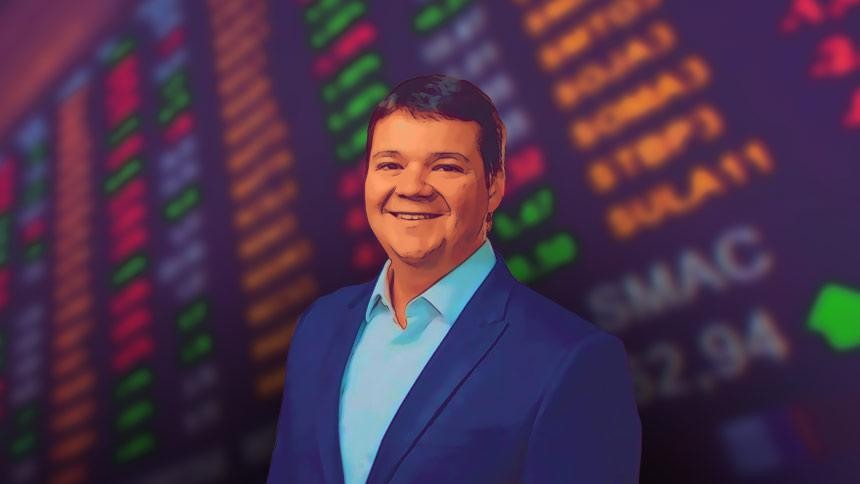
This was said from 2023 to 2024 and from 2024 to 2025. But the operations didn't materialize. Worse: those years were even marked by reductions in the number offollow-on offerings in the equity market. For Antonio Coutinho, head of the investment bank (IB) at Citi Brazil , 2026 will be different, with a recovery. He believes we could see an IPO right at the beginning.
“We are very close to the reopening of the window, both in New York and in Brazil. And this should happen in the first quarter of 2026,” says Coutinho, in an interview with NeoFeed .
At the helm of IB since June 2025, after leading the M&A area for Latin America, Coutinho states that the recovery should be driven by foreign investors, who are already investing in the local market. Furthermore, there are companies prepared to list shares on the stock exchange and in need of resources to invest.
Unlike previous years, the processes are moving forward. He didn't mention names, but the company that publicly signaled its intention to go public was BRK Ambiental . The sanitation company, managed by the Canadian firm Brookfield, announced on December 11th that it had filed a request with the CVM (Brazilian Securities and Exchange Commission) to carry out a primary and "potentially secondary" public offering of shares.
“There are cases that are being worked on, they are out in the field, which wasn’t the case three, six, nine months ago,” says Coutinho. “Now it’s for real.”
The executive points out that foreign investment has helped improve the comparable multiples of companies on the stock exchange, encouraging those interested in or needing to carry out an IPO. This has had a greater influence than the Selic rate or the elections.
The improvement in multiples also led many already listed companies to resume follow-on offering plans after a bad year. The total volume of operations is around R$ 8 billion, below the R$ 25 billion of 2024, which was saved by the privatization of Sabesp. Among the few operations in 2025, Citi participated in the Cosan follow-on offering .
The issue of valuations has also improved conditions for those wishing to sell companies. Coutinho expects an even better 2026. This year, in February, the bank advised on the sale of Suvinil to Sherwin Williams, a transaction worth R$ 6.3 billion, and participated in the merger of Marfrig with BRF.
“The growth of the capital market, with more active equities and shares at higher prices, stimulates the closing of deals. The environment has already accelerated and has everything to improve in 2026,” says Coutinho.
Read below the main excerpts from the interview:
What is your assessment of capital market activity this year, in terms of IPOs and follow-ons? Is it in line with expectations?
We expected the IPO window to have reopened by now. It was a less active year on the equities side than we would have liked, but it's ending better than it started. With the fall in interest rates in the United States and the outlook in Brazil, there was an expectation that something would happen in the second half of this year. But we are very close to the reopening of the window, both in New York and in Brazil. And this should happen in the first quarter of 2026.
What is driving this positive outlook for IPOs in the first quarter? Are companies anticipating the election cycle?
There are companies that are perfectly ready for an IPO, and if it weren't for the four-year drought without offerings, they would be ready. They need resources to grow and are at an excellent level of preparation. The counterpart on the stock price side, compared to other companies, is a great help. We now have stock prices that make much more sense in the market for someone looking to issue an IPO. This comes from the flow of foreign investors, who have a significant participation in IPOs. They had a larger participation in the secondary market this year. Now, we will test the appetite for IPOs as well.
Foreign capital inflows are driving the stock market this year. Now, will this motivate a resumption of IPOs?
Yes. The desire to go public and the preparation to do so are already in place for many companies. And now it's possible to combine that with investor interest, particularly from foreign investors, and get the transactions up and running as early as the first quarter.
But why believe that this time will be different? The reopening of the IPO window is something that has been said and expected over the last three years.
Because there are very concrete cases being worked on, it's not just an expectation that something will happen in the future. There are cases that are being worked on, they're out there, which wasn't the case three, six, nine months ago. As far as I know, there weren't any IPOs being worked on before. Now it's for real.
"There are cases that are being worked on, which was not the case three, six, nine months ago."
To what extent is the prospect of a Selic rate cut helping to motivate trading?
The expectation of a reduction in the Selic rate throughout next year helps, but that's still a bit distant, with the market consensus pointing to a rather modest reduction. That's not what's driving transactions. It will be a controlled, moderate opening of the window, not an IPO boom . And, over time, as interest rates consolidate at lower levels, we will see greater diversification in the types of companies and sizes of offerings.
Is the Selic rate drop more of a catalyst for more companies than a factor that will open the door?
That's right.
When discussing the resumption of IPOs, the common perception is that the movement will be driven by large corporations and infrastructure companies. Is that the case?
From the window in Brazil, yes, that's what was expected.
Is it the infrastructure aspect that foreigners are focusing on? Or are they open to other issues?
He is open to stories, but selective, seeking larger stories that will have liquidity in the secondary market. Naturally, he leans towards sectors where the country has larger companies. Infrastructure, for example. This is the case with very large companies that are ready for an IPO. On the tech and fintech side, there are also companies of significant size. The investor is sector-agnostic, but as we are looking for the best stories to open the market, he naturally ends up focusing on these sectors.
In the case of the reopening of the US market window, we saw many companies targeting the American market between 2021 and 2022, but they didn't achieve the results they expected. They went public, but didn't reach the multiples they wanted, nor did they attract the investors they sought. Why does the United States remain an option?
There's no one-size-fits-all approach. You need a strategy that's best suited to each type of issuer. What we've seen is that companies targeting the United States tend to be those with a stronger tech or fintech focus, and those with global or even Brazilian counterparts listed abroad. And there's also the issue of size. While it's true that larger companies are often used to open up opportunities, the companies seeking an IPO in the United States are relatively larger. This also helps create positive negotiation dynamics.
"Brazil has some very interesting, qualified companies with histories that rival global ones."
But what is the appetite of an American for a Brazilian company on the Nasdaq or NYSE when he has a wider range of options from companies, from names he knows?
Brazil has some very interesting, qualified companies with histories that compare to, and rival, those of global companies. And we see investors seeking diversification and markets where pricing is less inflated. We have a combination of very good companies and very good stories.
We also saw many companies classified as tech, but which weren't exactly tech companies, going to market and not achieving the expected results…
Brazil has companies closely linked to technology, but it's not a hotbed of software and AI companies. Most are stories of tech-enabled companies, companies that leverage technology for greater efficiency. This is the case with fintechs, which are highly innovative in terms of applying technology to processes, costs, and customer service. Compared to traditional companies, these companies experience greater growth and efficiency. You don't need to look to OpenAI Brazil to conduct a tech IPO.
If the market is positive for IPOs, will it be even better for follow-on offerings?
Yes, the increase in follow-on offerings is part of this improvement, remembering that follow-on offerings are executed faster than an IPO. We will see a more dynamic market throughout next year, with a surprisingly high volume, given the recent price movements. Many transactions have started to make sense in this environment.
Just like with the IPO, will we see follow-on offerings to raise funds for investments? Or will we have a good number of secondary offerings?
This year was marked by numerous secondary offerings, many blocks of offerings, and shareholders selling significant positions. With easy access to the debt market and unattractive share prices, companies were more hesitant to make primary offerings. Based on what we are seeing, we should expect more primary offerings, driven more by companies to finance growth projects, stabilize their capital structure in some cases, but with greater demand from companies than from shareholders.
"This year was very much marked by secondary offerings, many blocks, and shareholders selling significant positions."
How was the M&A phase: is the market still favorable?
It was a year of stable volumes compared to last year. Activity is still concentrated in certain sectors, infrastructure in particular. We have seen an acceleration of the pipeline in this second half of the year, with several announcements, which is normal. And the supply of transactions at less advanced stages, in the middle stage, is interesting, which should make the first half of the year quite active, perhaps more active than the second, due to the elections.
Is it expected that volumes will remain stable in 2026?
This year's volume is very similar to last year's, even though the year isn't over yet. Activity is still below what we've seen in previous years. There's room for improvement in 2026. With the growth of the capital markets, with more active equities, and higher stock prices, all of this stimulates the closing of deals. The environment has already accelerated, and I think everything is in place for improvement in 2026.
In recent years, there was much talk that lower valuations caused those wanting to sell to hold on, while those buying were able to impose lower prices. How is it now? Is it more balanced?
I would say it's much more balanced, with the force that has tipped the balance towards a less buyer-leaning market being the public market. Comparables, the stock market multiples, have recovered quite significantly across several sectors throughout the year. This provides a better basis for sellers to make transactions.
Any particularly "hot" sectors?
There's no escaping the obvious answer. Infrastructure is a major driver of activity, perhaps accounting for 40% of total activity, with the remainder diversified across the various other sectors of the economy.