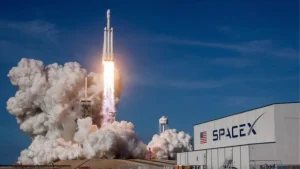


With fortunes of US$651 billion and US$233 billion respectively, Elon Musk and Jeff Bezos cultivate a great rivalry. Beyond the exchanges of barbs, this dispute extends to areas such as the space race, with SpaceX and Blue Origin, and robotaxis, with Tesla and Zoox, an Amazon investment.
Now, in yet another chapter of these clashes between the two billionaires, Bezos seems willing to escalate the confrontation in another arena, where Musk, just as in the realm of bank accounts, is ahead: the provision of high-speed broadband internet via low-orbit satellites.
According to the Financial Times , Amazon is in talks to acquire Globalstar, an American satellite telecommunications company, to definitively enter the Starlink space, Musk's operation in this segment.
According to the British newspaper, the two parties are still discussing the terms of the agreement, which is considered complex. A complicating factor is Apple 's 20% stake in Globalstar, which has necessitated further negotiations between Amazon and the Cupertino company.
However, should these talks lead to a positive outcome, the acquisition would mark a significant step for Amazon to develop its operations and finally position itself as a strong competitor to Starlink.
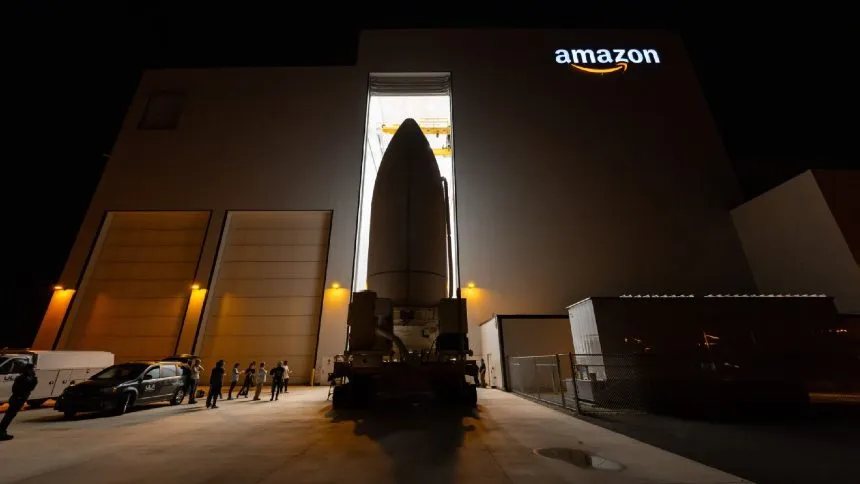
So far, Amazon has struggled to gain traction in the field, starting with an initiative called Project Kuiper . A year ago, the operation launched 27 satellites, marking its first step on a larger scale.
Starlink, on the other hand, was already well ahead. To give you an idea of this gap, at the same time, its rival, launched in 2019, already had more than 7,000 satellites in operation – today, there are more than 10,000 – and 4.5 million customers in over 100 countries.
In one of the measures implemented to try to make up for lost time, Amazon signed contracts with the airlines JetBlue and Delta to provide internet services starting in 2027 and 2028, respectively.
In contrast to these efforts, in February of this year, the company requested a two-year extension from the Federal Communications Commission (FCC) regarding the launch of 1,600 satellites. The previously defined deadline was July 2026.
According to documents filed by Amazon, the company plans to have approximately 700 satellites in operation by the middle of this year. However, the company emphasized that a shortage of launch capacity is hindering the expansion of its service, which currently includes 180 satellites in orbit.
Founded in 1991, Globalstar can help solve part of this problem. And, in proof of its importance in the segment, in recent months the company has attracted the interest of other companies. Among them, Starlink itself, with whom it has held preliminary talks.
The fact is that, at the center of this attention, Globalstar, which has an annual revenue of US$273 million, is already reaping the rewards of this position, seeing its share price soar to new heights, with an appreciation of more than 230% in the last year.
Rumors about the deal with Amazon also gave the stock a new boost. Globalstar shares were up 8.39% on the Nasdaq around 10:55 am (local time), valuing the company at US$9.5 billion.