

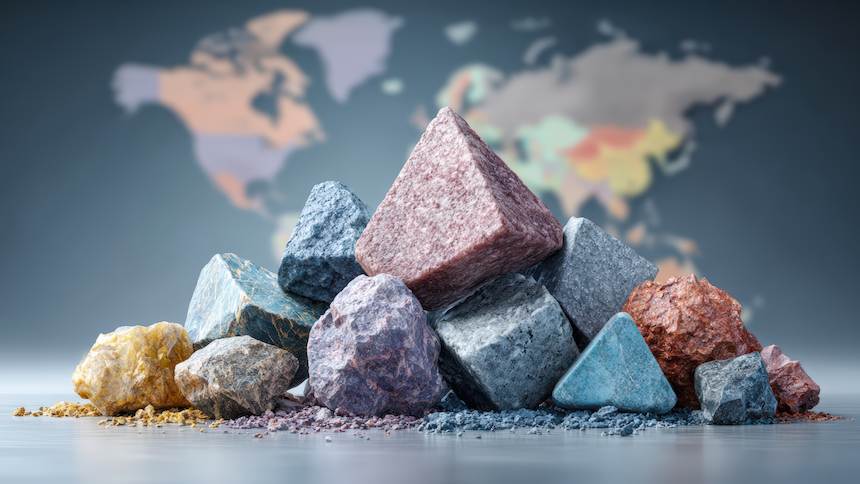
At a time when US President Donald Trump is encroaching on Venezuela's oil reserves – thereby undermining China 's supply of fossil fuels – an international event starting on Tuesday, January 13, in Riyadh, Saudi Arabia, sheds light on the true geopolitical battle of the 21st century.
This concerns the competition for critical minerals and rare earth elements , essential inputs for enabling the emerging technologies of the new global energy economy, from the manufacture of smartphone screens to wind turbines, including rechargeable batteries for electric cars, smart grids, and even missiles.
The Future Minerals Forum (FMF) 2026, which runs until Thursday, January 15, is considered the leading global event for bringing together governments, companies, investors, and multilateral organizations to discuss the future of mining, critical minerals, and the security of global supply chains.
Brazil is sending a delegation of over 100 people, including government officials and representatives from companies in the mining , energy, steel, and infrastructure sectors, reflecting the country's significant role in the global debate on critical minerals and the energy transition.
The country holds approximately 19% of the world's rare earth reserves – a group of 17 chemical elements from the periodic table, essential for wind turbines, electric vehicles, and defense applications – as well as roughly 74 million tons of graphite, a key input for batteries and energy storage systems.
Added to this is its prominent position in manganese and nickel, the accelerated growth of lithium production – especially in the Jequitinhonha Valley – and a predominantly renewable electricity matrix, a decisive factor for the production of minerals with lower carbon intensity.
These credentials justify the estimate from the Brazilian Mining Institute ( Ibram ), which forecasts an investment pipeline in critical mineral projects in the country of around R$ 100 billion by 2029, mostly from foreign sources.
Two other recently released studies, one by the consulting firm PwC and the other by the Brazilian Center for International Relations ( Cebri ), reinforce Brazil's potential for strategic insertion into global supply chains of critical and strategic minerals.
According to Carlo Pereira, CEO of Gin Capital – an investment platform focused on mining and data centers – Brazil has the potential to attract new investors to Riyadh, as critical minerals and rare earth elements gain increasing relevance in the energy transition and the economy as a whole. Part of this appetite stems from the realization that the world is thirsty for these critical minerals, with demand three to four times greater than the volume currently offered.
According to him, Brazil's advantage at this moment goes beyond the volume of natural resources in its subsoil. "The global debate is no longer just about mineral supply, but about who offers predictability, governance, decarbonization, and geopolitical alignment," says Pereira. "Brazil possesses these attributes, and the FMF is the stage where this translates into capital and concrete partnerships."
He cites the fact that Brazil's mineral potential is underestimated – it holds the second largest reserve of rare earth elements in the world, for example, despite having mapped only 23% of its subsoil. Furthermore, the country's legal security and regulatory stability are attractive compared to other emerging markets, such as the Democratic Republic of Congo, which leads global cobalt production and copper reserves.
“The Future Minerals Forum is the space where these advantages connect directly to global capital and the geopolitical decisions that are reshaping production chains,” says Pereira, who makes no secret of his expectation of brokering deals with investment funds from Gulf countries, which are attentive to the movement of diversification and global energy transition.
Gin Capital organized an event at the Brazilian Embassy in Riyadh on Monday the 12th, to bring Brazilians and Saudis closer together and present the country's mineral potential, bringing companies with a mandate to attract and form partnerships.
According to him, Arab investors reject the "ATM" approach, limited to requests for investments. "They prefer partnerships with investment and reciprocal presence; Brazil can attract capital and develop local supply chains through joint ventures, plants, and technology transfer," he believes.
Projects in progress
Brazil already has rare earth mining projects in Minas Gerais, Goiás, Bahia, and Amazonas. These projects are funded by both Brazilian and international companies (USA, Australia, and China).
The three main projects are led by foreign companies. The Colossus project, led by the Australian companies Viridis Mining and Minerals Limited in Poços de Caldas (MG), with an investment of R$ 1.35 billion, has the highest global recovery rates for rare elements, solidifying the project as a world leader in the recovery of neodymium, praseodymium, dysprosium, and terbium.
The project by the Australian company Meteoric Resources , also in the mining town, has an investment of R$ 1 billion focused on the extraction of ionic clay. It is expected to generate 700 jobs.
Finally, the project undertaken by the American companies Denham Capital and Minerals Group, in Minaçu, Goiás, has an investment of R$ 855 million directed to the operational unit of the Serra Verde group, Serra Verde Pesquisa e Mineração ( SVPM ). The objective is to strengthen the production of fundamental elements for the energy transition, such as magnets, batteries, and wind turbines.
Recent reports, in turn, are detailed about where foreign investors can obtain returns in Brazil.
PwC, for example, states that Brazil has measured and indicated reserves of approximately 1.3 million tons of lithium, about 5% of the global total; 74 million tons of graphite (26% of the global total); and 21 million tons of rare earth elements, in addition to smaller reserves of nickel, manganese, and vanadium.
The biggest bottleneck, according to the report, is in refining and chemical transformation, that is, the conversion of concentrates into pure industrial compounds (oxides, carbonates, or metals). Much of what is extracted is exported in crude or concentrated form for refining in countries like China and South Korea.
"Until recently, lithium extracted in Brazil was exported as spodumene concentrate with low added value," the report points out.
The Cebri study, released in November, also follows this line of thought. But it highlights the need for the creation of public policies. "For Brazil to maximize the extraction and exploitation of its critical and strategic mineral resources, it is essential to establish policies that integrate mining, innovation, and sustainability," says the Cebri report.
In this respect, progress is being made, but it is still slow. Since 2024, the National Congress has been debating the creation of a National Policy for Critical and Strategic Minerals, aiming to encourage the exploration and processing of minerals such as lithium, rare earths, and graphite, which are essential for the energy and technological transition.
The two bills currently under consideration – PL 2780/2024 in the Chamber of Deputies and PL 4443/2025 in the Senate – are expected to converge into one, with the Chamber bill being more likely to concentrate the measures. Initiatives such as a BNDES fund for low-cost financing and the approval of a National Mining Plan-2050 to increase the sector's competitiveness are also expected.
USA vs. China
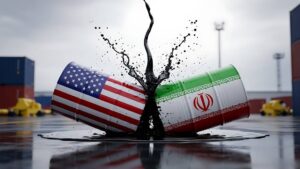
The need to accelerate the process stems from the window of opportunity opened by the dispute between the United States and China over critical and strategic minerals. The unparalleled military might of the US, touted by Trump, is unable to unbalance the power dynamics between the two world economic superpowers in terms of reserves, production, and refining of many of these critical minerals.
China accounts for more than 50% of the production of 18 critical minerals, in addition to controlling a large part of the refining and processing of rare earths, graphite, vanadium, and intermediate stages of lithium and cobalt. And it has used this dominance as a strategic weapon in the trade war with the United States.
In 2023, China implemented export restrictions on refined graphite and gallium – strategic inputs for batteries and semiconductors – in response to trade disputes with the United States and the European Union. In 2025, Chinese restrictions in response to new American tariffs were on the export of rare earth elements – essential for the production of cutting-edge technologies – whose refining in 2024 was 91% concentrated in China, becoming a strategic topic in negotiations between the United States and Brazil.
This highlights how control over later stages of the mineral supply chain can become a geopolitical lever – a lesson that Brazil needs to learn, and quickly.