


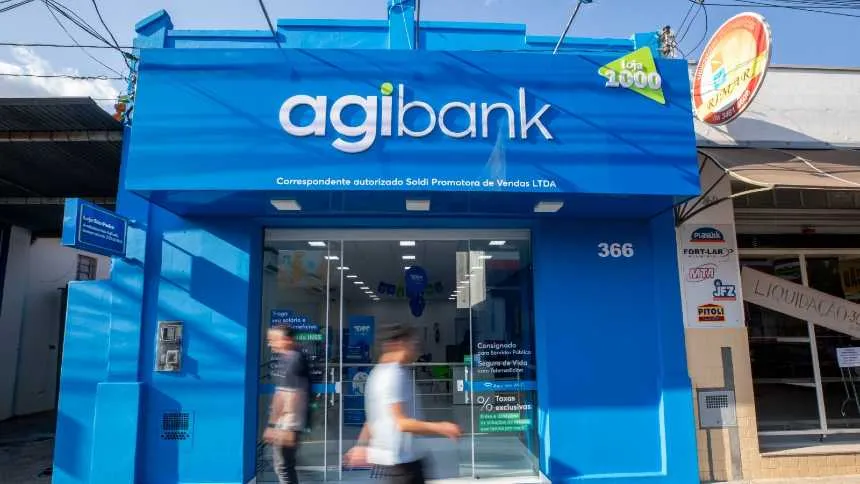
One of the names reopening the window for Brazilian IPOs , Agibank has begun to receive its first research reports. BTG Pactual and Itaú BBA initiated coverage of the digital bank this Monday, March 9th, both with a buy recommendation for the shares that debuted on the New York Stock Exchange (NYSE) in February.
BTG Pactual set a target price of US$17, indicating a 62% upside from the current level. Itaú BBA set a target price of US$15, calculating a potential upside of 43%. Both participated in the banking syndicate that coordinated the initial public offering.
The assessment is that Marciano Testa 's institution will be one of the main players in capturing gains from the so-called "silver economy," a demographic over 60 years old that is expected to represent 38% of the population in 2070, according to IBGE (Brazilian Institute of Geography and Statistics).
According to analysts, Agibank's ability to combine the benefits of the fintech model, with a focus on digitalization, and investments in physical branches has positioned the bank as one of the leading names to serve pensioners and capture profits from INSS (Brazilian National Social Security Institute) payroll loans.
"With over 1,000 smart hubs – mini-branches that are much cheaper, with an annual cost of R$422,000 (90% more efficient than the average branch) – Agibank has managed to 'unravel the secret' of how to serve older individuals, mostly low-income and underserved," says BTG Pactual.
In addition to better serving this audience, the branch network allows the bank to be one of the few fintech companies capable of participating in INSS auctions, which determine the banks responsible for paying the monthly social security income.
The lack of physical branches is a barrier to entry for names like Nubank and Inter. Compared to the major banks, Agibank offers lower service costs, offsetting interest rate limits and longer terms for these transactions.
"Agibank is effective at maximizing revenue per client, which is fundamental for profits and competitiveness. The ROE of INSS payroll loans alone is not excellent, due to intense competition amidst high CDI rates and interest rate caps," says Itaú BBA.
Another point of the thesis is the cross-selling capability of products with high margins, such as life insurance and unsecured loans, which represent 13% of the loan portfolio but account for approximately 60% of operating results.
Analysts at Itaú BBA highlight that, while INSS (Brazilian National Social Security Institute) payroll loans generate stable returns, they have low margins (maximum of 1.85% per month). Meanwhile, unsecured personal loans (14% of the portfolio) yield margins of 7% to 8% per month.
“This yield advantage, applied to a growing customer base with secured and unsecured balances, increases the net interest margins (NIMs) of Agibank’s combined portfolio by more than 10% per year and allows for high ROE,” says the Itaú BBA report.
Regarding unsecured loans, BTG Pactual states that focusing on pensioners helps reduce default rates. "By granting unsecured loans only to beneficiaries who receive payments through Agibank (approximately 80% of its 1.4 million clients have an unsecured personal loan), the bank has reduced NPLs in this segment from over 25% in 2018 to 8.4% currently," the report says.
At approximately 12:19 PM, Agibank shares were up 1.05%, at US$10.61. Since their debut, they have accumulated a 3.5% drop, bringing their market value to US$1.7 billion.