


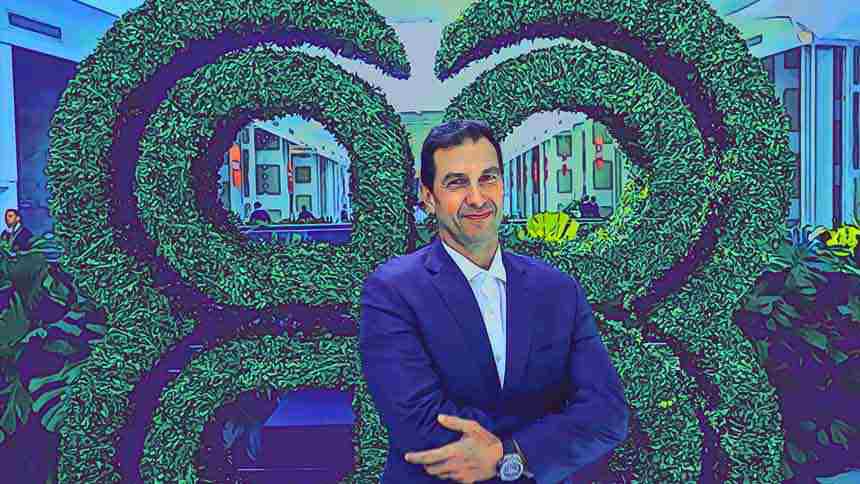
The lack of public safety in Brazilian cities is already directly affecting consumption. In retail, the impact is seen in the reduced number of people circulating on the streets at night and, therefore, spending less. This scenario, currently one of the biggest concerns for Brazilians, is even affecting the giant shopping mall company Multiplan .
In an interview with NeoFeed , Multiplan CEO Eduardo Peres states that the lack of public safety has resulted in decreased foot traffic in the corridors of its shopping centers after 7 pm, especially in Rio de Janeiro.
According to the businessman, this situation causes a potential reduction of 15% to 20% in sales during the last three hours of operation of the shopping malls.
“There isn’t a city where we can walk around peacefully today. It’s an evil that afflicts the country and hinders development. I notice this a lot in shopping malls, especially the more distant ones, like ParkJacarepaguá and ParkShopping Campo Grande,” says Peres.
Research institutes have shown that public safety is currently among the main issues identified by Brazilians as needing to be addressed by public authorities.
A survey released on Monday, August 3rd, by the Nexus/BTG Pactual Institute shows that, for 19%, health is the biggest negative highlight of Luiz Inácio Lula da Silva's government, followed by security, with 18%, and low economic growth, with 12%. The survey consisted of 2,002 interviews across all states.
According to the CEO of Multiplan, it is necessary for the issue to be addressed consistently by the presidential candidates, who, in his view, need to present a plan to change this scenario.
“This issue impacts everyone's lives much more than just the economy. Living with inflation is bad, but it's not terrible. Those who have children are very worried. The problem of security is part of the daily routine for Brazilians today. And that's very bad. It's unavoidable that this issue be discussed during the election,” says Peres.
Despite the impact caused by the uncertainty, the sales volume of retailers in Multiplan's 20 shopping malls grew 7.7% in the second quarter, compared to the same period of the previous year, reaching R$ 6.8 billion.
With an occupancy rate of 96.2%, the company achieved a negative net delinquency rate of -1.2% in the quarter. However, according to Multiplan's CEO, this result is not related to a possible improvement in the economy.
“It’s the retailer who doesn’t want to default, in the place that can save him. It’s a priority for him. It’s also the company’s efficiency, which has improved its processes. It’s not a reflection of the economy,” says Peres.
In this regard, the businessman says that the company will only consider building new shopping malls again when the economic scenario is extremely positive, "with growth of 5% to 6%".
Until then, the path forward will be to continue revitalizing and expanding existing units. Between 2023 and the second half of this year, the company has already invested R$ 1.7 billion in these cycles. There are plans for further expansions until at least 2028.
The company's net profit in the second quarter was R$ 427.4 million, a 61.7% increase over the result achieved in the second quarter of 2025.
In the year to date, MULT3 shares have registered a 6.2% increase. Over 12 months, the appreciation is 13.5%. Multiplan's market capitalization is R$ 14.6 billion.
Below are the main excerpts from the interview:
What explains Multiplan's growth in the second quarter, even with the challenging macroeconomic scenario?
We've managed to achieve this, despite the country. In the last 20 years, Brazil hasn't improved. We've gone backwards. Back then, our stock market was worth US$1 trillion, and the American one was worth US$7 trillion. Today, we're still worth US$1 trillion [R$4.86 trillion], but the United States' is worth US$80 trillion. This gives you an idea of how far behind we've fallen. It's a non-political observation.
And why are we going backwards?
Too many rules, too much bureaucracy. Every city has its own law. We have 5,600 municipalities. Each one has its own legislation. And the government continues to spend a lot and poorly. If the government gives more money [to social programs] than to education, what is the answer? Furthermore, there isn't a city where you can walk around safely today. São Paulo and Rio de Janeiro are like that. It's an evil that afflicts the country and hinders development. Tourists think about this when choosing a destination. Nobody benefits from violence. If cities were safer, you would have people more willing to leave their homes.
Does Multiplan feel this impact?
Yes. In Rio, after 7 or 8 pm, there's much less activity in the malls. I notice this a lot in the malls, especially the more distant ones, like ParkJacarepaguá and ParkShopping Campo Grande. In the case of Jacarepaguá, which has a conflict zone, after 7 pm nobody goes out on the streets. There are many cities in Brazil that face this problem.
And what has the company done to lessen this impact?
There's nothing we can do. We can't fight this problem. Our security is about property. And public security is the state's responsibility. We demand action, we ask for solutions. In the city of São Paulo, for example, our shopping malls are connected to the Smart Sampa program of the City Hall. The public authorities need to intervene.
"There is 15% to 20% less potential consumption. If the security problem didn't exist, we would have fuller streets, with people moving around more freely."
How much does this situation affect Multiplan's business?
There is 15% to 20% less potential consumption. If the security problem didn't exist, we would have fuller streets, people circulating more calmly. When people travel to a safer place, they feel more relaxed and more inclined to consume. We've lost this characteristic of a normal city. Brazil has this problem and needs to confront it. It's a scourge. Almost 50,000 people are murdered every year. That's more than any war. And very little is said about it.
In your opinion, will this topic be present in this year's election debate?
This issue impacts everyone's lives much more than just the economy. Living with inflation is bad, but it's not terrible. Those with children are very worried. The problem of security is part of the daily routine for Brazilians today. And that's very bad. It's unavoidable that this issue be discussed during the election. We are reaching a point where it's not acceptable or not. Whoever wins the election will need to face these issues. Cities cannot continue to be as unsafe as they are today. A plan is needed. This is a societal desire. The same applies to public debt.
What needs to be done in this regard?
Our reality is very bad. We will soon reach a one-to-one level of public debt in relation to GDP [currently at 82%] and we will have difficulty refinancing this debt. The discussion about the size of the State has to happen. We can no longer avoid the issue. It's a complex topic, but it needs to be addressed. Today, fewer and fewer people are paying taxes, with an ever-growing State.
"The discussion about the size of the state has to happen. We can no longer avoid the issue. It's a complex topic, but it needs to be addressed."
Of the two models presented that are polarizing the election, which one should follow?
Anyone who sits in the president's chair will need fiscal prudence. You can't spend more than you collect. We're on that trajectory. It has to change. I understand all the social problems, but we could have an even bigger problem. We'll have an adverse scenario next year. In the case of people who receive government assistance, this has almost become an acquired right. This is complicated. To bring Brazil back to fiscal balance, you'll need to be difficult. There's no other way. This needs to be rebalanced. And without improving the workforce's skills, this won't improve.
Do you believe that the interest rate, currently at 14.25% per year, will continue to fall?
It's still very high. 14.25% for whom? How much do you think a retailer pays in interest when they get financing? It reaches 30% per year. That's enough to kill anyone. It's no wonder we have the highest level of bankruptcy proceedings in history. Interest rates are the weed of business. But is it the Central Bank's fault? No.
"Interest rates are the weeds of business. But is the Central Bank to blame? No."
And whose fault is it?
The government is the biggest borrower of interest. Interest rates are determined by the market. If they artificially try to lower the rate to 5%, 8%, the other indices will explode. It won't hold. The economy has its own laws. Interest rates can continue to fall, as it affects other companies and the country's consumption. We don't feel this in shopping malls, partly because our sales have grown. But we have been making investments in expansion. Multiplan will not stop producing, but we have to see at what speed.
Does this safety issue affect your speed?
Absolutely. For us to have more consumption, we need to discuss and confront the problem of security in cities. Street commerce is also greatly affected. Shopping malls are a more controlled environment, but as cities become more unsafe, people are even ceasing to go out on the street. We are reaching the point of "chaos theory." When things get too chaotic, a new order will need to emerge. It's impossible to continue like this.
Multiplan experienced negative net delinquency on store leases in the second quarter. Is this related to the economy?
No. It's the retailer who doesn't want to default, in the place that can save him. It's a priority for him. It's also the company's efficiency, which has improved its processes. Our collections are very proactive. It's not a reflection of the economy.
Today, Multiplan has 20 shopping malls in Brazil. What does it need to do to acquire a twenty-first?
For a new shopping mall, a stronger economy is necessary. Brazil needs to grow 5% or 6%. It's impossible to build with 2% growth. Nobody is building shopping malls from scratch today. We chose the best path, which was to improve what we already have and expand our existing malls. We are improving our customers' experience. What I truly hope is that whoever sits in the president's chair from 2027 onwards understands the importance of moving forward with fiscal responsibility.