


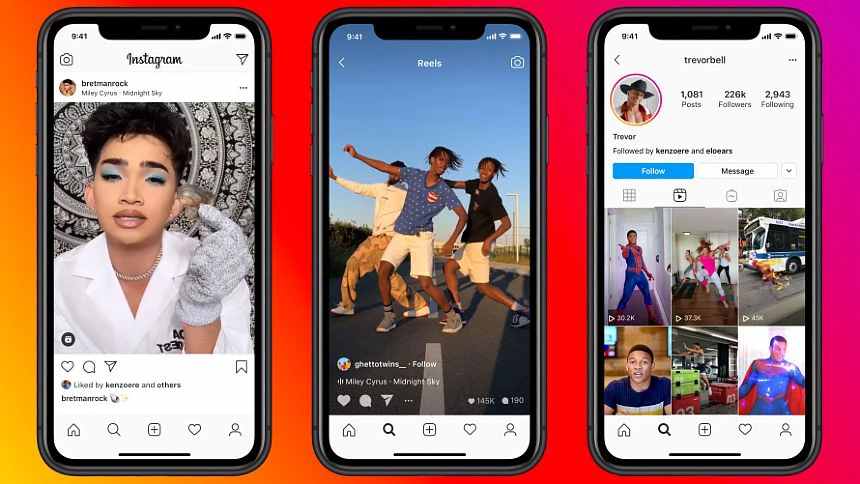
In 2020, pressured by the rise of TikTok , Meta decided to repeat the strategy used against Snapchat and its short-term posts: imitating what made the competitor famous .
Thus was born Reels, a 15-second video tool incorporated into Instagram and Facebook , which, five years after its creation, is expected to generate over US$50 billion in annual revenue, according to The Wall Street Journal (WSJ) .
This means the company is expected to surpass Coca-Cola 's revenue in 2024 ($47.1 billion) and Nike 's by the end of fiscal year 2025, which ended on May 31 ($46.3 billion). Meta's consolidated revenue in 2024 was $164.5 billion, up 22%.
The value also surpasses that of the competition. Analysts project that YouTube will have revenues of US$46 billion this year. TikTok, the source of "inspiration" for Reels, is expected to reach US$17 billion, according to estimates from the consulting firm eMarketer.
The projection shows how much Meta has improved with Reels, after internal memos obtained by the WSJ indicated that the tool was not achieving the expected results.
In an earnings call, Zuckerberg attributed the performance to the artificial intelligence (AI) -based video recommendation system. According to him, the tool began offering content more aligned with the user's profile, increasing the time spent watching videos on Instagram by 30%.
Reels reinforced Meta's work to expand Instagram and Facebook beyond social networks where users only see content from profiles they follow, whether friends, celebrities, or creators.
What TikTok did, and Meta "copied," was to change the logic of social media , showing users videos from accounts they don't follow and inferring their preferences based on interactions and viewing time.
It worked. Estimates from the consulting firm Sensor Tower show that Instagram users spend an average of 27 minutes a day watching videos on Reels, up from 21 minutes on the same YouTube platform. TikTok remains in the lead, with an average of 44 minutes.
With Reels now established, Meta's plan is to expand the tool. Television , considered "dead" due to the growing consumption of content on tablets and smartphones , is a central piece in the strategy to increase advertising revenue.
One of the plans is to allow watching short videos on TV, since many people mirror the app on their televisions, according to Tessa Lyons, Instagram's vice president of product.
A few weeks ago, Meta began testing an app that facilitates this mirroring. It was made available to users of Amazon Fire TV , a streaming device that transforms any television with an HDMI input into a Smart TV, in the United States.
In April, Meta launched Blend, a tool that allows users to create personalized video feeds based on their algorithms and those of their friends. Last month, the company began offering more control over the themes of the videos suggested by the algorithm.
The investment in television is yet another example of Meta "copying" successful practices from competitors. In this case, YouTube.
Last year, Alphabet 's platform became the most-watched video provider on televisions in the United States . Americans watch more YouTube videos on TV than on mobile phones or other devices.