

Just five days after completing a R$780 million fundraising round for its first "purebred" fund, focused on the shopping centers in its portfolio, JHSF is back in the game. And this time, with even more momentum.
The high-end real estate group announced on Wednesday evening, December 10th, that it has completed the sale of its inventory of completed and developing properties in its real estate development division, in a deal worth R$ 5.2 billion, exceeding the initially projected R$ 4.6 billion.
This package was sold to a Real Estate Investment Fund (REIT) anchored by Itaú BBA, Bradesco BBI, and XP. The vehicle was structured and will be managed by JHSF Capital , the asset management arm of JHSF, which, in turn, becomes one of the investors in this fund, effectively making it the second "purebred" fund in its portfolio.
In this arrangement, JHSF will be an investor in the subordinated tranche of the real estate fund , with a stake equivalent to approximately 24.9% of the tranches. The remaining tranches will be subscribed by the fund's senior tranche holders.
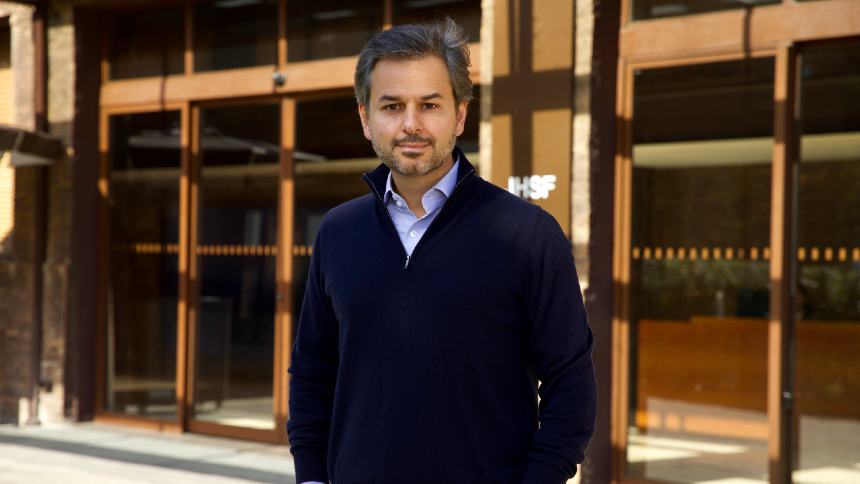
“This is the largest IPO in the history of the Brazilian capital market, not only in terms of REITs, but in the entire real estate sector,” says Augusto Martins , CEO of JHSF, to NeoFeed . “And it’s transformational for JHSF, in terms of model, structure, and how much it will further catalyze our two business theses.”
The two theses in question involve precisely the incorporation segment, the segment through which JHSF became known. And, completing this pair, are the recurring revenue businesses, which include shopping malls, hotels and restaurants, airports, rentals and clubs, and JHSF Capital itself.
These latter arms began to gain strength in early 2024, when Martins took over the leadership of JHSF. And since then, each quarter the company has made progress in the results – and in the connection – generated by this ecosystem focused on high-income consumers, within a "lifestyle center" concept.
Despite this thesis being reflected in the financial statements, the executive emphasizes that the company felt the need to provide more clarity about these two strategies. This is in addition to the difficulty, in this context, for the market to have a more accurate perception of the intrinsic value of each of these businesses.
“We studied more modern structures, mainly from American companies, to develop real estate projects in investment funds,” says the CEO – the spin-off option was ruled out due to liquidity restrictions on the B3 stock exchange. “The challenge has always been the size of our inventory.”
He notes, however, that the group is turning the page on this issue with the sale of its real estate development assets. And, on this point, he emphasizes the fact that the amount raised from these assets alone, R$ 5.2 billion, is greater than the market value of the entire JHSF – currently valued at R$ 5.1 billion.
“This shows the uncaptured value within this structure,” says Martins, who also highlights the other side of the coin. “And it also underscores how much value it unlocks for a company that generates more than R$ 1 billion in recurring revenue.”
Starting from this billion-dollar figure generated by JHSF's other strategy, he adds: "Recurring income companies, in general, operate at between 10 and 15 times this multiple, which should be the appropriate perception of value for this new structure."
An essential part of the plan to turn this around, the REIT in question will be composed of completed and developing inventory of projects such as Boa Vista Village, Boa Vista Estates, Reserva Cidade Jardim, São Paulo Surf Club Residences, and Fazenda Santa Helena.
At the same time, JHSF will retain a portion of the inventory from these projects. These "slices" will be allocated to its recurring revenue business, more specifically, residential rentals. In Boa Vista Estates, for example, the group will have 700,000 square meters for this purpose.
At Reserva Cidade Jardim, the company will own 62 apartments in the Fasano Cidade Jardim hotel. Meanwhile, at São Paulo Surf Club Residences, it will occupy two of the four towers. This package also includes units at Boa Vista Village and Fazenda Santa Helena.
“Even with this huge sale, we retained inventory to strengthen the recurring revenue pipeline,” he says. “It’s the perfect combination. We provide more clarity to both arms of the business, put R$ 5.3 billion into the cash flow, moving towards negative net debt in the medium term, and we have more room for investment.”
Within the total volume involved in the transaction, R$ 3.49 billion will enter JHSF's coffers on December 15th, upon settlement. The remaining amount of R$ 1.74 billion will be received in December 2026.
Martins emphasizes that incorporation remains strategic. And, from this perspective, he highlights another point: JHSF will continue to be responsible for the development of assets that have not yet been completed – which translates into a land bank with a total sales value (VGV) of R$ 30 billion.
“This transformational model opens a very important avenue for us to launch new products in the same way we did with the company's entire inventory,” he says. “Now, we have the option of seeking these more modern financing structures.”
Finally, Martins also emphasizes that, with the new transaction, JHSF Capital reaches approximately R$ 10 billion in assets under management. He adds that there are already other "purebred" vehicles under study to increase this figure.
“In the future, the plan is to have one fund for the airport and another for properties,” says Martins. “We will have the complete portfolio, opening up the option for investors to look both directly at the company and at each business strategy.”