

With Chinese cars increasingly gaining favor with global consumers, hedge funds are seizing the opportunity and shorting the debt and equity of major European automakers.
Funds have increased their bets this year against long-term and perpetual debt securities of Stellantis , Volkswagen , BMW and Mercedes-Benz, while shares of these companies are among the main targets of short positions in the European market, according to a report in the Financial Times (FT) .
Stellantis is one of the main targets of the funds. A debt security issued by the owner of brands such as Jeep, Fiat and Citroën was the most shorted investment-grade corporate bond in Europe, according to Bank of America (BofA) at the end of May.
More than 18% of the €800 million bond maturing in 2035 was shorted (an indicator of short selling) on June 12, up from 14% earlier in the year, according to S&P Global Market Intelligence data cited by the Financial Times .
Hedge funds also hold short positions equivalent to 7.2% of a €500 million Stellantis bond maturing in 2036 and 9.7% of a €1.8 billion perpetual bond issued in March.
The situation is also repeated in the stock market. Short interest in Stellantis shares rose from 1% at the end of December to 5.8%, according to the Financial Times .
Stellantis is not alone. Volkswagen ranked third among the most shorted stocks in Europe at the end of May, according to BofA. The company's perpetual bonds, considered riskier, have been particularly targeted. Short positions against a €750 million subordinated issue jumped from less than 9% at the beginning of the year to 16.2% in June.
The funds also hold short positions in a €750 million BMW bond maturing in 2035 and in two €500 million bonds maturing in 2032 and 2033, according to the Financial Times .
Bets against a €300 million bond maturing in 2030 issued by Mercedes-Benz have increased from 5.5% to 9.2% since the beginning of the year.
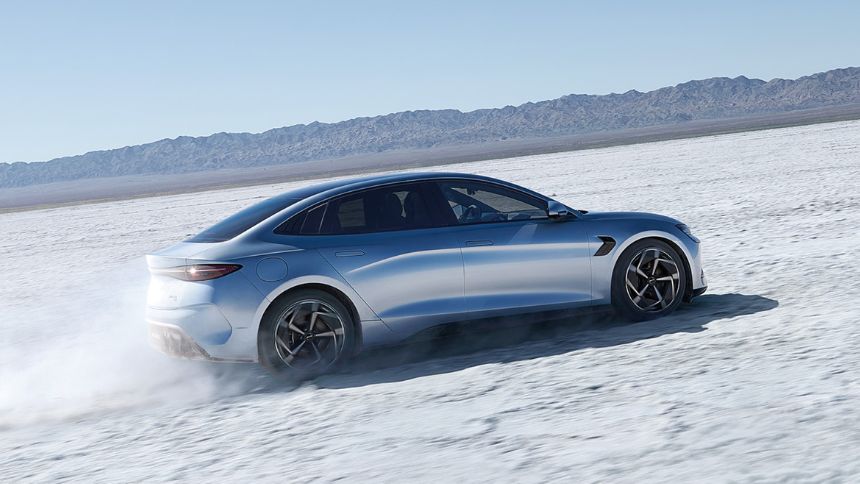
European automakers have been struggling in recent years with the arrival of Chinese competitors, who have entered the market with a more modern range of electric and hybrid cars and competitive prices.
In the first four months of the year, Chinese manufacturers, including BYD and Geely, captured 8.5% of the European Union (EU) market, compared to 6% in the same period of the previous year, according to the European Automobile Manufacturers Association (ACEA).
The blame doesn't lie solely with the Chinese. European automakers are also facing weaker demand in the Old Continent and are still feeling the effects of import tariffs imposed by the United States.
These factors reinforced the perception that the situation in the European industry is not circumstantial, but structural, with automakers having fallen behind their competitors.
Faced with the difficulty of competing with the Chinese, companies have decided to resort to protectionism. This month, Stellantis, Volkswagen, and Renault advocated for the creation of "Made in EU" targets, which would reward manufacturers that keep production within the European bloc.
At the same time, Europeans are forging partnerships with the Chinese to take advantage of the country's lower costs and advanced technologies, seeking to upgrade their products and processes.
Meanwhile, Chinese automakers' appetite for the European market remains strong, at a time when they are beginning to face signs of saturation in their domestic market. This week, BYD announced plans to invest nearly €2 billion by the end of 2027 to develop the necessary infrastructure in Europe for its five-minute ultra-fast charging technology.