

The calendar for the second quarter of 2026 was not the most favorable for shopping malls and retailers. In addition to Easter in early April, the longer World Cup worked against them, causing the already traditional drop in consumer traffic in shopping centers, especially on days when the Brazilian national team played.
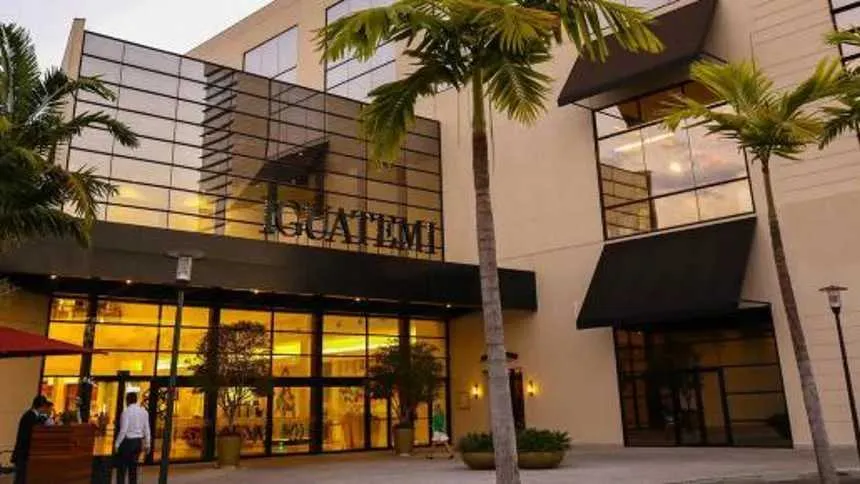
Part of these impacts can be measured in Iguatemi 's balance sheet . The shopping center operator recorded a 32% drop in sales on the dates of the Brazilian national team's matches compared to the same days in 2025. Without this effect, sales in June would have grown by about 7%.
Although the tournament affected these operational indicators, the group understands that, unlike the performance of the team led by Carlo Ancelotti in the United States, the overall result for the period was positive.
“It was a difficult quarter, due to these calendar effects, but it showed the resilience of our portfolio,” says Guido Oliveira , CFO of Iguatemi, in an interview with NeoFeed . “But we can’t complain.”
Some figures support this perspective. The indicators follow a pro forma view, as the group understood that this was the most appropriate way to reflect the intense movement in its portfolio made between the second quarters of 2025 and 2026.
In practice, Iguatemi took into account the stakes in the assets it currently holds in its portfolio and the performance of these operations in the two periods to establish a fairer basis for comparison.
During this period, on one hand, the group reduced its stakes in the Market Place, Galleria, Iguatemi Ribeirão, Iguatemi Rio Preto, Iguatemi Alphaville, and Praia de Belas shopping malls. And, on the other hand, it bought a stake in Pátio Paulista and increased its stake in Pátio Higienópolis.
Under the terms of this restructuring, the company reported a recurring adjusted net profit Pro Forma of R$ 133.8 million between April and June of this year, representing growth of approximately 22.1% compared to the same period in 2025.
Adjusted net revenue increased 11.6% to R$396 million, while total sales expanded 4.6% to R$6.6 billion. Recurring adjusted EBITDA rose 10.8% to R$290.5 million, and adjusted operating cash flow (FFO) jumped 21% to R$170.9 million.
In the figures that exclude these pro forma adjustments, adjusted net income decreased by 35.8%, while adjusted net revenue fell by 2.7%. In the same comparison, adjusted EBITDA registered a drop of 34.8% and adjusted FFO of 28.9%.
Oliveira, however, offers other arguments to "defend" the performance during the period. "We closed the quarter with a very high occupancy rate, a discount level that is the lowest in the last fifteen years, and a net delinquency rate close to zero," says the CFO.
The average occupancy rate was 96.9%, up 0.5 percentage points. Rents for the same stores and same areas grew 2.7% and 2.5%, respectively, and rent per square meter of owned space increased 11.8%, to R$ 703. Net delinquency decreased 0.2 percentage points, to 0.1%.
In other indicators, sales from the same areas and the same stores grew by 4.2% and 1.7%, respectively. Sales per square meter of owned space, in turn, registered an increase of 13.3%, to R$ 9,837.
According to Oliveira's assessment, the changes made to the operator's portfolio over the past twelve months are precisely the main factor explaining how the company navigated the second quarter of 2026 without major setbacks, despite the impacts of the period.
“We exited weaker malls and expanded our presence in the most productive ones, which boosted our numbers,” says the CFO. “And, for the second half of the year, the commercial outlook remains optimistic, in terms of demand and store retention.”
Regarding the mix, the second quarter brought new developments such as the opening, last week, of one of the first own stores of the Swiss sportswear brand On at JK Iguatemi, in São Paulo.
This shelf also included the announcement of a new Dior store in Iguatemi São Paulo, in a 600-square-meter space, as well as the opening of H&M stores in the Iguatemi Porto Alegre and Praia de Belas shopping malls.
Oliveira emphasizes that Iguatemi consolidated all these major changes in its portfolio without leveraging its operations. The company closed the quarter with a leverage ratio of 1.62 times. Without considering the impact of capital gains from the sale of minority stakes in the first quarter, the leverage would be 1.81 times. A year ago, the ratio was 1.90 times.
The improvement in the liabilities equation also featured on the quarter's agenda. After raising R$ 535 million at the end of June through a Real Estate Receivables Certificate (CRI), the group made an early redemption of the 2nd series of its 11th debenture issuance, in the amount of R$ 236.1 million.
“We are maintaining our financial discipline, given the high interest rate environment,” says Oliveira. “But even in this context, with this liability management and our cash generation, we are continuing with our investments. Today, we have five construction sites.”
With capital expenditures between R$450 million and R$600 million for this project by 2026, the works include expansions and retrofits at the Iguatemi São Paulo, Iguatemi Brasília, Market Place, and Iguatemi Campinas shopping malls, as well as Casa Figueira, a planned neighborhood integrated with the latter shopping center.
The CFO adds that, apart from these projects, there is still room for significant recycling moves and portfolio allocations at Iguatemi, which, along with the financial report, also announced a new share buyback program of R$ 60 million, valid until December 2027.
Iguatemi's units closed today's trading session up 1.07%, quoted at R$ 25.57, exactly the same level as at the end of 2026. The group is valued at R$ 7.6 billion.