

Brasilia - A select list of export sectors in the Brazilian economy has been suffering doubly from the United States, due to the perverse combination of high tariffs and anti-dumping duties.
In addition to the successive tariff hikes imposed by President Donald Trump's administration, sectors such as steel, aluminum, copper, honey, lemon juice, rubber, and uncoated paper have had to manage a double tariff crisis with Washington.
This scenario occurs even though some sectors have managed to specifically escape the new 12.5% forced labor tariff (within the so-called "Section 301"), which came into effect last week. This is the case for steel and aluminum – however, they still pay the 50% tariff increase from last year and also face anti-dumping tariffs applied by the Americans in recent years.
The anti-dumping measure was already in effect for these sectors, but since it is an ongoing investigation, there are cases where the tariff has already been renewed in 2026. In this process, the tariff can be reduced, canceled, or maintained with each review.
According to Celso Figueiredo, a partner at the law firm Barral Parente Pinheiro Advogados and a PhD in international law, who has been working directly with Brazilian exporters in the US capital, these sectors are being "doubly penalized." "These products are being doubly affected. And this implies double the work," Figueiredo told NeoFeed .
The lawyer explains that the process for reducing or exempting a company from having to pay an anti-dumping tariff is very detailed, as it generally involves years of price renegotiation with the presentation of various technical evidence and multiple steps within the US government.
Antidumping is a legitimate trade defense mechanism validated by the World Trade Organization (WTO), used by a country whenever it believes that the export price charged by a company is lower than the price charged in the domestic market of the exporting country. In this case, the importing country that considers itself harmed begins to charge a surcharge on the product brought from abroad.
Figueiredo also points out that, given the dependence of the US consumer market on a specific product, it is possible that even so, the imposition of antidumping duties and tariffs may not be sufficient to stop Brazilian exports of that item.
“It doesn’t eliminate shipments entirely, but it decreases significantly because you lose a competitive advantage compared to other competing countries,” he emphasizes. “We are increasingly involved in these dumping investigation processes by the United States, also working to protect their market position in Brazil.”
However, there are cases in sectors with lower export volumes, such as lemon juice, where the combination of anti-dumping measures and high tariffs will certainly make future shipments to the United States completely unfeasible, says a source in the Brazilian juice export sector. In other words, it is no longer worthwhile to export due to the double blow, and the company will have to stop exporting to the Americans.
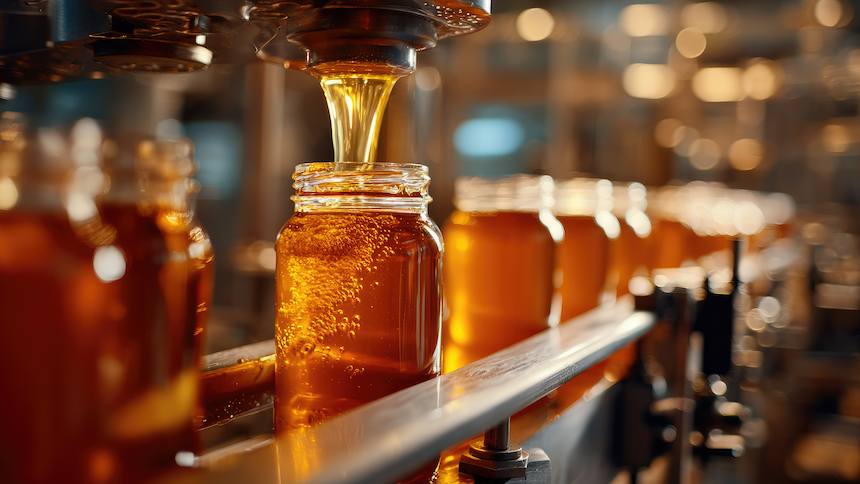
Brazilian organic honey, for example, is a symbolic case of this double tariff burden. Companies exporting the product have been paying an anti-dumping tariff imposed by the US since 2021, and in March of this year the surcharge was renewed, albeit at a lower level.
During the investigation process, exporters were able to prove that export prices have actually been rising. The tariff, which reached 30%, was not discontinued by the Trump administration, but was recently revised from 9% to 5%.
Renato Azevedo, president of the Brazilian Association of Honey Exporters (Abemel), says that the double blow suffered by the beekeeping industry was not greater only because Brazil's main competitors (India, Argentina, Vietnam) are also facing lawsuits for alleged dumping against the US.
“Of course, antidumping measures plus high tariffs are bad. Tariffs are terrible; they only increase the cost of the product,” says Azevedo. “We want to eliminate this [antidumping] tariff.”
Currently, he says, the situation is somewhat more favorable. But last year, companies even stopped exporting. About 80% of the US$117 million in Brazilian shipments of organic honey (the most exported item by this industry) are destined for the USA.
Approximately 55% of Brazilian production is exported. "It's a gigantic dependence on that market [the US]."
Another sector also affected by this situation is the paper and pulp industry, which will have to pay a massive tariff of 37.5% (12.5% for forced labor extended to several countries and 25% of the tariff applied to Brazil).
In the case of uncoated paper (bond paper, book blocks, etc.), the United States has been levying an anti-dumping tariff on these Brazilian products since 2022 – this levy will continue until next year.
“We’ve noticed for some time now that, due to this imbalance in international trade, each country is protecting its own market,” says Carlos Mariotti, industrial policy manager at the Brazilian Tree Industry Association (Ibá), an organization that represents paper and pulp companies.
"And we are experiencing this in the domestic market as well, where Asian exports that used to go to the United States end up shifting to South America, mainly to Brazil."
According to the executive, Brazilian exports from the sector to the North American market still exist, but they are decreasing. "Our biggest concern is maintaining competitiveness," Mariotti adds.