



Serasa Experian's monthly survey, the Map of Default and Debt Negotiation for February of this year, indicated a total of 81.7 million indebted Brazilians, an increase of 8.9% compared to the same period in 2015 and the highest number in the entire historical series, which began ten years ago.
As these indicators reach record levels and attract attention, another, less talked-about area gains credibility : the NPL market, based on the purchase of portfolios of non-performing debt from financial institutions by companies specializing in debt renegotiation.
In 2025, the sector generated R$ 34 billion in Brazil, an annual jump of 21.4%, according to data from Recovery. The company is Itaú Unibanco 's arm in this area. And even without much media attention, it plays a relevant role in the operation of the largest private bank in the country.
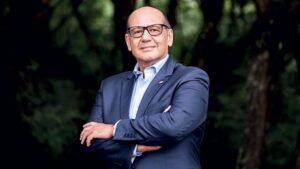
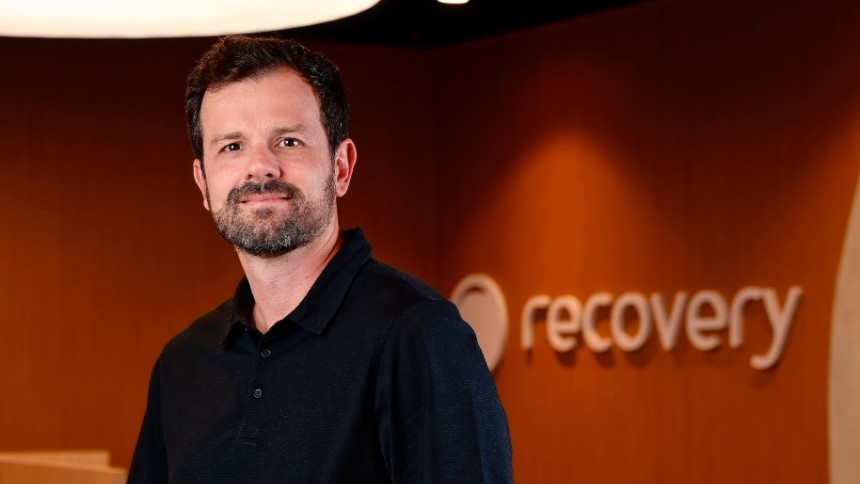
“Itaú is an ocean liner, we are the lifeboat,” says Bruno Russo Franco, CEO of Recovery, in an interview with NeoFeed . “But even in the final cycle, which is debt collection, we are on the main conveyor belt of any bank, which is credit. And we are not in a small market.”
Recovery's numbers give a good indication of what's at stake. The company ended 2025 with revenue of just over R$1 billion – basically, the amount of debt recovered – and a package of 6 million renegotiated agreements.
Currently, the company has approximately R$ 150 billion in non-performing loans under management and 33 million debtors in its database, which is predominantly made up of individuals, a segment that represents approximately 95% of the portfolios purchased.
The portfolios are purchased from Itaú, as well as other financial institutions and sectors of the economy. These agreements are based on the face value of the debts, plus 60 days of interest. At Recovery, the average volume recovered from the portfolios is 15%, which is already included in the price of these transactions.
At the renegotiation stage, the company's model includes offering discounts averaging 50% to 70% of the debt, but which can reach up to 99%. There is no limit on the number of installments, but rather on the value of the payment slips, which must be above R$ 50. The greater the number of installments, the smaller the discount.
One of the main players in this market, Recovery was founded in 2000 in Argentina. It subsequently expanded its operations to Mexico and Brazil, the only operation that, years later, succeeded. And in 2011, its control was acquired by BTG Pactual .
At the end of 2015, Itaú took control of the operation. The R$1.2 billion deal marked the bank's entry into the segment and, conversely, BTG Pactual's exit from this space. Eleven years later, Recovery is one of the main players in the market. But it's not alone in this race.
The main rivals are Return Capital, from Santander ; RCB Investimentos, from Bradesco ; and Arc4, which acts as BTG Pactual's arm for retail investors and marked the bank's return to the sector. Another player is Ativos, from Banco do Brasil , which is more focused, however, on the bank's own portfolios.
Portfolio diversification
This movement was accompanied by two changes in the market. "The first was an acceleration in the aging of debts," says Franco. "The large banks had a large concentration of portfolios with longer delinquency rates, from 4, 5, even 7 years. And the cost of keeping these operations in-house."
According to the executive, upon realizing that they could anticipate this revenue and, at the same time, have a tax benefit from the sale of an asset that was already provisioned, these institutions began selling portfolios, on average, within a period of one and a half to two years.
The second change came with the diversification of who was selling these portfolios. First, with the advancement of credit fintechs, digital banks, and credit cooperatives. Then, with retailers. “Five years ago, you had 15 sellers in the market. Today, I talk to 150 a year, and in practice, 75 are already selling,” says Franco.
Data from Recovery, whose market share in these transactions is around 35%, indicates, for example, that considering transactions carried out in the market as a whole, fintechs and digital banks registered an annual growth of 26% in the volume of non-performing loans assigned in 2025.
According to Franco, there are more sectors willing to bolster this account. He doesn't reveal names, but says that, more recently, Recovery has started buying portfolios from cosmetics and education groups. And that these companies are leading the way for other players in these segments.
For 2026, the CEO adds other ingredients to highlight the growth prospects in this base of assignors. And, consequently, in the volume of non-performing loan portfolios available to the sector – today the estimated volume of stock under management in the market as a whole is around R$ 800 billion.
“The expectation is that Bradesco, which didn’t sell any portfolio in 2025, will return to the market,” he says. “And there’s also the case of Caixa, which has an absurd amount of stock and made its first sale in February. The last one was in 2015. Now, it seems they’re coming back with energy for 2026 onwards.”
At the other end of the spectrum, regarding debt collection, he highlights the record number of indebted Brazilians. He adds: “We have never had so many debts per individual taxpayer identification number (CPF) in the country. Three years ago, the average was 2.2 debts. Today, that figure is at 3.5.”
Real-time artificial intelligence
In this scenario, one of Recovery's focuses in 2026 will be to improve negotiations with these clients – with more flexibility and in real time. And, for this, the company's big bet is on advances in generative artificial intelligence, with models in training and production for about three months.
“Today, AI can actually converse. It’s as if this customer were entering a store and could negotiate,” says Franco. “Before, we couldn’t. The negotiation was more packaged, and we didn’t have the technology for that.”
In addition to real-time negotiations, which have quickly led to a reduction in discounts granted, technology has allowed Recovery to advance in offers that reconcile different debts from the same individual taxpayer identification number (CPF), simplifying the process and opening opportunities for better settlement terms.
In line with what Itaú has been doing, what enabled the company to make these moves was the migration, about three years ago, of its entire back-office infrastructure to the cloud, in this case, Microsoft's Azure.
Regarding portfolio acquisitions, one modality that will be reinforced is loans secured by vehicles – the so-called car equity, a segment in which Recovery began to invest seriously during the pandemic. At the time, its market share in this area was around 3%.
“These were the portfolios that suffered the least at the time, due to having collateral attached,” says Franco. “Today, our market share is 15%, and we want to reach 50% of the portfolios purchased in this area, because I distribute my risk and am not so exposed to market fluctuations.”