


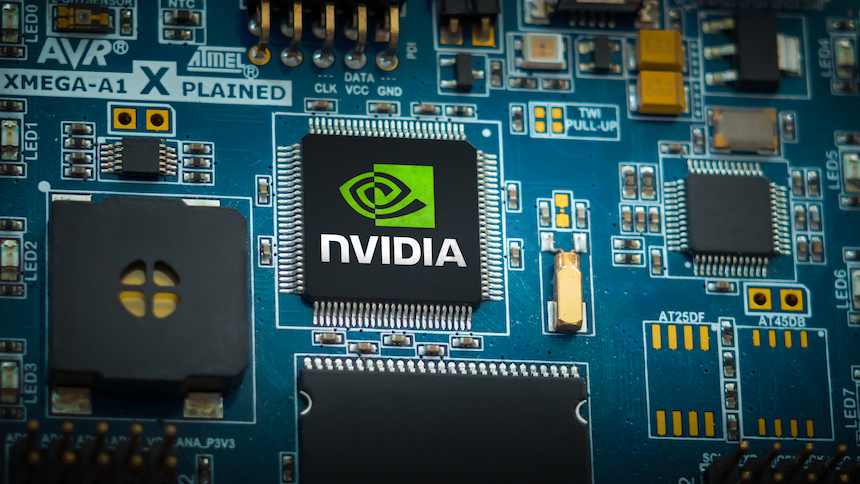

Nvidia has just intensified the competition with brands like Apple and Intel even further after launching its first "super chip" of artificial intelligence focused on personal laptops, this Monday, June 1st. With it, it will be possible to run the AI agents so often touted by the company.
Called RTX Spark, the product is presented as "the most efficient PC chip ever built" and is intended for creators, AI developers, and gamers.
Initially, the chips will be installed in Windows-based laptops developed by Dell , Lenovo , Microsoft , HP, Asus, and MSI. The expectation is that soon, approximately 30 laptop models and 10 desktop models will utilize the new chips, developed from Nvidia's graphics processing unit (GPU).
"This reinvention of the computer is as significant as the reinvention of the telephone into what we know today as the smartphone," said Nvidia CEO Jensen Huang during the opening of the Computex technology fair in Taipei, Taiwan.
The new chips demonstrate the advancement of artificial intelligence and, for many, a shift in the course of businesses within this market. The sector, which was previously focused on large language models, is now moving away from the human universe and connecting to tens of millions of AI agents, the famous bots, that autonomously perform all kinds of activities.
This is the market that Nvidia, a company with a market value of US$5.1 trillion, is targeting with its new chips. The company believes that AI agent technology could soon replace consumers' use of chatbots like ChatGPT , Gemini, and Claude .
“That era is coming to an end,” Kari Briski, vice president of generative AI software at Nvidia, told the Wall Street Journal . “Agents are the new workload. They will be everywhere, from data centers to the end consumer.”
On Sunday, May 31st, Nvidia had already presented its new line of AI computing hardware to the market, widely known as Vera Rubin.
The new generation of products includes the company's most powerful GPU, as well as servers developed exclusively for Vera CPUs and a system of chips designed by Groq, a technology that cost Nvidia US$20 billion last year.
The new products, which are already in production, will reach the market in the third quarter of this year. Ian Buck, Nvidia's vice president for hyperscale and high-performance computing, explained that this initiative is part of the company's vision that, with the rise of agentic AI, it has become impossible to meet consumer needs with only powerful chips or even customized servers.
“This requires advanced networking hardware, software libraries that developers can use to program chips and design models, as well as large data center clusters capable of connecting tens of thousands of processors and processing data quickly and cost-effectively,” the executive told the WSJ.