


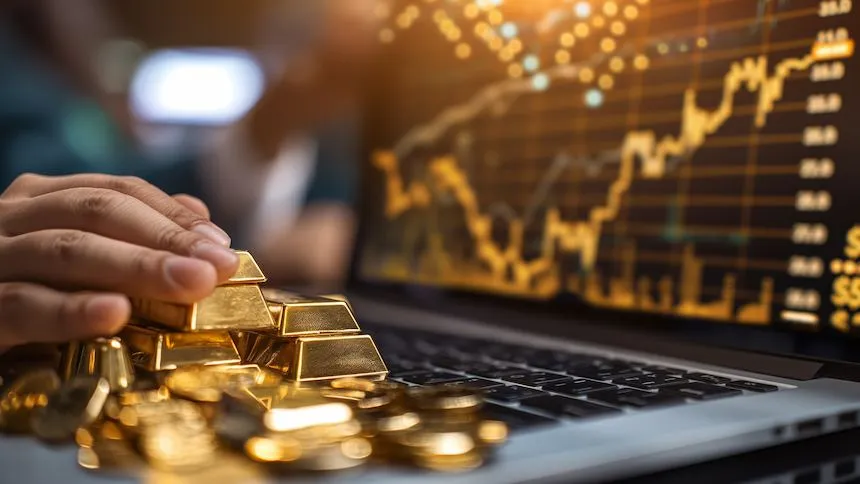
Eternally seen as the last safe-haven asset in times of economic crisis, gold has accumulated consecutive record highs since last year – with the turbulence generated by US President Donald Trump's tariff policy combined with the prospect of falling interest rates in the US – but now faces a reversal of expectations as the war in Iran enters its fifth week.
The metal even registered a slight increase of 1.6% on the morning of Tuesday, March 31, after the spot market closed on Monday, March 30, with a drop of more than 13% this month, or more than US$700 per troy ounce – which led banks and financial consultancies to assess the fall in spot prices in recent weeks as a strong trend that is likely to consolidate.
As a result, gold is on track to close March with a 14.6% drop in its price – which would represent the metal's biggest monthly decline since October 2008, when prices fell 16.8%.
A combination of factors helps to understand the volatility trajectory of gold and other precious metals, such as silver, platinum, and palladium. The first of these is the inverse relationship that gold maintains with the yields of US Treasury bonds and the US dollar – when these rise, as has been happening recently, the price of a troy ounce tends to fall.
Two other factors are having a major impact on this trend. The war in Iran is causing oil and gas prices to rise, increasing expectations of an inflationary spike across all economies, which could lead to a series of interest rate hikes.
This outlook puts pressure on gold prices because it tends to perform well when interest rates are low and the opportunity cost of holding the metal is low. When rates are higher, investors tend to sell off gold in favor of other assets, such as Treasury bonds, which offer stable income.
Before the war, financial markets expected two interest rate cuts by the Federal Reserve, the US central bank. Today, the market is not pricing in any monetary easing this year. Investors observed a similar dynamic in 2022, when Russia's large-scale invasion of Ukraine led to a surge in energy prices, fueling inflation. Gold fell for seven consecutive months, between April and October of that year.
Portfolio sale
Furthermore, the declines in gold may also have been exacerbated by the strength of the troy ounce price in early 2026 and possibly by a desire among investors to liquidate profitable positions.
Considering the sharp rise in gold and silver prices over the past two years, some investors may be taking profits to cover losses in other parts of their portfolios. Others may want to keep cash on hand due to the strengthening dollar or seek more attractive investments, such as energy sector stocks.
“Liquidity needs in other sectors are outweighing the geopolitical risk premium on gold,” assesses Suki Cooper, global head of commodities research at Standard Chartered , a British bank present in 60 countries, including Brazil.
To give an idea of the ups and downs in the price of gold, the record price of US$5,416 per troy ounce was established on January 28, amidst constant upward trends since the second half of 2025. After surpassing the historic barrier of US$5,000 per troy ounce, gold entered a downward trajectory until reaching a minimum price of US$4,379 last week.
Goldman Sachs , however, maintains an optimistic outlook for the gold market, despite recent volatility, projecting that the metal could reach $5,400 per ounce by the end of 2026. In a note to clients, the bank's analysts acknowledge downside risks in the short term, especially due to gold's vulnerability to further liquidations amid persistent tension in the Strait of Hormuz.
“However, in the medium term, we are forecasting upside risks, assessing that recent geopolitical events — such as the conflict involving Iran and tensions in regions like Greenland and Venezuela — may accelerate the search for safe haven and reinforce demand for the metal,” says the Goldman Sachs report.
In other words, the bank emphasizes that its forecast assumes no significant new sales from the private sector and stability in private diversification, maintaining gold as one of the most resilient assets in a global environment of uncertainty.