

The current state of the Brazilian economy demands caution from companies, especially retail chains. Preserving cash and waiting for the right conditions for growth seems to be the best course of action. Riachuelo thinks differently.
In presenting the second quarter results for this year, which showed a record net profit of R$ 168 million for the period and the 12th consecutive quarter of same-store sales (SSS) growth in apparel, CEO André Farber announced a new expansion cycle.
"Our balance sheet is quite robust and we feel prepared to do this. We will begin a new process of opening stores and renovations in the second half of the year," he tells NeoFeed .
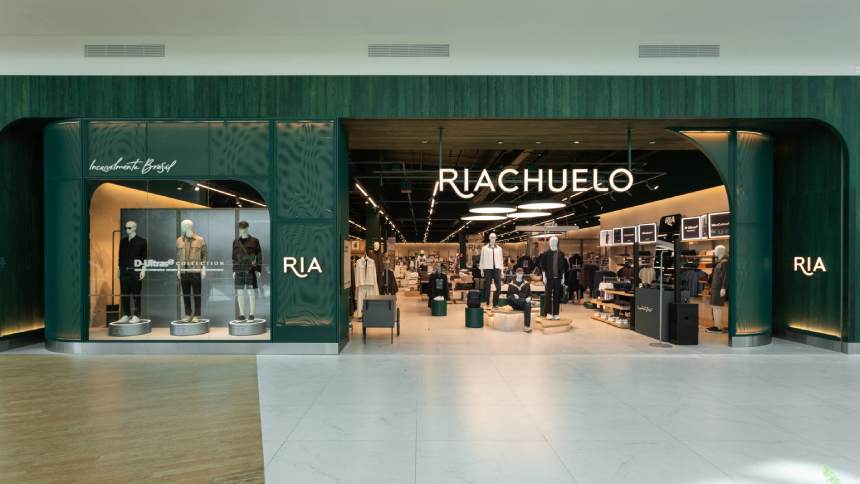
“We plan to open 14 new Riachuelo stores and renovate seven older stores to the new model. These 21 stores are already coming to the new model that we are calling 'the store of the future',” he adds.
This concept had a pilot project launched at the end of last year in Pinheiros, São Paulo. Farber states that the initial results are positive enough to justify the expansion, but he still lacks indicators to show the productivity of the new units.
The store at ParkShopping Barigui, in Curitiba, is in its final stages to become the first full-service Riachuelo store under the brand's "Incredibly Brazilian" model.
In Farber's view, Riachuelo has spent the last few years building a solid operational base to reinvest even in a macroeconomic scenario that remains challenging.
The apparel business, for example, recorded a 7.8% growth in same-store sales (SSS). More importantly, in Farber's view, this performance came from a high base – Riachuelo delivered an SSS of 15.8% in the second quarter of last year.
At the same time, the segment's gross margin reached 59.2%, a record for a second quarter and the 11th consecutive expansion, bringing the EBITDA of the merchandise operation to R$ 342 million.
"Our margin is growing like a Swiss watch. We grew 1.9 percentage points compared to the second quarter of 2025 and 1.9 points compared to the second quarter of 2024. There's a happy coincidence: this represents almost six points of margin improvement over three years," says the CEO.
Riachuelo's improved margins contradict analysts' predictions, which projected that Brazilian retailers would have to sacrifice margins to face competition from rivals such as Shein and Temu .
According to Farber, the increase in profitability for the retail chain did not come from generalized price increases, but from the ability to convince consumers to buy higher value-added products.
"Consumers aren't paying more because we've raised prices. Often, they're buying a R$59 t-shirt instead of a R$39 one because they perceive more technology, innovation, and quality in that product," says the CEO.
According to the executive, this change is a consequence of a deeper transformation of the business. "Riachuelo has evolved from a retail company that sells fashion to a fashion company that owns the retail business."
Business concentration
Instead of dispersing capital in parallel businesses, Riachuelo sold its shopping center - the Midway Mall, located in Natal, for R$ 1.61 billion to a group of investors led by Capitânia Capital in December 2025 - and reinforced investments in the production chain, expanded its factory, increased the number of stylists, accelerated collaborations with designers, and began investing more in technology applied to fabrics and product development.
This vertical integration also gained scale. When Farber took over the company, the factory produced around 27 million pieces per year. By 2026, the expectation is to reach approximately 40 million units, a growth of nearly 50%.
In an environment of high interest rates, expensive credit, and still-pressured consumption, Midway's performance shows that this is the way to go.
The financial arm of the retail chain saw a 6.7% growth in financial revenue in the first half of this year compared to the same period last year, reaching R$ 1.34 billion.
The figures show an improvement in delinquency rates between 15 and 90 days, from 7.5% to 6.9%, although delinquencies exceeding 90 days increased from 17.4% to 18.9%.
Since last year, the group has changed Midway's strategy. Instead of continuously expanding its portfolio of financial products, the institution has focused its efforts on lines considered central to the business, prioritizing profitability and portfolio quality.
According to the CEO, discipline in granting credit allowed the company to navigate a high-interest rate environment while keeping default rates virtually stable.
"We decided to make fewer products, focus on the core products of our business, and this has helped us a lot to execute with focus and discipline," he says.
On the B3 stock exchange, RIAA3 shares have fallen 18.5% this year. The retail chain's market capitalization is R$ 3.9 billion.