

Brasilia - As the government awaits the best moment to send a bill to the National Congress to regulate the new Selective Tax, the Ministries of Finance and Development, Industry, Trade and Services (MDIC) have not yet reached a consensus on the best way to collect the so-called " sin tax " in the midst of an election year. And the uncertainties surrounding the issue, which needs to become law this year, remain.
NeoFeed has learned that there is internal disagreement within the government, between the two ministries, regarding how to collect this tax. The new tax needs to become law sometime in 2026 to be implemented next year, when the entire tax reform also comes into effect.
In recent months, the MDIC (Ministry of Development, Industry and Foreign Trade) has been holding a series of technical meetings with the sectors targeted by the new tax, which in practice will replace the Tax on Industrialized Products (IPI): mining, the sugary food industry, automotive, betting, and cigarettes. It has also been discussing a methodology for collecting the tax, based on a kind of "credit/debit" system.
The Finance Ministry, however, which will have the final say on the matter, prefers to set a maximum tax rate, according to a source involved in these discussions.
If companies meet requirements (energy efficiency, decarbonization, recycling, labeling) to classify products as more or less harmful to health or the environment, for example, they may pay lower tax rates, as proposed by the Treasury.
Therefore, there is yet another uncertainty associated with the topic. As NeoFeed showed in early April, the economic team is considering submitting a bill to the Legislature, most likely in the second half of the year, after the elections. There is even a strong chance that a provisional measure (MP) will be issued in the last days or weeks of the year.
The issue has the potential to cause significant political damage to the government, precisely in the year that President Luiz Inácio Lula da Silva (PT) will attempt to be re-elected. It could also be used as fuel by the opposition to accuse the Executive branch of creating yet another tax.
So far, the Provisional Measure has been pointed out as the most viable resource by the government, since it has the force of law and comes into effect as soon as it is published in the "Official Gazette of the Union". According to constitutional rules, the Executive would have until December 31st to enact a law establishing a new tax rate or creating a new tax.
Even so, the new tax would only take effect 90 days later. If, by chance, the bill is only submitted next year by the next elected government, the Selective Tax rates could only be charged in 2028, according to Brazilian law.
Contacted for comment, the Finance Department and the Ministry of Development, Industry and Foreign Trade (MDIC) did not respond to requests for comment.
Tax risk
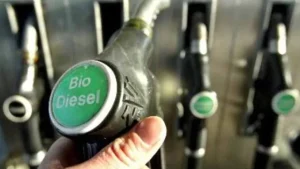
The tax is included in the tax reform and will apply to products or services that are harmful to health or the environment, such as alcoholic beverages, cigarettes, sugary foods, cars and boats, gambling (betting), and minerals.
The selection of these targets for the new tax is stipulated in Complementary Law 214, from last year, which established the new Brazilian taxes: Tax on Goods and Services (IBS); Social Contribution on Goods and Services (CBS) and the Selective Tax.
The sectors that will have to pay the "sin tax" have also been arguing, in debates with the government, that the new tax burden on items such as cars and alcoholic beverages, for example, should not exceed the current tax included in the IPI (Tax on Industrialized Products). The general principle of tax reform is that the overall tax burden should not increase in Brazil.
However, there is an ongoing trend for sectors that cause more harm to health, such as alcoholic beverages and tobacco, to be subject to higher taxes (pay higher rates).
According to lawyer Matheus Bertolo Piconez, partner at the law firm Baruel Barreto Advogados, the Selective Tax should not be calibrated by the logic of maintaining the tax burden, since its main purpose is to discourage harmful consumption. This is different from the new taxes (IBS and CBS), whose functions will be to raise revenue and which are governed by the principle of fiscal neutrality.
"It [the sin tax] should be calibrated by the damage to health and the environment. Those who pollute more or produce more negative externalities should, indeed, pay more," he states.
Piconez also believes that the delay in defining the Selective Tax is also delaying the reform, not in the sense of paralyzing it, but of creating a "costly mismatch." The new tax was conceived as a piece of the reform's transition, coming into effect as the IPI ceases to exist, he says.
"A postponement to 2028 opens a gap in which the replacement remains incomplete, with a loss of revenue and regulatory coherence right at the most sensitive period (2027–2033). The sooner there is clarity, the better for legal certainty and for the success of the tax reform itself," he adds.