


Brasilia — From January to April of this year, federal state-owned companies accumulated a deficit of R$ 5.9 billion, the worst in the historical series that began in 2022, according to data from the Central Bank. Faced with this scenario, one state-owned company plans to get out of the red and make money from the country's major infrastructure projects.
It is Infra SA, a state-owned infrastructure company, that has just presented the government with a plan to become independent from the Treasury and achieve profitability by 2029. Today, it is a dependent state-owned company—a public company that does not have sufficient revenue of its own to finance day-to-day expenses, depends on the Treasury, and in practice competes for budget resources with social programs, for example.
The goal set by the Executive branch is to achieve between 40% and 50% of its own revenue for a public company to be considered a "non-dependent" state-owned enterprise. For now, Telebras is the only state-owned enterprise that has so far managed to become "non-dependent".
Besides Infra - whose process is more advanced, according to the government - Ceitec (a semiconductor manufacturer) and Imbel (an arms industry) are also candidates for this position.
Created in 2022, resulting from the merger of Valec (a state-owned railway company tainted by numerous corruption cases) and EPL (a state-owned company from the Dilma government that barely got off the ground), Infra has been getting its house in order with the goal of achieving an unprecedented positive net worth result by 2026.
“We have a plan to be profitable within three years. Currently, it is still operating at a loss. We are fixing its remuneration, which is very low, to ensure a proper net income,” says Transport Minister George Santoro to NeoFeed .
Linked to the Ministry of Transport, Infra participated in the engineering project modeling of 104 concessions and PPPs for highways, railways, ports, and airports. It has already closed contracts totaling R$ 52.6 million between 2022 and the first quarter of 2026. During this period, the state-owned company also participated in 30 infrastructure auctions, providing technical support through technical and economic feasibility studies.
“I prefer to organize the company for this moment. If I anticipate a step, but the company is not yet at the appropriate level of maturity, it ends up having a problem of the company becoming addicted to not having results and forever taking money from the Treasury,” says Santoro. “That’s why we are being so careful.”
With a budget of approximately R$ 500 million, the minister says that Infra is already close to 50% of its revenue coming from its own sources, but even so, he decided to deepen the governance and transparency processes necessary to change the culture of the state-owned company, which usually takes many years.
To follow this path and achieve the status of a "non-dependent" state-owned company, Infra spent two years getting its house in order, revamped its entire accounting, opened a voluntary redundancy program (for employees inherited from two other state-owned companies), created a commercial area, and began selling logistics and modeling plans to states in the South and Southeast regions. The company currently has 636 employees.
Currently, the company, which is headed by Jorge Bastos (former director of ANTT), has contracts with two ministries: Transport and Ports and Airports. It also envisions replacing commissioned employees with civil servants hired through competitive examinations, in coordination with the government, as these financial performance targets progress.
Between 2023 and 2025, the state-owned company's gross revenue more than doubled to R$ 74.1 million. And in the first quarter of this year it was already R$ 47.4 million.
“The accounting was all wrong, and first we worked to reorganize the finances. We proposed a management contract for Infra, and with these adjustments, the company will quickly jump from 40% to over 80% revenue coverage in relation to expenses, as early as next year. In 2028, it should hit 100% [break even], and in 2029 we expect it to be profitable,” says Santoro.
Currently, Infra S/A is involved in modeling the conservation and maintenance project for the controversial BR-319 highway in the Amazon, under a management contract with the Ministry of the Environment. The government's environmental area required this governance to monitor the works and avoid severe impacts on forest areas and the region's fauna.
"The intelligence they [Infra] will generate there is very significant. They have the potential to develop a great deal of expertise in the market," says Santoro.
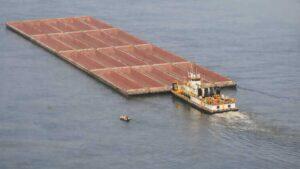
Infra has already participated in auctions such as those for highways BR-040 and BR381 (both in Minas Gerais); railway projects such as the Fiol works and feasibility studies for freight modes — Southern Railway Network (RMS), Central Atlantic Railway (FCA) and Teresa Cristina Railway (FTC) —; and port lease and waterway concession projects (Madeira River, Mirim Lagoon and Paraguay River waterways).
The National Logistics Plan, from the Ministry of Transport, which foresees multi-billion dollar transport concessions, in which Infra SA participates, is expected to generate R$ 600 billion in investments in the coming years. The eight railway concession auctions alone are estimated to generate R$ 160 billion.
On another front, however, among the new projects, according to Santoro, the state-owned company intends to raise funds through the auctions of 20 railway terminals on the North-South line and obtain revenue from the electronic transport document (DT-e) that the government expects to launch soon. Another new area of operation will be organizing port queues, working in data management. "It will have many revenue possibilities," says the minister.
State-owned companies in the red
Of the 43 federally controlled state-owned enterprises, primary deficits are frequent. Recently, nine had deficits due to investments or dividend payments made with resources generated in previous years. Another eight recorded surpluses.
According to the Ministry of Management, however, 17 are profitable and only the Post Office is reporting losses. Furthermore, the Ministry is also implementing a restructuring program (Inovar) for 14 state-owned companies to modernize them and improve their efficiency.
The Ministry, responsible for federal state-owned companies, clarifies that a deficit (a negative financial result between revenues and expenses, but which does not consider cash on hand and accumulated investments) is different from a loss. A loss represents the real or potential loss of value of a company and occurs when the company is unable to cover its expenses or has lost the value of its assets.
In the case of the Brazilian postal service, Correios, the company incurred a large deficit, estimated at around R$ 8.5 billion by 2025. In the first quarter of this year alone, the net loss was R$ 3.1 billion, a result 82% higher than that recorded in the same period last year. Since 2022, the company has accumulated losses of approximately R$ 28 billion.
To get out of the hole, the state-owned postal and logistics company has been conducting a financial recovery plan, which includes a loan of R$ 12 billion taken out last year. It is also running a voluntary redundancy program, which so far has not been entirely successful. The expectation, according to a high-ranking government source, is that the state-owned company will be out of the red starting in 2027.