


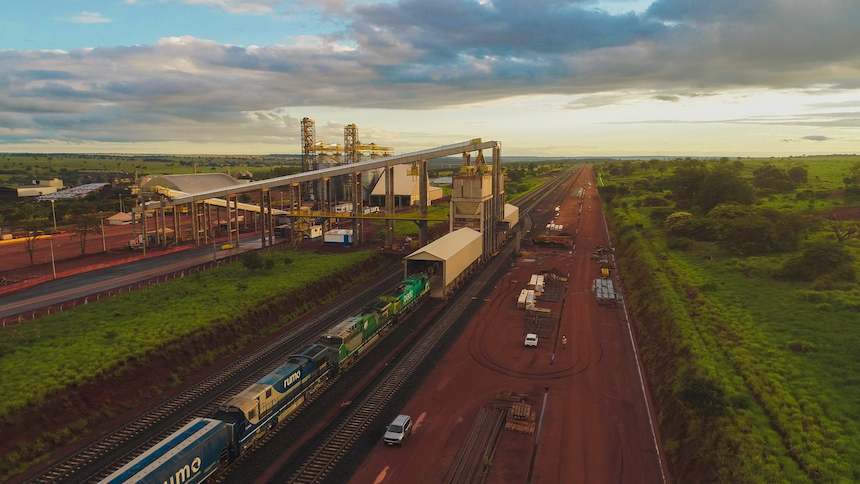
Brasilia - In an attempt to increase the attractiveness of future railway concessions and attract more investors to the sector, the federal government will announce on Thursday, June 11, a portfolio of 20 cargo logistics terminals along the North-South Railway (FNS).
The initiative, revealed exclusively to NeoFeed by the Minister of Transport, George Santoro , is part of a broader government strategy to unlock investments in railway infrastructure and increase competition for projects that will be brought to market in the coming months.
The launch will take place at an event at B3 in São Paulo, which will bring together logistics operators, cargo shippers, banks, engineering companies, and representatives from the National Bank for Economic and Social Development (BNDES).
The FNS (North-South Railway) is 4,155 km long and connects Açailândia, in Maranhão, to Estrela d'Oeste, in São Paulo, where it connects to the Paulista rail network. Of the 20 terminals that will be offered, about ten already exist and are in operation. The others will still be implemented.
The government expects approximately 90% of the traffic to be related to agribusiness, especially grains and fertilizers, but there is also potential for fuels and other cargo.
“I have a terminal that already has people operating. The railway only works if there is a connected logistics terminal,” Santoro tells NeoFeed .
The goal is to create an integrated network between different modes of transport. “The most important thing is interoperability. The entire portfolio is integrated between rail and road, rail and waterway. Our idea is that rail will be used worldwide, as the backbone of freight structuring,” he adds.
The 20 terminals function as a kind of "railway roadshow." The Ministry of Transport realized that, in general, the portfolio needs to be better explained to the market – the announcement comes at a time when the government is seeking to reinforce market confidence in the railway's potential.
Considered one of the main initiatives of President Luiz Inácio Lula da Silva's administration to expand the role of rail transport in national logistics, the new portfolio of railway concessions foresees investments estimated at R$ 140 billion.
The plan includes eight major railway projects: the Southeast Railway Ring, Ferrogrão, the Fico-Fiol Corridor, the Western Network, the Minas-Rio Corridor, the Rio Grande Corridor, the Mercosur Corridor, and the Paraná-Santa Catarina Corridor.
Initially, the government expected to publish the bidding documents and hold the auctions during the current presidential term. However, the complexity of the projects, regulatory discussions, and procedures with the Federal Audit Court (TCU) ultimately made the timeline more challenging, resulting in delays.
Currently, four concessions are already under technical analysis by the TCU (Federal Court of Accounts) and are awaiting consideration by the plenary. Another four are still undergoing final adjustments at the Ministry of Transport before being sent to the oversight body – the government remains committed to moving forward with the portfolio.
“I have no doubt that we will issue the public notices and hold the auctions this year. The worst-case scenario is having only the notices and no auctions. I will prepare all the notices, and the next government will handle the bidding. I want to publish all the notices by December,” says Santoro.
Market doubts
Behind the initiative, the government also seeks to answer questions that still persist among investors and private operators about the new model for railway projects.
Unlike highway concessions, railways require significant investments over several years before generating the first operating revenues, which increases the financial risks of the projects.
"Railways are not like highways, where you lay asphalt and start charging tolls within a maximum of six months. I spend money for a while without generating revenue, and it can take up to eight years for the company to start operating," says the minister.
To reduce this risk, the government intends to adopt unprecedented risk-sharing mechanisms in new contracts. Among them is the coverage, by the Union, of so-called economic viability gaps – situations in which the profitability of the project is not sufficient to attract private investors.
“This is an innovation: government participation in covering the gaps in economic viability. Wherever there is a hole, we will cover 100%,” says Santoro.
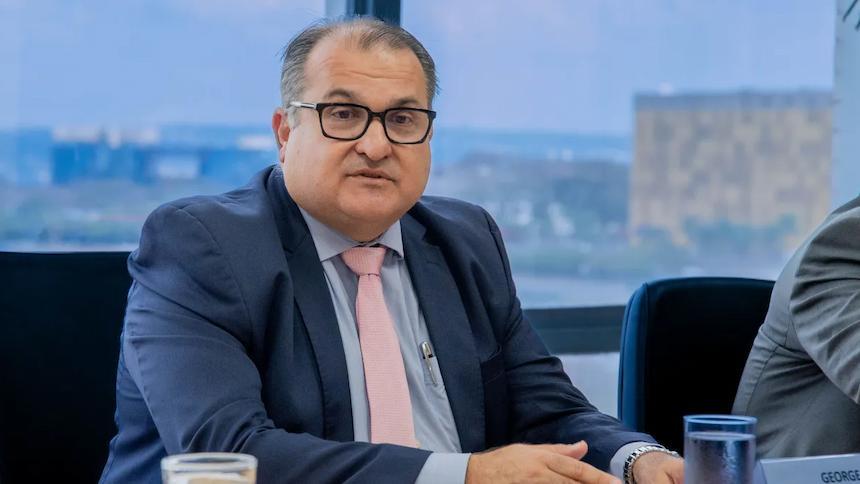
According to the minister, the proposed innovations ended up requiring more analysis time from both the market and the regulatory bodies.
“With the amount of innovation, we arrive at the TCU (Federal Court of Accounts) and they are surprised. And it took longer than we thought as well. Probably, as the market is saying, the schedule we presented was going to slip a little anyway. But that doesn't mean we won't hold the auctions.”
The government's concern is to avoid future bidding processes having low competition, repeating situations recently observed in some infrastructure auctions.
"I don't want that past anymore, because the group doesn't like competition. So, I have to explain the projects. And I want more competition," he says.
As part of this effort to broaden investor interest, BNDES will also announce a new financing line for railway projects on Thursday.
According to Santoro, the line will have a significantly longer term than what is currently available on the market, potentially reaching double the terms currently practiced. “We will have a new line, with double the term for companies. It will double what we have today, which is 20 years. To give you an idea, Rumo is about to inaugurate a stretch of almost 200 kilometers, and they only secured financing for five years.”
The minister states that there are already national and foreign logistics operators supporting the railway terminal initiative, including European and Asian groups.
The government's assessment is that the combination of new terminals, long-term financing, and risk-sharing mechanisms can significantly increase private sector interest in the country's new generation of railway concessions.