

In mid-2019, Bruno Cecatto, 27, decided it was time to seek new professional challenges. Having previously worked at the fintech company Nibo and spent three years at Uber as director of small businesses, looking for a position at a startup was a natural progression.
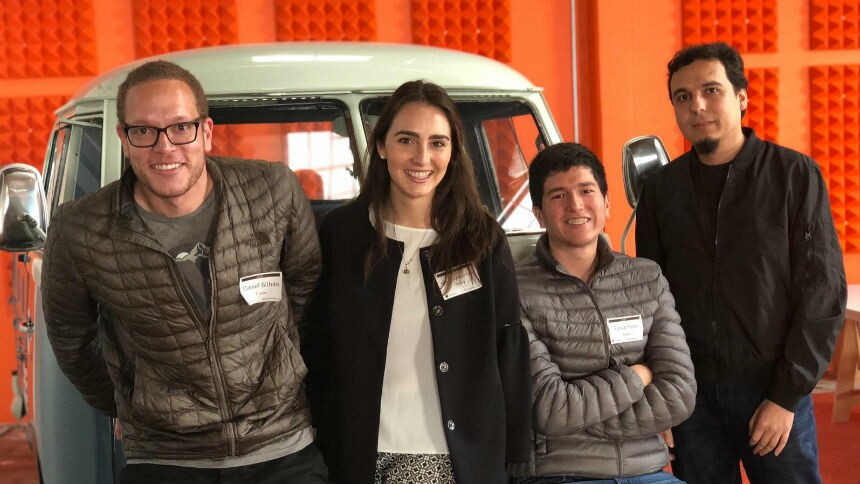
The opportunity arose in a conversation with Andres Bilbao, co-founder of the Colombian company Rappi. His twin brother, Daniel Bilbao, was one of the names behind Truora, a fraud prevention company founded a year earlier in Bogotá.
Focusing on big names in the startup ecosystem, such as Cabify and Rappi itself, the newcomer was beginning to gain traction. And on the path to expanding its customer base, it was looking for someone to structure its operation in Brazil.
Five months after that "meeting," Truora is preparing a new phase in its plan to become the leading name in fraud prevention in Latin America. And under Cecatto's leadership, the Brazilian operation is one of the prime examples of what the company is doing to expand its reach.
“Our model was born, grew, and attracted the attention of investment funds by serving companies in the new economy,” says Cecatto. “But we understand that this proposition can go further and serve other client profiles.”
Truora's platform is geared towards operations that handle large volumes of users, suppliers, and service providers. Its clients also include apps like iFood and 99, which use the tool to register delivery drivers and couriers.
Using robots that automate the consultation of various public sources, Truora validates the information of individuals and legal entities. This process takes, on average, 20 to 30 seconds and involves verifying data and documents such as ID cards, tax identification numbers, driver's licenses, credit checks, and criminal records.
The portfolio also includes facial recognition technologies. And, in a third layer, it applies algorithms to analyze the behavior of users or service providers in their relationship with the client in question.
New segments
Truora's diversification plan includes large marketplaces, banks, and fintechs, as well as smaller operations in these segments, and recruitment and selection companies.
The relationship also extends to small and medium-sized enterprises whose businesses directly involve handling data from individuals and legal entities. This includes law firms and accounting firms, among other companies.
The main novelty of this strategy, however, is the launch of a version of the tool for end consumers, scheduled for this quarter. The idea is to reinforce security in transactions between individuals.
The principle is the same as the business version. With the system, the user will have access, for example, to the evaluation of a service provider or a potential tenant of a property.
In line with the General Data Protection Law, consultations will only involve public sources. And the person whose data will be checked will be informed about this check. At the same time, each user will be able to consult and share their own evaluation.
The initiative already has pilot programs in Colombia and Mexico. With a web version available, the startup is evaluating whether the tool will also be launched as an app. Initially, the product will be paid. However, offering some features for free is also under consideration.
Local operation
To realize these new offerings, Truora is moving forward with setting up its subsidiary in Brazil, officially launched in December. This week, the operation, previously distributed across coworking spaces, is taking shape in an office in Vila Olímpia, São Paulo. The space is shared with Frubana, another Colombian startup.
Brazil was the sixth country to host an operation of the company, whose map also includes Mexico, Chile, Peru, and the United States. By the end of the quarter, the company will open another office in Argentina. A large part of the startup's engineering team is concentrated in Colombia. In this structure, 20 professionals are dedicated exclusively to business in the Brazilian market.
In Brazil, the plan is to hire at least 20 professionals this quarter, in areas such as product and sales. However, everything indicates that new positions will open up by the end of the year. "Our expectation is that Brazil will represent 50% of the company's revenue by 2020," says Cecatto.
The strategy of expanding geographic reach and portfolio gained momentum following a US$3.3 million investment, with participation from Kaszek Ventures and Accel Partners. Truora's investor list also includes Lara Lemann's Maya Capital fund; the American accelerator Y Combinator; as well as Simón Borrero, CEO and co-founder of Rappi; and Fabien Mendez, CEO and co-founder of Loggi.
Beyond the resources invested, Cecatto highlights other benefits of partnering with these companies. Accel Partners, for example, has Checkr in its portfolio, an American startup in the same segment as Truora and valued at US$2.5 billion. Dog Hero, one of Kaszek's portfolio companies, is the company's newest client in the country.
“Both Accel and Kaszek, as well as Maya Capital, open many doors,” says Cecatto. “Whether it’s for interactions with Checkr, for knowledge about how to operate in Latin America, or for access to companies in these funds’ portfolios that could be great clients for our portfolio.”
Follow NeoFeed on social media. We're on Facebook ,LinkedIn , Twitter , and Instagram . Watch our videos on our YouTube channel and subscribe to our newsletter to receive daily news.