




































Gerdau is currently experiencing a double inflection point. The investments made by the company in the last cycle are coming to an end, and the results are about to appear – indicating a potential for pent-up cash generation that is about to be unlocked.
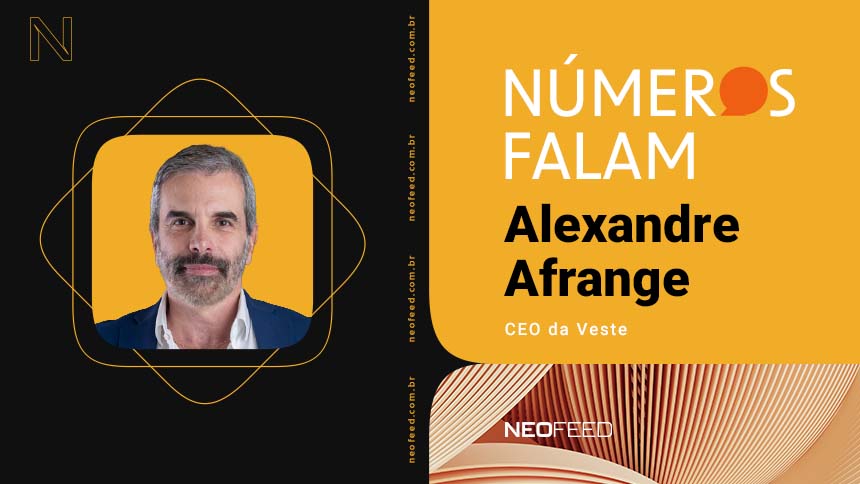
"We have a portfolio of three highly representative projects that, together, are capable of generating, when fully operational, more than R$ 1 billion, almost R$ 1.5 billion per year in EBITDA more than we produce today," said Rafael Japur, CFO of Gerdau, in an interview with Números Falam .
In partnership with CNN Brazil, the NeoFeed program will now be broadcast bi-weekly, on Fridays at 7:45 PM, on CNN Money.
Gerdau's projects were approved in 2021 and 2022 and are being completed throughout 2026, with particular emphasis on the Miguel Burnier complex in Minas Gerais.
In the first quarter of 2026, Gerdau recorded EBITDA of R$ 3 billion, a 25% increase over the previous quarter. Of this result, 75% comes from operations in North America and 25% from the combination of Brazil and South America.
Capital expenditure (capex) for the quarter was R$1.1 billion, a figure that, at first glance, may seem high. But Japur explains that, in recent years, the company has spent around R$6 billion per year on investments. For 2026, the guidance has been reduced to approximately R$4.7 billion.
What may seem like a reduced appetite for investment is actually the opposite. The major projects are nearly complete, the heavy cycle of capital expenditure is coming to an end, and the remaining cash flow will go to the shareholders.
"This difference in reduced capital expenditure that I'm making is cash flow that's left over for the company to return value," said the CFO.
For this reason, the number from the steelmaker that few people look at is the ratio between the share price and the book value per share (P/BV). And this is one of the most important indicators on the table, according to Gerdau's CFO.
With GGBR4 shares trading around R$23 and a book value per share of R$27.27, the stock is trading at a discount of approximately 18% relative to its net worth.
The P/BV ratio is approximately 0.82, meaning the market pays 82 cents for every dollar worth of the company's equity.
"The share price is below the book value per share. I believe that's a good indicator that something, from the point of view of how much value is being attributed to the company, is wrong," Japur stated.
In March 2026, XP Investimentos reiterated its buy recommendation for the company's stock with a target price of R$ 25 for this year – still below what Gerdau calculates as its fair value.
The argument of the analysis is that the stock is trading at multiples incompatible with the steelmaker's strong exposure to the United States and with the expansion of domestic margins projected for the second half of the year.
The Brazilian challenge
The scenario in Brazil remains challenging for the steel industry. The EBITDA margin for the domestic operation was 9% in the quarter – tight when considering that the capital expenditure (capex) required to operate a steel mill consumes a similar portion of revenue, not to mention high taxes and interest rates.
The villain, according to Japur, is imported steel, mainly from China. That country currently exports more than 100 million tons of steel per year. That's more than the entire North American market consumes.
Every two and a half months, China exports the equivalent of everything Brazil produces. With global oversupply and dumping prices, imported steel puts pressure on local producers to lower margins or reduce production.
"You have to keep up and lower prices or reduce your production, which has several complications: diluting fixed costs less, eventually having to make layoffs, generating less tax revenue and fewer jobs," said the CFO.
With a market value of R$ 43.75 billion on the B3 stock exchange, Gerdau's preferred shares have accumulated a 13.8% increase this year.