


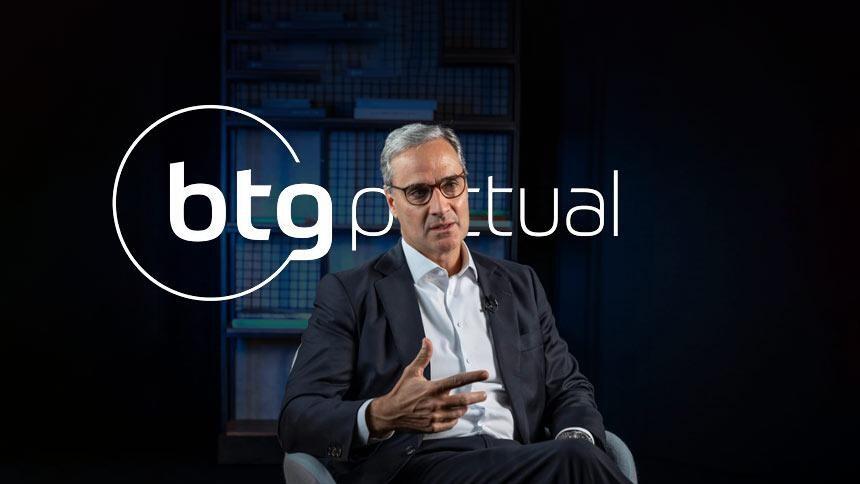
Just over a year after acquiring the Brazilian operations of Swiss bank Julius Baer and the wealth management division of JGP, owned by André Jakuski, BTG Pactual has completed the integration of the two acquisitions, which have significantly increased its size in the high-net-worth segment, and is beginning to outline a strategy to gain even more market share in Latin America.
Before bringing the two operations in-house, André Esteves and Roberto Sallouti's bank had R$ 40 billion under management. With the arrival of the two firms, it added R$ 78 billion. And, contrary to speculation that it would lose assets under management during the business transition, BTG managed to increase the total amount of its family office to R$ 130 billion.
“We have built one of the largest family office platforms in the country, combining independent operations with the structure and services of a global financial institution,” says Rogério Pessoa, partner and global head of wealth management at BTG Pactual, to NeoFeed .
And he confirms that the bank should step on the gas. "We continue to see opportunities for organic growth and are evaluating inorganic opportunities," he says.
Now, the focus is on scaling. After streamlining structures, extracting synergies, and turning the operation acquired from the Swiss bank into profitability, the bank wants to use the family office as one of the levers to grow in wealth management in Brazil and abroad. In its latest balance sheet, BTG reported more than R$ 1.2 trillion under management in wealth management, an area that includes high net worth assets and the digital personal banking platform, a 28% increase in 12 months.
Of this total wealth, BTG does not disclose what belongs to private banking and what belongs to the digital platform. However, according to market professionals consulted by NeoFeed , the estimated amount ranges between R$ 650 billion and R$ 700 billion. The R$ 130 billion figure for the family office, however, is confirmed by the bank. This number is the result of an extensive process of digesting and refining BTG's portfolio of offerings for high-net-worth individuals.
“Here, clients have access to services such as portfolio management, currency exchange, cards, credit, insurance, payroll, bank terminals, wealth planning, and access to global investment opportunities through our global footprint,” says Pessoa. This is a more structured area compared to the services that clients who came from other firms had.
The integration processes of Julius Baer and JGP were very different. JGP was an operation very similar to BTG's family office, and therefore, there were already ongoing talks for the purchase, and upon completion, client retention was total. André Jakurski remained as chairman of the family office's investment committee, demonstrating continuity in the work.
“JGP had a very strong cultural affinity with what we were already doing. The integration of Julius Baer, however, required more extensive operational work, but it was successfully completed,” says Pessoa.
Julius Baer appeared midway through the process as an opportunity. However, when the sale became public after a report by NeoFeed , some clients went to the competition. And so did professionals. Itaú alone hired 12 bankers , as NeoFeed showed. But, according to Pessoa, after the acquisition was finalized, they gained the trust of the new clients and retention was very high.
“As with any transaction of this size, there was a period of uncertainty for some clients. After the acquisition, we were able to stabilize operations, preserve important relationships, and continue growing,” he explained. In addition, there was the challenge of balancing the operation, which was operating at a loss due to high costs associated with Swiss bank-standard salaries and excessive bureaucracy.
To achieve synergies and avoid overlapping roles, adjustments were made, primarily in the back office and IT. In total, BTG managed to streamline operations by 40%. The result was a rapid return to profitability, very close to the rest of the bank's wealth management segment.
Even before these acquisitions, BTG had already bought, in 2024, RIA Greytown Advisors in Miami, with approximately US$1 billion under management and a large client portfolio in Central America, an area of operation far from the bank's usual scope. A small family office from Rio de Janeiro, GGP, was also brought in. And further strategic acquisitions remain on the radar.
“We are in a market without new wealth generation, so we are playing a game of stealing the pile to grow. But it needs to make sense. We look for either portfolios that we wouldn't be able to obtain otherwise, or significant volumes,” Pessoa explains.
The “new” integrated family office offers different contracting models at varying costs. Clients can choose to have their portfolio consolidated across a few platforms, with management handled solely by BTG, or they can opt to consolidate multiple platforms, or even have BTG manage the entire portfolio along with a wealth planning service.
It is within this model that BTG is strongly entering the family office market, as are its main competitors. Santander launched the Beyond Wealth segment this year, which in less than a year of operation reached more than US$6 billion under management. The bank claims to have a total of more than R$300 billion under management in large fortunes. Meanwhile, UBS Consensus, which was previously an independent player, became part of a bank with the merger with Credit Suisse, which the market estimates has around R$250 billion under management.
Itaú , in turn, has over R$ 1.1 trillion under management in large fortunes. Previously, the bank owned by the Setubal and Moreira Salles families offered the consulting model only to its family office segment, which serves clients with assets exceeding R$ 1 billion. Now, it has begun offering this service to its private banking base, in a more family office-oriented model.
Global wealth for the Latin American client.
The integration of Julius Baer and JGP is just one part of BTG's strategy for the high-net-worth segment. The other front is outside Brazil, where the bank wants to position itself as a global benchmark for Brazilian and Latin American clients. Today, the bank already manages approximately US$35 billion in offshore assets.
The expansion began less as a result of a carefully planned thesis and more due to demand from the clients themselves. As Brazilian families began to live, invest, or structure their assets outside the country, especially in Portugal, BTG started to act as an international family office, monitoring assets held in custody at banks such as Pictet and UBS, without necessarily competing for custody rights.
In 2023, the bank decided to purchase a banking license in Luxembourg, which was approved the following year. Today, the European wealth management operation has a presence in Lisbon, Madrid, London, and Luxembourg, which concentrates the continent's custody and already totals approximately €3.5 billion and around 40 professionals.
The initial idea was to serve Brazilians who had moved to Portugal. But it expanded. In Madrid, the target became Latin Americans with ties to Spain, leveraging BTG's presence in countries like Chile, Colombia, Argentina, and Peru. In London, the trading desk was set up due to regulatory requirements following Brexit.
The European movement has also begun to attract clients from outside the Latin American universe. According to the executive, about 20% of BTG's European client base is already made up of non-Latin American clients, such as those from Europe or the Middle East. The strategy, in this case, is to sell the image of a more agile bank, with partners leading the operation and a closer relationship with businesspeople.
“We are seeing a very interesting opportunity in Europe to serve the European or Middle Eastern client who wants a more agile, more flexible bank, where the executives are the owners. There's a lot of this business-to-business conversation going on,” says Pessoa.
In the United States, ambition took on a new dimension with the purchase of M. Safra Bank, which transformed BTG into a nationally licensed American bank. The operation, which previously combined brokerage and asset management, now offers bank accounts, cards, credit, and mortgages to clients in various American states, with headquarters in New York and a significant presence in Miami, particularly after the acquisition of Greytown Advisors. The wealth management firm already has approximately 70 professionals working in the country.
The search for RIAs in the United States remains on the radar, but without urgency. The bank is evaluating opportunities that bring scale or access to new markets. The logic is similar to that adopted in Brazil: not buying for the sake of buying, but using acquisitions to accelerate growth where organic growth would be slower.
In the competition between Europe and the United States, Pessoa sees distinct avenues for growth. In Europe, expansion began with Brazilians changing their tax residency, but has already started attracting local clients. In the United States, the potential comes both from the Latino base that already uses Miami as a financial hub and from the possibility of offering complete banking services to clients who previously only had investment accounts.
The source of the fundraising is also changing. The initial movement was driven by Brazilians taking or organizing assets abroad. Now, BTG is trying to combine this flow with attracting foreign clients, especially Latin Americans, Europeans, and families with international structures.
At the same time, BTG wants to leverage its global structure to offer clients access to products and opportunities that, according to Pessoa, bring the bank closer to a global private bank. As an example, he cites access to competitive international deals , such as the SpaceX and Anthropic IPOs, which a client of a Latin American bank would hardly be able to access on their own.
The ambition is not to compete for the average American customer, but to accompany the Latino customer where they live, invest, and structure their wealth. For Pessoa, there is room for a bank with a Latino DNA, an international presence, and the ability to speak to businesspeople on equal terms. This is especially true at a time when large international banks are becoming increasingly selective with Latino clients and raising minimum transaction values.
Another step in this direction was the recent purchase of HSBC's operations in Uruguay. According to Pessoa, the move didn't stem from a long-standing plan to enter the Uruguayan retail market, but from an opportunity: HSBC was leaving the country, and BTG saw this as a chance to gain a banking presence in a stable market with good regulation and a natural connection to high-income clients in the region. A banking license was also applied for in Peru.
These countries add to our presence in Mexico, Chile, Colombia, Peru, and Argentina. "We see a great opportunity to grow as the leading wealth bank in Latin America, being an agile bank that understands the specific needs of this audience and that already has a presence both in the region and in the main offshore hubs," says Pessoa.