


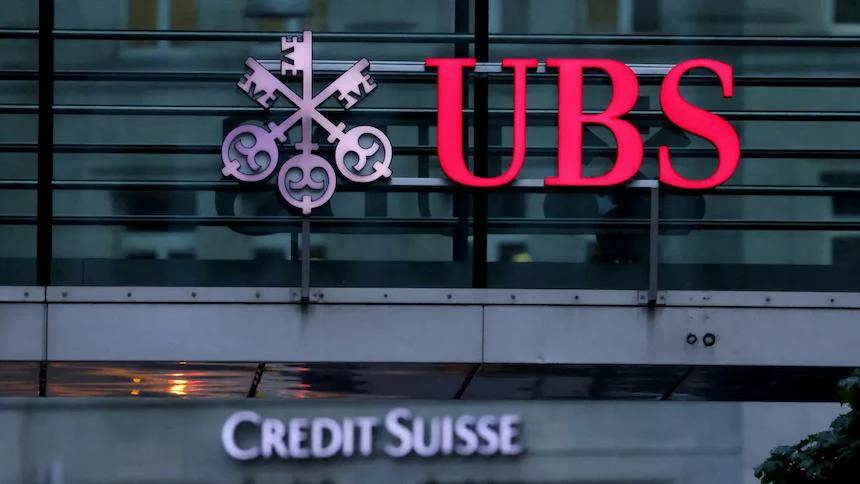
In recent weeks, UBS announced that the integration with the operations of Credit Suisse (CS) , acquired in 2023, is in its final stages and has reorganized its Global Wealth Management in Latin America. This change had been planned for some time by the Swiss group's leadership, but coincides with increasing pressure for results, particularly in Brazil.
Since the merger of UBS and CS, the Brazilian wealth management operation has suffered from cultural clashes among professionals, high client churn (both entry and exit), dissatisfaction with the products offered, and a drop in net inflows. NeoFeed has learned that this explosive mix caused the wealth management unit to incur losses of approximately R$ 500 million for the bank last year.
Sources familiar with the operation, however, say that the losses are occurring because UBS is investing heavily in integration and technology. Other professionals who have seen the business have stated that, currently, what generates returns for the bank are the offshore accounts of Brazilians managed globally. "The money of wealthy Brazilians that's in Switzerland," says this source.
The offshore operation, in fact, has undergone strategic changes since 2024, shifting its booking from the Bahamas, where CS operated, to Switzerland on the UBS platform, with the aim of extracting even greater profitability for this business . The new organizational structure also seeks to deliver better results. Whether it will succeed, only time will tell.
In this structure, Marcello Chilov, head of wealth management for Latin America and a former CS employee, centralized reporting from the regional offices. Rafael Gross, who previously shared leadership of the Brazilian wealth management platform with Consenso's founder, Luiz Alberto Borges, assumed responsibility for the market in Brazil. Borges remained as director of business development for Brazil.
Daniel Carvalho, who until now was responsible for the Advisory & Sales area in Brazil, has become the head of the local desk, responsible for client consultants in the UHNW, HNW and Unified Private Clients segments, reporting to Gross. José Renato Carvalho has been appointed Location Head for Brazil at UBS GWM and Leonardo Bulgarelli has been appointed Head of the Multi-Family Office for Latin America at UBS GWM, both reporting to Marcello Chilov.
According to market sources consulted by NeoFeed , the reorganization exposes internal cracks within the new business and confirms that in Brazil this merger was a reverse takeover by Credit Suisse executives of UBS. Furthermore, the bank is seeking changes to capture greater profitability in its Brazilian operations as soon as possible.
Several prominent leaders from the acquiring bank have left over the years, such as Bruno Barino, who was co-CEO of UBS Consenso alongside Borges and is now CEO of BlackRock in Brazil ; and Maria Alice Gouvêa, who was a founding partner of MFO and has formally retired.
Contacted for comment, UBS Global Wealth Management declined to give an interview. They answered some questions by email, while others went unanswered. In a statement, UBS said that the recently announced changes in Latin America are part of a broader movement to evolve the organizational model of wealth management in the region.
"The reorganization reflects the transition to a more customer-centric structure, bringing decision-making closer to local markets, and is designed to accelerate the next phase of growth for our business. It does not alter the bank's strategy in Latin America, and especially in Brazil."
Sources familiar with the matter claim that the operation of UBS Consenso, the bank's family office, is operating at a loss. In part, this is due to lower fees compared to the market (around 0.3%/0.5% per year). As a result, the numbers don't add up, and without achieving significant scale, generating returns for Zurich has become increasingly difficult. This is exactly what happened with the Swiss bank Julius Baer , which, at the first sign of need, sold its Brazilian business, a portfolio of R$ 61 billion, to BTG Pactual for R$ 615 million in January of last year.
The family office sector has suffered, and the same has happened to the private banking sector. This segment joined the group through the merger with Credit Suisse and was considered one of the most important in the country – both in terms of volume, which the market estimates was around R$ 250 billion under custody at the time, and in terms of its management style, offering sophisticated and riskier products than average.
“CS succeeded in Brazil because it wasn't Swiss at all. From the beginning, it was always very aggressive, bringing its guarantee base and achieving autonomy from Switzerland to act as it wished. And, it seems, it's trying the same with UBS,” said a former bank employee. The problem is that since the CS crisis in 2022, the private banking division has been bleeding and hasn't been able to recover.
The market estimates that it has lost at least about a third of its assets under management, currently holding around R$160 billion. And a large portion of these billions would be corporate cash reserves, belonging to clients who pay very low fees.
Sources familiar with the matter state that UBS's wealth management operation (combining private and family offices) currently has approximately R$250 billion under management and advisory services. This demonstrates the decline in private banking over the years. The bank states that it does not disclose data by country.
Several bank and family office executives told NeoFeed that they prospected many Credit Suisse private banking clients amidst the global crisis of confidence that later resulted in the merger. And some clients left because they couldn't adapt to the new culture being built at the bank and because they lost the bankers with whom they had relationships.
Part of the bank's problem was having to digest this merger while competitors were strengthening. The result was a wave of layoffs within the group, which continues to this day, including those of key executives, to streamline operations to its new size. Furthermore, UBS ended up losing professionals to the competition.
The latest loss was Priscila Cassandre, who left last month after 20 years with the group (formerly CS) and had been the head of the Ultra High Net Worth segment since 2023. Other important names who left last year were Marco Tullio Forte, who was director of private banking and had been with the bank since 2002 and is now at Sten MFO. And Juliana Pagetti, who was Managing Director, Head of Swiss Platform International Business for Brazil, and is now at Pictet.
In 2024, Bloomberg reported the departure of 35 wealth management professionals from Latin America. Among them were many Brazilian bankers and professionals. And the bank has not made any significant hires since then, only occasional ones.
"What's clear is that, with the loss of clients, the business needed to downsize. And there's no intention on the part of the bank to invest in having a larger team to try and attract new clients. The investment will only come later. The question is how they're going to attract them," assesses a wealth management executive who interviewed and hired some of the bankers there.
Alongside the integration, UBS also inherited some problems from the former Credit Suisse in Brazil. One of them was the investment in Banco Modal. In 2020, Credit Suisse announced the purchase of a stake of up to 35% in Modal, in a transaction that, in the market, implied a valuation of around R$ 5 billion for the digital platform.
Two years later, XP closed the purchase of Modal in a stock swap deal that valued the bank at approximately US$528.5 million, or roughly R$3 billion at the time. By then, Credit Suisse's stake had already been diluted to 15.8%, crystallizing yet another case of value destruction in the group's assets in the country and causing clients who were part of the deal to lose money.
Inherited problems that have hindered growth.
To make matters worse for UBS Private Banking, amidst the merger, several crises and regulatory changes occurred that diminished some of the advantages the area had compared to the market. Starting with the multi-asset crisis. CS was always known for the Verde asset management firm (originating within Hedging-Griffo) and gave clients access to it and other highly sought-after funds. But today, clients are avoiding it.
UBS even tried to create a "new Verde" in-house with Evolution Multimercados, but it didn't take off. According to data from the Mais Retorno platform, the feeder and master multimercados funds have only about R$ 500 million in assets. But the Evolution family as a whole managed to raise around R$ 25 billion, operating only for the firm's clientele.
Following the same strategy of capturing clients by product, UBS acquired a minority stake in YvY Capital in February 2025, founded by former Economy Minister Paulo Guedes and former BNDES president Gustavo Montezano. The alternative asset manager, which aims to invest in low-carbon assets, had R$ 300 million under management at the time.
Another issue is that the old CS (presumably referring to a specific bank or platform) managed exclusive funds in an agile way. But with the implementation of the "come-cotas" (tax withholding system), in 2024, clients reduced their fund holdings and placed a significant portion of their portfolio in managed portfolios with tax-exempt products, and sought out bank securities, products that the bank does not originate like its competitors. Furthermore, it took a long time for the bank to develop a relevant managed portfolio technology to compete.
Another chapter that caused headaches for the bank was the losses from the Wave energy fund, structured for the issuance of debentures by the company 2W; and the Solar fund, linked to the securities of Rio Alto Energias Renováveis. These products, created by CS and inherited by UBS in the merger, were sold to private banking clients and became worthless after the bankruptcy proceedings.
Both companies had partners and founders who were under investigation for embezzlement, money laundering, and involvement with money launderers, which CS allegedly concealed from investors. These assets were also indirectly sold to clients through the CS Evolution Master Fixed Income Strategy fund, which recognized losses throughout 2024, a year in which the fund had a return of -1.5%.
Another controversial investment that resulted in losses was the former Ford factory in São Bernardo do Campo. In 2020, the land was purchased by a group formed by Construtora São José, Fram Capital, BTG Logística, and clients of Credit Suisse's wealth management firm, with the intention of transforming the area into a logistics complex that would require approximately R$ 1.2 billion in investments.
A significant portion of this exposure was concentrated in the SJ AU Logística real estate fund, which held 75% of the asset. However, the project did not materialize as planned, and in 2024, the area was sold to Prologis for R$ 850 million. Following this, investors filed lawsuits questioning the price difference between series of shares issued in a short period to enable the operation, in yet another episode that generated friction surrounding an asset distributed to clients of the former Credit Suisse.
“These episodes, which occurred during CS's management and continued to have repercussions afterward, were very poorly received by customers. For some, it was the last straw,” stated a source who worked at the bank. When contacted for comment on these operations, the bank declined to respond.
Due to the incident and the failure to hire a competitive sales team, acquiring new clients in the market became difficult, and the operation practically stagnated. The problem was also seen as critical by UBS, which attempted to further leverage its Swiss compliance framework to prevent future issues, but this ultimately hampered operations.
Amid this cultural dispute, sources within the bank claim that structured credit operations are no longer being carried out as before. And that there is now a strategy to try to grow more regionally, so much so that an office has been opened in Porto Alegre and others are on the radar. Today, the bank also has a presence in São Paulo, Rio de Janeiro, Curitiba, and Recife.
However, in the last three years that UBS was digesting its merger, its competitors have advanced. Itaú Private has already surpassed R$ 1 trillion under custody, and Bradesco is close behind with more than R$ 500 billion. Santander emerges with around R$ 300 billion in its private banking and BTG with a similar volume, according to market sources. And even XP, which is also undergoing restructuring under new management, has already reached the R$ 250 billion that CS once had.