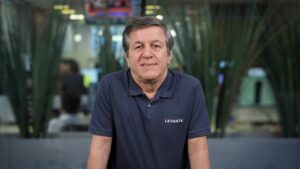



Large investors are searching for the major trends that will shape the world and investments in the coming years, such as artificial intelligence (AI) and the energy transition. But, according to the newly created family office Longview Capital, two themes are being overlooked: the rise of Asia and the end of globalization.
“I believe that we may be experiencing the opposite of what happened in 1989, when the West won the narrative battle and the world became more liberal and globalized,” says Enio Shinohara, founding partner and managing director of Longview Capital.
“We are moving towards a more 'mercantilist' world, in which each country tries to focus on its own economic and political interests,” he adds, citing a view from Ray Dalio of Bridgewater.
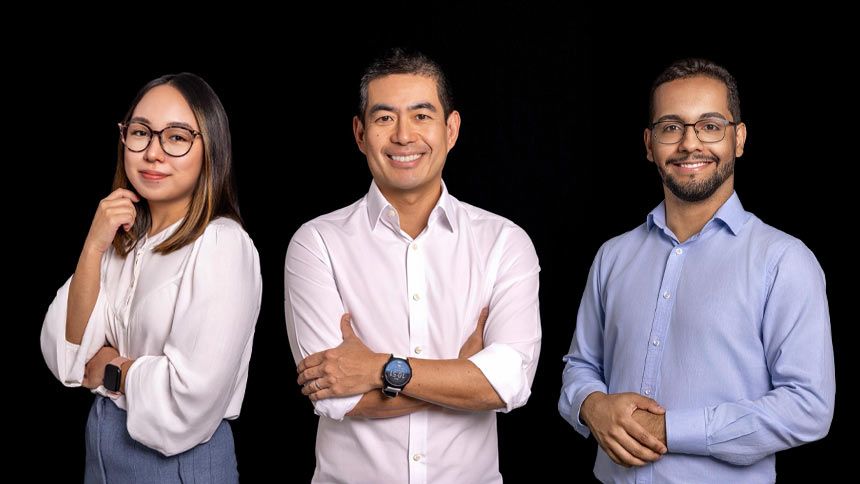
Shinohara, who was head of fund solutions at Credit Suisse/UBS and a partner at BTG, decided to create Longview with Vinícius Xavier, a former UBS Wealth Management executive, and Leticia Higuchi, also a former BTG executive, to serve high-net-worth families with at least R$150 million in assets and a long-term vision. Initially, it serves six families.
For Longview, the management of these portfolios is based on the idea that it is necessary to abandon the automatic approach that has dominated the internationalization of many Brazilians' assets in the last decade, that is, the US as the center of the world, the dollar as synonymous with a strong currency, and technology as an exclusively American topic.
Of the total assets under management by the firm – an amount he cannot reveal – less than half of the families' wealth is in the US. The main focus is on the rest of the world, not specifically on Europe, where Brazilians are also looking, but on Asia.
“Unfortunately, Europe has fallen behind in the technological field, and we are focusing more on high-growth sectors in Asia, such as Japan and especially China. We see many people concentrating their technology investments in the US, and for us, that is a mistake,” says Shinohara.
In his view, the AI dispute is binary between the two powers, but in different ways. While in the US it's about hyperscalers and data centers, in China it's more about developing cheaper models and incorporating them more quickly into the industrial process and to the end consumer.
Examples include industrial robots, drones, and electric vehicles. To capture this, management involves selecting various global sector ETFs. Today, two-thirds of net assets are in index funds.
But the family office also manages a significant portion of its assets in long-term illiquid assets. And Chinese private equity funds are being considered for this segment.
“We know it’s a risky investment; China has a history of intervention, but since the end of 2024, the government realized it needed to subsidize technological innovation and is creating an ecosystem for it. And not capturing that evolution there is also a risk,” says Shinohara.
Global hedge funds are also gaining ground in the illiquid segment. After enduring a period of about 10 years until 2019, underperforming the US stock market, they have been experiencing a renaissance since 2022 and are once again delivering good results – the selection of managers is done by Shinohara, who has over 30 years of experience selecting international funds at major banks.
As a result, currency diversification is also significant in the portfolio, with the dollar occupying about two-thirds and the remainder held in other strong currencies and gold, which is already beginning to be partially exchanged for other strategic commodities, such as industrial metals. This follows what major powers are doing to protect themselves from geopolitical pressures.
In Brazil, he believes the greatest opportunity lies in inflation-linked fixed income investments, such as NTN-Bs. And in the credit sector, he looks for either tax-exempt products or good special situations funds, uncorrelated with the country's macroeconomic climate.
Longview's plan
Longview Capital was created to be a boutique family office, serving a select few qualified and high-net-worth families, without other business verticals. The plan is not to capture a large number of clients, but the vision is to double the operation from the current six families to 12.
“We were very clear that we either had to follow a large-scale wealth management model, serving smaller clients and being very large, or a boutique model, serving a few high-net-worth families. And we saw that our competitive advantage lay in the second option,” says the founding partner.
The first clients were families from his network of over 15 years in the market, who sought him out to handle this mandate. And growth will be through word-of-mouth recommendations, since there are no plans to have a sales team, but rather clients will be served directly by the partners.
In the US, wealth boutiques like this are quite common, but here in Brazil they are few, the main reference being Pragma, which caters to a few families with assets exceeding US$100 million. But with the growth of the market as a whole, this type of structure is likely to multiply.