

Brazil has entered the center of a silent global crisis, a consequence of the conflict between the United States and Iran, this time impacting the base oil supply chain and threatening the manufacture of premium automotive lubricants in the country.
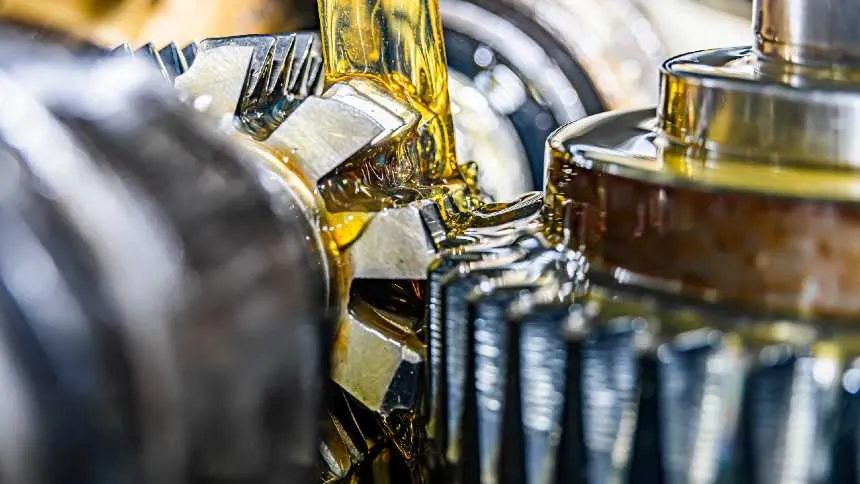
The prolonged disruption of traffic in the Strait of Hormuz — a strategic bottleneck through which up to 30% of the world's base oil production passed — triggered an unprecedented shortage of these essential inputs for the manufacture of automotive and industrial lubricants .
The warning comes from Gabriella Twining, head of base oil pricing at Argus – a British intelligence platform for global energy and commodities markets. The crisis, which has already begun to affect the supply of premium lubricants for luxury vehicles in Europe and the United States, now threatens to spread to emerging markets.
“No country suffers as disproportionately from the bottleneck of base oils as Brazil,” Twining told NeoFeed . According to her, base oils represent about 90% of the volume of lubricants, hence the risk surrounding the supply of these inputs.
The impact of this bottleneck is significant given the country's prominent position as the fifth largest lubricant market in the world, with an annual production volume of approximately 1.7 billion liters. With the slower adoption of fully electric vehicles and a preference for hybrids—which still consume lubricants—consumption of the product in Brazil is expected to grow at twice the global average.
Divided into three categories, Group I base oils are the simplest and least refined. Group II oils undergo processes that increase purity and performance, and Group III oils are highly refined, with greater stability and used in high-performance synthetic lubricants, which have been used for ten years by the national automotive industry for passenger vehicles.
The last ship carrying base oils left Hormuz at the end of February. Since then, the global flow has been disrupted. Bombings of refineries in Russia and a large unit refining Group III base oils in Qatar have compressed global supply. Demand for VGO (Vacuum Gas Oil), a raw material also used to produce diesel—whose market is under pressure—has further increased the cost of base oils.
For Brazil, the impact is direct: the country imports 100% of its Group III base oil needs and about 70% of its Group II needs, traditionally supplied by the United States.
“But the US was also affected: about half of the American supply of Group III crude oil came from Hormuz,” reveals the Argus expert. “With the blockade, refineries in the country had to reconfigure operations to try to produce more Group III oil domestically.”
Brazilian production is led by Petrobras (Group I) and Lwart (Group II). Imported base oils from Group III are therefore the most vulnerable to external supply shocks.
Risk
According to Twining, major global companies in the sector are already having difficulty supplying lubricants to automakers, and dealerships in the United States and European countries are also not receiving the full volume of ready-made lubricants they need.
"The picture points to a trend of global shortage of finished synthetic lubricants — a bottleneck that is beginning to affect assembly lines and after-sales services," he assures.
The good news is that, apparently, the risk of lubricant shortages for the national automotive industry is not yet immediate. NeoFeed has learned that, at Anfavea , the association that brings together national automakers, there is currently no news about any potential problems involving the supply of lubricants to its members.
More recently, however, industry sources have stated that Stellantis is having difficulty maintaining its lubricant inventory for the assembly line and dealerships. The automaker did not respond to requests for comment.
In 2025, the national lubricants market generated approximately R$ 25 billion, according to FactorX Strategic Consulting. Due to increases in the price of base oils, insurance, and freight, lubricant prices have seen double-digit increases since March.
Sérgio Rebêlo, CEO of FactorX, states that the Brazilian market for premium lubricant manufacturers is highly concentrated. Five giants — Vibra , Iconic, Moove , Raízen , and Petronas , associated with the major oil and gas companies, with access to raw material sources, cutting-edge technology, and international brands — hold approximately 70% of the market for this product.
"With long-term contracts and privileged access to global supply chains, the Big Five mitigate shortages and prioritize large clients, such as automakers, with firm contracts," says Rebêlo.
All are known for the lubricant brands they produce. Vibra (formerly BR Distribuidora) operates the Lubrax brand. Iconic, a joint venture between Ipiranga and Chevron, is responsible for producing the Ipiranga and Texaco brands in Brazil. Moove (Cosan Group) is licensed by ExxonMobil to produce and market the Mobil brand in Brazil and other countries. Raízen does the same with lubricants under license from Shell.
"That is why the base oil crisis has not yet directly affected the supply of lubricants to the national automotive industry chain," adds Rebêlo.
Smaller manufacturers (30% of the market), in turn, depend on surplus base oils imported from the five major companies. "During the crisis, the leading companies cut off this distribution to guarantee their own supply, leaving the smaller ones in a dramatic situation due to a lack of raw materials," reveals the expert.
Besides Stellantis, NeoFeed contacted Raízen and Iconic, but both companies also chose not to comment on the matter. Regardless of the fact that the risk of lubricant shortages is still low in the country, it tends to increase with each passing month of the blockade in the Strait of Hormuz.