

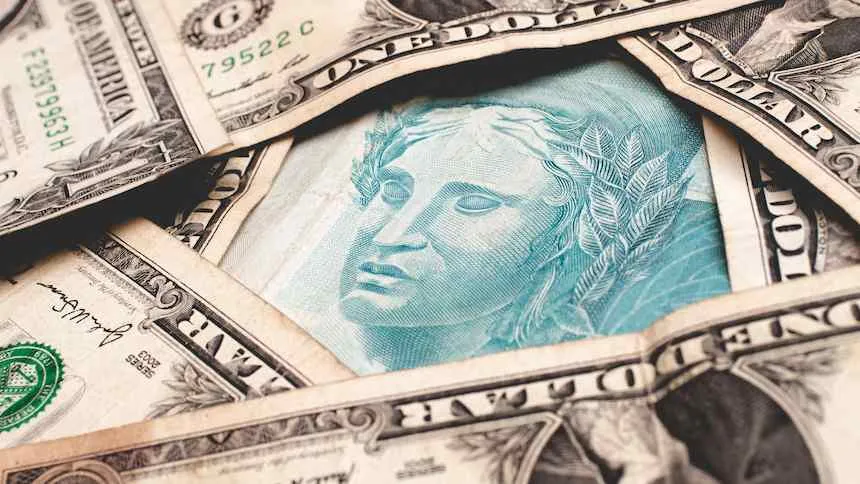
The dollar has already fallen about 35 cents against the real since the beginning of 2026, accumulating a drop of nearly 7% — and there is still room for it to fall further.
The projection comes from Alfredo Menezes , founding partner and CEO of Armor Capital and one of the most respected traders in the Brazilian market. His firm, with approximately R$ 1.7 billion under management, specializes in investments in assets linked to the macroeconomy, such as interest rates and exchange rates.
“I think the real is the best asset in Brazil, because the flow of dollars has improved a lot. Not only the price of oil, but Chinese investment is booming. And there's still the Selic rate at 14.25%, which is still monstrous,” he says in an interview with NeoFeed .
Former head of treasury at Bradesco, Menezes is known in the market as " Iron Fist " — a nickname he earned for the way he handled the dollar during his time at the bank.
The seasonal effect, which usually drives down the price of the real in the second half of the year, according to Menezes, should be much weaker this year due to an atypical factor.
This, he explained, is due to the effect of Law 15.270/2025, which began charging 10% Withholding Income Tax (IRRF) on remittances of profits and dividends abroad, leading many companies to anticipate sending remittances.
On the other hand, Menezes says he is pessimistic about the stock market and believes that the relatively low multiples in the local market reflect the high real interest rate — a consequence of fiscal disarray.
"Few companies can afford to pay 20% annual interest (considering spreads). The trend is towards increased default rates in the medium and long term , especially in capital-intensive companies," he says.
The manager believes that sectors such as infrastructure, construction, food, and agribusiness may be among the most affected by the Selic rate, which, according to him, should remain at 14%, without any prospect of a long cycle of cuts.
Regarding American monetary policy, his projection is for two 0.25 percentage point increases by the end of the year. However, he believes the scenario could become even more complex if Donald Trump's party loses the midterm congressional elections and decides to intensify the war against Iran. In that case, he says, the whole world would lose, with higher interest rates and inflation.
Read below the main excerpts from the interview.
Alfredo Menezes, founding partner and CEO of Armor Capital
The Treasury has been reducing NTN-B issuances and even canceled an auction last month. Will it continue at this pace?
You should stop selling LTN and NTN-B bonds. Especially since it's no longer a matter of price. You simply don't have demand. If he insists on selling more LTN and NTN-B bonds the way the market is, it will deteriorate to such an extent that it will become increasingly difficult. What's not right is having a lot of tax-exempt bonds competing . That's a huge mistake. It would be much better for the government to subsidize certain sectors. It would be much cheaper than leaving them tax-exempt to operate.
Does the Treasury's action of repurchasing NTN-B bonds on the market have any effect in lowering the rate?
I think he'll only come in if the market goes blank. But it's a one-off. It won't solve the problem, especially because the systemic risk is very high. You can buy, but it won't solve the problem in the long term. It's like an aspirin for someone who's already sick. What solves the problem is fiscal adjustment, which I don't think will happen. I think the insecurity in the market is only going to increase.
And what are the consequences for the market? Is this level of interest rate likely to stifle the credit market?
Few companies can afford to pay 20% annual interest (considering spreads). Very few can even obtain that kind of funding. The trend is towards increased default rates in the medium and long term, especially among capital-intensive companies.
"Here in Brazil, I don't think the interest rate will go up. The Central Bank will make another cut of 0.25 percentage points (pp) and that's it."
Which sectors, for example?
Infrastructure, construction companies, food companies. And I think agribusiness will suffer quite a bit—the rise in fertilizer prices itself. People aren't capitalized and can't withstand these interest rates.
Will interest rates rise?
Here in Brazil, I don't think it will go up. The Central Bank will make another 0.25 percentage point (pp) cut and then stop. I don't see interest rates rising any further, especially since raising them now will create more fiscal distrust than it will have an effect on the long-term yield curve. The yield curve has already risen significantly, so it has already done the Central Bank's job.
Does it go up outside?
It's going up. I think there will be two 0.25 percentage point increases by the end of the year—because I expect the conflict to be more prolonged ( on Wednesday, July 29th, the Fed kept interest rates unchanged in the US ). If Trump is worried about the elections, about Congress, about the US Senate, he wouldn't want to see the stock market down and oil down. But this has to be brief, because he's already raised everything else in the country. But, if he has nothing to lose, I believe he will economically strangle Iran.
Does this mean the global economy suffers as well?
More inflation, more interest rates.
And what's the outlook for the Brazilian stock market?
I'm more pessimistic. There's a perception that the Brazilian stock market is cheap compared to others around the world, but with a price-to-earnings ratio (P/E) of 9 to 10, while in the US it's at 20. However, here the real interest rate is 9 percentage points, while in the US it's 2 percentage points. This justifies the different multiples. But I feel the market is more optimistic about the stock market; I'm more pessimistic.
"I feel the market is more optimistic in the stock market; I'm more pessimistic."
Is there any sector that can save us?
There's Petrobras, which is in a sector that will see a greater influx of capital this year. I don't believe in a change of power, so I prefer to stay out of the stock market.
So the dollar is going up?
The price of oil improved the trade balance by R$20 billion. Direct investment is very good, and it's normal to have a large outflow in November or December. But this year will be atypical because of the tax change for next year—many people anticipated this remittance. So, I don't believe the dollar will go up. There might be some [increase], but I don't see it rising much, especially given the size of the interest rate.
Even with the US rising, is the exchange rate still holding?
I think the real is Brazil's best asset because the flow of dollars has improved significantly. Not only the price of oil, but Chinese investment is booming. And then there's the Selic rate at 14.25%, which is still monstrous.
Is it sold in dollars?
Lately I haven't been trading dollars against reais. I trade reais against Mexican pesos. So, I'm long on the real and short on the euro and the Mexican peso. I rarely trade the real outright.
Why?
When I do this, I'm not directly exposed to the dollar. But since I'm trading in reais, then indirectly, I am [exposed to the dollar].