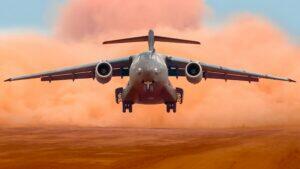


Ford has decided to return to territory it abandoned more than three decades ago: the battlefield.
The century-old automaker has officially entered the race to build the next tactical truck for the United States Army, a vehicle capable of transporting troops, tackling rough terrain, and also functioning as a mobile power unit for drones and command systems.
The initiative, revealed on Monday, July 27, by The Wall Street Journal , marks Ford's largest military contract since the Cold War. It comes at a time when the Pentagon is pressuring American automakers to direct some of their production capacity toward modernizing and replenishing the country's arsenal, depleted by conflicts in the Middle East and the war in Ukraine.
The Army plans to build around 600 of these trucks and has confirmed that Ford, General Motors , and off-road manufacturer BC Customs have received contracts to develop prototypes that will be delivered next year.
GM had already been working on its own version, the ISV-Heavy, derived from the Silverado – a full-size pickup truck, part of Chevrolet's pickup truck lineup in the US. It is equivalent in size and function to the Ford F-150 and Ram 1500.
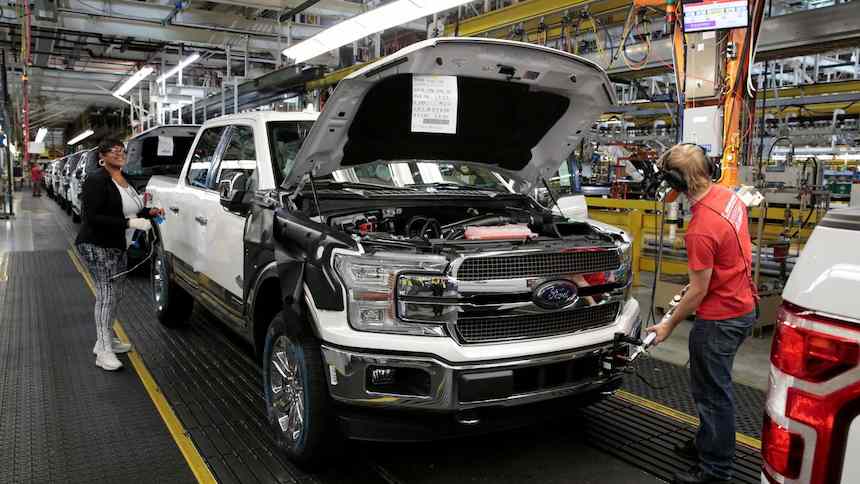
Ford, for its part, will develop three prototypes based on the Super Duty F-Series line. The company stated it is “excited” about the project and ready to demonstrate “the value that Ford can offer to the Army and its soldiers.”
The Department of Defense's interest in commercial vehicles adapted for military use is not surprising. Smaller tactical trucks manufactured by GM cost around US$330,000 each, and the Pentagon is seeking cheaper and faster-to-produce solutions than vehicles designed exclusively for military purposes.
Ford has insisted that its commercial products are capable of meeting the needs of the Armed Forces, while GM is trying to go beyond vehicles and get closer to ammunition production.
GM recently struck a deal with Lockheed Martin to collaborate on the manufacture of weapons components, in an attempt to apply its industrial expertise to a sector that operates with smaller volumes but more attractive margins.
The automakers' foray into the defense sector is not only strategic for the American government. It is also a rare financial opportunity for companies that have faced a chronic problem for years: lack of growth.
Ford generated approximately US$6.5 billion in operating profit in 2015, practically the same amount it is expected to generate in 2026. GM, although more profitable, also operates in a sector with slow growth and requires heavy investments in electrification, batteries, and software.
This modest performance explains why both are trading at single-digit earnings multiples, while the S&P 500 is trading at about 20 times projected earnings.
Profit in war
The defense sector, on the other hand, offers a different perspective. General Dynamics ' Combat Systems division, the manufacturer of the Abrams tank, generates approximately US$10 billion in annual revenue and over US$1 billion in operating profit.
For Ford and GM, which together generate more than $360 billion in annual sales, entering this market will not transform their balance sheets, but it could add hundreds of millions of dollars in operating profit — a significant boost for companies struggling to expand margins in their traditional businesses.
GM is already reaping the rewards of this strategy. Its defense subsidiary, created in 2017, recently secured a $1 billion contract to build 10,000 smaller vehicles for infantry squads, contingent on budget approval.
CEO Mary Barra stated that the area represents an attractive growth opportunity, citing the case of the Chevrolet Colorado-based vehicle, whose initial order of 1,200 units could multiply by almost ten.
By competing for the same type of contract, Ford is trying to regain ground in a segment it abandoned in 1990 when it sold its subsidiary Ford Aerospace, which was responsible for missiles and space equipment. Previously, during the Korean and Vietnam wars, Ford supplied tactical trucks similar to the Jeep to the Armed Forces.
Ford's entry into the defense sector also runs parallel to another of the company's bets: energy storage. The automaker recently announced a business dedicated to utility-scale energy solutions, leveraging the capacity of the lithium-ion batteries used in its electric vehicles.
Tesla pioneered this area, and GM is following a similar path. For investors, these initiatives represent attempts to diversify into sectors with the potential for faster growth than the traditional automotive market.
The Pentagon, in turn, sees in automakers an opportunity to rapidly expand the production of military equipment without relying exclusively on specialized manufacturers, who operate at limited capacity.
The pressure for increased production intensified after Russia's invasion of Ukraine and the rise in tensions in the Middle East, which exposed bottlenecks in the defense supply chain.
Ford stated that it expects to play a significant role in the internalization of the production of minerals and critical components, such as semiconductors, reinforcing its willingness to integrate more deeply into the US military industrial infrastructure.
For the financial market, the news of Ford's entry into the tactical truck market was received with moderate optimism: the company's shares rose 0.9% on the day of the announcement, while the S&P 500 fell 0.3%.
Investors see the initiative as an opportunity to add new revenue streams at a time when the automotive sector is facing a slowdown in electric vehicle sales and margins squeezed by global competition.
Ford will release its quarterly results later this week, and analysts expect the company to detail the financial potential of its foray into the defense sector.
For an automaker seeking new avenues for growth, the war—or, more precisely, supplying it—has once again become an attractive business. And this time, Ford seems determined not to remain merely in the background.