

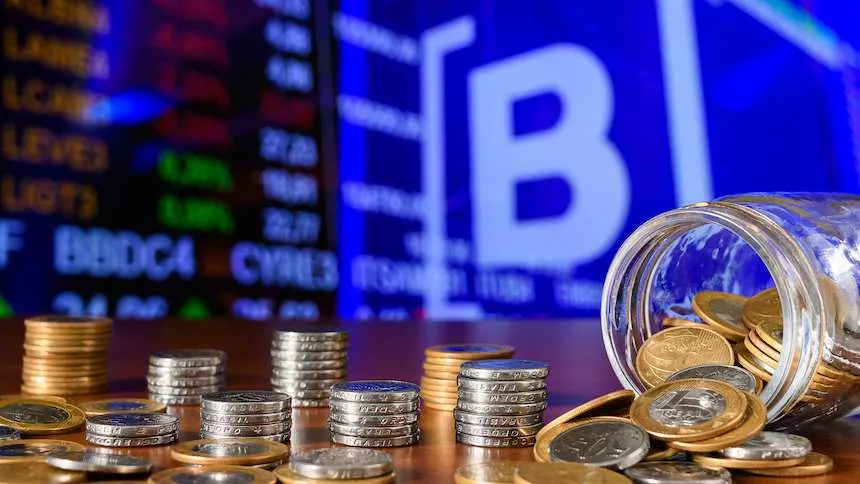
Delinquency in the Brazilian National Financial System's free credit market reached 5.2% in July of this year, the highest level since November 2017, according to data from the Central Bank. This figure, which has already accumulated a 1.1 percentage point increase this year, reinforces a growing concern among asset managers: the market has not yet correctly priced in the magnitude of the problem.
For Meraki Capital, the trend is toward worsening, not stabilization, of this problem. The asset manager has approximately R$ 2 billion under management and is primarily dedicated to the stock market, although it also has a multi-market fund that manages the assets of the Lia Maria Aguiar Foundation.
“Banks are seeing the number of customers delaying payments rise day after day. And how does the bank react? It doesn't stop lending, but it charges much more for it. In other words, to survive, it 'kills' even more people,” says Stefan Darakdjian, CFO and one of the three founding partners of Meraki, in an interview with NeoFeed .
In this turbulent scenario, the asset manager has sought to navigate with safer assets. In the banking sector, the preference falls on Itaú and BTG Pactual , banks that the firm considers to be less exposed to retail credit, precisely the segment most sensitive to worsening default rates.
On the other hand, he says, all other large listed companies are likely to suffer from increased default rates — which could open up opportunities to establish short positions.
With no prospects for tax reform from left-wing politicians, Darakdjian sees the elections as a key factor for the coming years. The CFO of Meraki argues that the fall of the dollar since the beginning of President Luiz Inácio Lula da Silva's term was a matter of "luck" and that it is only a matter of time before the dynamics of default spread throughout the Brazilian stock market if fiscal policies remain the same.
“We are heading towards a point with no easy way out: either the country collapses, or the right wing wins, or Lula changes course. And it's more difficult for Lula to change course,” he says.
Despite the risk, Darakdjian prefers not to maintain large short positions in long-biased and long-and-short funds, allowing for greater allocation flexibility. According to him, the chances of presidential candidate Flávio Bolsonaro being elected are probably higher than the polls indicate, which could generate significant upside in the stock market.
Darakdjian claims there is a strong negative correlation between the prices of US technology stocks and the Brazilian market. Because he believes companies like Nvidia may be overvalued, he expects this money to be redistributed when earnings cease to exceed analyst consensus.
Stefan Darakdjian, CFO and founding partner of Meraki
“We hope that we’ll be in a good position [when that happens]. That’s why it’s so important for Lula to lose,” he says. “This stock market should be at 300,000 or 400,000 points. And we’re settling for 175,000 points.”
Below is an interview with the CFO of Meraki:
There is no longer any prospect of a significant drop in interest rates, the debt-to-GDP ratio continues to rise, and Brazilians' income is more committed than ever to debt repayment. Where will this situation lead?
We're still in the phase where GDP growth is possible. But further down the line, with the current fiscal dynamics, we're going to have a relatively strong contraction, with unemployment rising. That moment hasn't arrived yet—but it will in two years. And then there's nothing more to be done, because the fiscal situation is deteriorated. The country has high interest rates and can't lower them. If it does lower them, with inflation as out of control as it is, it loses its fiscal anchor. With the government's credibility compromised and the fiscal situation on the verge of default, there's no dynamic for lower interest rates or debt. And what happens to the exchange rate in this scenario? It could become 7, 8, 10 reais per dollar. I'm not saying Brazil will become Argentina, but that's the kind of tail scenario that exists: there, the dollar went from 5 or 6 pesos to over a thousand.
And would that generate more inflation?
Brazil imports a large portion of the inputs it uses or depends on foreign products. Therefore, any exchange rate shock spreads quickly to prices. This generates a Tostines effect: GDP falling, activity rising, inflation rising, interest rates rising—and then the country collapses. I don't think this is a basic scenario, but it is a tail scenario. We are heading towards a point with no easy way out: the country collapses, the right wing wins, or Lula changes course. And it's more difficult for Lula to change course.
"We are heading towards a point with no easy way out: the country collapses, the right wing wins, or Lula changes course. And it's more difficult for Lula to change course."
One sign of this loss of confidence has been the Treasury's increased difficulty in issuing new fixed-rate bonds?
The market wasn't going to provide liquidity for the Treasury to issue debt at that rate level—it had to raise the rate. There's still liquidity, but we're reaching a point where this risk [of default], which previously seemed distant, is getting closer to materializing every day. The Treasury won't issue debt. And if it does, it will have to pay more. And if it pays more, what happens at the end of the chain? The cost of debt increases.
So what explains the appreciation of the exchange rate?
We're in luck, because the United States has made a lot of mistakes in the world since the Biden era—the freezing of Russian reserves is a prime example. The moment a country has its assets frozen by the unilateral will of another, it breaks trust. Anyone thinks, "It could happen to me"—and the response is to sell dollars. The result of all this is a global migration away from the dollar, and that's what's holding up the real today.
Why, looking only at Brazil, should the dollar be at 7, 8, or 9 reais?
The problem is that when the market panics, it forgets all about that luck and starts buying dollars, everyone at the same time. At those times, the dollar skyrockets, inflation expectations explode, and this worsens the situation even more for those who are already struggling. That's exactly the scenario we're heading towards—we haven't reached it yet, but we're getting there.
Should the election result be something binary for the markets?
The race is yet to be formally confirmed, but who will be competing is already a given. At least one of the two sides is providing a working backdrop, and things are improving on the margins. In the ideal scenario, we would remove this weaker generation of politicians and put in a Tarcísio, a Zema, a Ratinho Júnior — names that we will be discussing in four years. People with good heads on their shoulders.
"In an ideal scenario, we would remove this weaker generation of politicians and replace them with someone like Tarcísio, Zema, or Ratinho Júnior."
Is this profile only found on the right?
I'm neither a Bolsonaro supporter nor a hardcore PT supporter; I don't support either of them based on identity—I support the solution that works. And today, the least bad solution is the right wing, because it provides the economic backdrop we need to survive. Because the left, for me, has no future. It's a government that, if it had cut spending in its first two years, would have gained more breathing room, with interest rates around 7%. Instead, it spent a fortune.
Despite everything, the stock market is still rising this year and the balance of foreign investment remains positive. Why?
It affects 90% of the country's companies, and everyone is in trouble — but, abroad, for foreign investors, only the 0.1% slice that has publicly traded capital is visible. There's no other way to solve this except with fiscal responsibility — and the left-wing government lacks fiscal responsibility. So there's no way around it. This dynamic of high interest rates and inflation will directly impact default rates — and it already is. Banks are seeing, day after day, the number of clients delaying payments rise. And how does the bank react? It doesn't stop lending, but it charges much more for it. In other words: to survive, it "kills" even more people. And this dynamic doesn't stop there.
We've already seen a considerable revision in banks' provisioning levels, with the entire sector predicting a rise in defaults. How serious is this problem?
Household debt relative to disposable income is at a historic high. The result is runaway inflation, with citizens losing purchasing power every day. This is what the government doesn't understand: it thinks that taxing the rich solves the problem of the poor. It doesn't—the bill always ends up falling on the poor. Taking care of the poor involves taking care of the rich, in the sense of balancing public accounts—this reduces the risk premium and lowers interest rates for everyone. When the country's accounts are in order, interest rates fall, inflation falls, the dollar falls, and GDP rises.
Have government debt refinancing programs alleviated this situation?
They provide some relief, but the situation is so bad that this relief only lasts about six months. Every program that came out offered an initial improvement, but within six months, it was back to the same place. These renegotiation programs just patch the problem without solving it. If you pull someone out of the gutter today, tomorrow they're broke again. There's no escape. You can expect that when all the banks' results come out, the cost of debt will be rising in all of them—the entire portfolio being repriced. NPLs aged 15 to 90 days will rise in all of them, and NPLs over 90 days will also rise.
Which bank is most likely to feel the effects of this worsening default rate?
Itaú should feel little or almost no impact — it's not a bank concentrated on this type of riskier credit, so it doesn't have much exposure to lose there. Santander, Caixa Econômica, Banco do Brasil, Bradesco, Nubank, and Inter, on the other hand, tend to operate with higher credit costs and rising NPLs.
Will this also affect retail companies that offer credit, such as Mercado Libre?
Of course. In the Mercado Pago card transaction, you'll definitely see NPLs rise. Consumers are getting poorer—that's a reality, and it's going to get worse. The situation isn't good. I don't know to what extent the market sees this, but this combination of default and fiscal imbalance isn't sustainable. Those with their finances in order will be able to manage on their own: Itaú, Petrobras, and BTG will emerge unscathed. Now, the retail sector is going down the drain. Every indebted company is going down the drain—including those in education—if the imbalance continues.
"We don't have a credit crisis because the banks are very solid. But it will affect indebted companies."
Are they underestimating this risk of default?
I think they are. We don't have a credit crisis because the banks are very solid. But it will affect indebted companies. Ultimately, credit becomes more expensive for those already at their limit. Activity falls, consumption falls, and companies can't pass on price increases. With each passing day, margins get smaller, costs rise, and things collapse.
Does it make sense to place some long and short bets on this banking sector?
Theoretically, yes. You buy Itaú and sell Bradesco, Santander, Banco do Brasil. Today we are not short on any of those names. We were at some point during the year, but we covered the position and held the long positions.
Nubank, right?
At the other end of the spectrum, Nubank also suffers. But, technically, it's well executed. However, if a shock like that happens overnight, it will certainly hit Nubank hard.
And what about being sold at retail?
Now is not the right time. Because if there is any change in the scenario related to the election, the stock market could rise significantly and boost the sector's stocks, which have a higher beta.
So how should the portfolio be positioned in this scenario?
Commodities are where you can really ride the wave against inflation. Banks too, because banks protect themselves. I'd stick with Itaú or BTG, for sure. BTG takes on little retail credit and has a share of payroll-deducted loans, which also don't suffer as much because it's deducted directly from the paycheck, making it safer. So it's better to buy good companies.
How's your wallet doing today?
We have a little bit of WEG, a little bit of Embraer, which are tied to the dollar. A little bit of Vale, which is a commodity—linked to China, with nothing to do with the United States, no exposure to tariffs. A little bit of Petrobras, because if the conflict in the Middle East intensifies, oil prices will rise—but this is a small position, nothing very significant. There's also BTG and a small exposure in the United States. Nothing very concentrated. Besides that, a small short position in some apparel, something that captures inflation well. It's not the time to be a wizard, to make bets. We have to stay cautious.
Given the likelihood of the right wing winning the elections, do you think it's worthwhile to be more short than long in the stock market?
No, the risk is too great for that. In the last four elections, the right has always been underestimated in the polls. Comparing the distance between [Senator] Flávio [Bolsonaro] and Lula today with the distance between Bolsonaro and Lula at the same time four years ago, Flávio is better positioned than Bolsonaro was. I think more nonsense will come out of Flávio's side, which could worsen his situation a bit. But, even considering this risk, I think Flávio can win.
"I think more nonsense is going to come out of Flávio's side, which could worsen his situation a bit. But, even considering that risk, I think Flávio can win."
Could the alliance between the Bolsonaro family and President Donald Trump somehow influence the outcome of the elections?
Biden helped Lula. And I believe—this is my personal opinion—that Trump should try to help Flávio. But I don't know if he'll succeed, or if he'll really help.
Has the market already entered election mode? Is it the main topic on the table?
This is still divided. The main issues today are: oil, linked to the war ; the election, to some extent; and the fiscal situation. But, when the war is over and the election is over, if the fiscal issue hasn't been resolved, it will become the main problem—it's just a matter of time.
Oil reached $100 and future expectations have already fallen below $85...
I think the deal will come out in a month or two—I'm not sure exactly. But the longer it goes on, the more the United States loses. Trump is at a disadvantage and, knowing this, decided to go all in. Since he could lose everything, including midterm elections, at least he'll leave a "legacy." In the end, I don't think it will turn into an uncontrolled escalation—it's the other side that will have to back down and ask for a way out.
And what about the American market? Are prices too high?
I think the valuations of tech companies are bizarre. You ask these companies how much they're going to produce and what the demand will be next year—demand is so high, supply will be so high—but the profit on top of that is difficult to estimate. The company knows the production and demand numbers well, but the market doesn't really know what the real profit will be—and it's going to feel the pain when it finds out. And this company is worth US$5 trillion.
Could it be inflated, a bubble?
It seems so. But everyone was already talking about a bubble when that company [Nvidia] was worth US$1 trillion. A year and a half has passed with it at US$5 trillion and, year after year, result after result, it continues to surprise. At some point it will stop surprising—and then, when a stock like that falls from US$5 trillion to US$3.5 trillion, it's still worth US$3.5 trillion, but you've lost US$1.5 trillion along the way. And when a fall like that happens, everyone falls along with it—even those who have nothing to do with that specific stock. Then it becomes a generalized collapse.
"Everyone was already talking about a bubble when Nvidia was worth $1 trillion. A year and a half has passed with it at $5 trillion and it continues to surprise. At some point, it will stop surprising us."
Does Brazil also suffer in this scenario?
One interesting thing is that on days when American tech stocks fall, the Ibovespa doesn't fall. This correlation, on a daily basis, I would say is between 85% and 95% — it's crazy, at the margin.
So, eventually, that money should come...
We hope that things will be alright. That's why it's so important for Lula to lose. It's what I'm saying: Brazilians are always content with little. This stock market should be at 300,000 or 400,000 points. And we're settling for 175,000 points.
Could it easily reach 300,000 to 400,000 points?
If they do the right thing, then with absolute certainty, yes. It's more likely to reach 400,000 points than 50,000 points. It's easy to get there. It's about getting the fiscal balance right. Once that's resolved, local investors come in, interest rates fall, and foreigners love falling interest rates. The entry point is narrow.