

The war between the United States and Iran may have come to an end, with the fragile agreement between the two countries, but the energy crisis that the conflict generated in the global economy is still far from over.
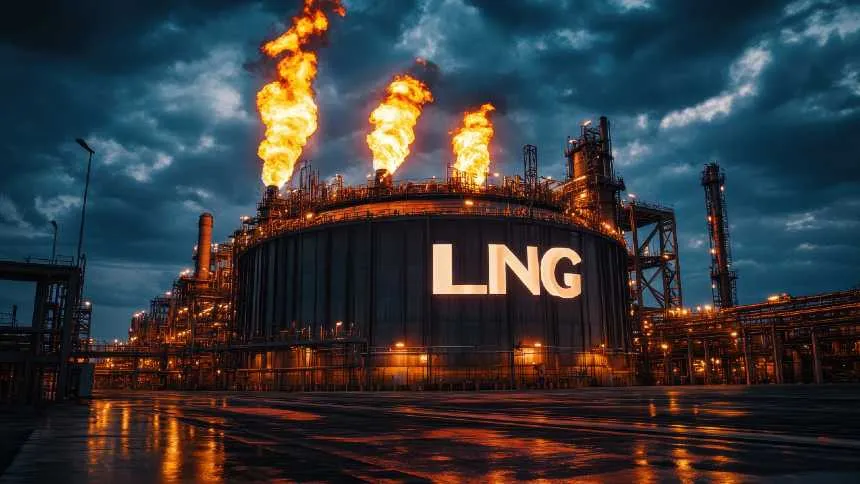
Despite the resumption of cargo ship traffic through the Strait of Hormuz, previously blocked by Iran – through which 20% of tankers and about a third of vessels carrying Liquefied Natural Gas ( LNG ) to various destinations around the world pass – a report by the consulting firm Wood Mackenzie, published by the British newspaper Financial Times on Monday, June 29, sounded an alarm.
The study shows that storage facilities in the European Union (EU) are expected to end the natural gas replenishment season, which normally takes place between April and October, with only 76% of their capacity.
If this estimate is confirmed, gas storage levels in continental Europe by the start of winter in the Northern Hemisphere are likely to be the lowest in at least 15 years. This means that gas prices could rise for businesses and households this winter.
After a harsh winter that left storage facilities at just 28% capacity at the start of the season, EU countries are struggling to rebuild their reserves to historic levels.
According to data from Gas Infrastructure Europe (GIE), the current average occupancy level of reservoirs is 48.29%. June, traditionally the month with the highest volume of filling of underground storage facilities in the European energy sector, did not reach the expected efficiency this year.
Industry officials note that the above-normal temperatures expected for July and August will increase electricity consumption for cooling, making it even more difficult to direct gas towards storage.
Gas prices in Europe surged after the joint US-Israeli attacks on Iran in late February, but have remained relatively stable recently, even before the interim peace agreement signed by the US and Iran earlier this month.
This resulted in a different problem, as the price in major European gas distribution centers fell to a level too low to attract LNG cargoes, which normally come from the US.
Reference prices for natural gas in Europe are quoted at around 40 euros per megawatt-hour (MWh), a value slightly higher than that recorded before the start of the war between the US and Iran on February 28, and within the normal range for this time of year.
Even with the price increase in the first weeks of the war, they remained well below the peak of 342 euros/MWh reached after the Russian invasion of Ukraine in 2022.
The situation regarding LNG stockpiles in Europe could change if a surge in LNG supply hits global markets. Almost immediately after the signing of the preliminary peace agreement, empty Qatari LNG tankers began returning to the Gulf.
Tom Marzec-Manser, director of gas and LNG for Europe at Wood Mackenzie, stated that although gas prices may fall further in the coming months with the increased flow of LNG from the Gulf, he predicts that "prices will rise again with the arrival of winter, which will create risks, particularly in a cold weather scenario" in early 2027.
Scarcity
A number of factors explain the natural gas shortage that Europe is facing. The disruption of LNG shipments through the Strait of Hormuz due to hostilities between the US and Iran, combined with declining production in Qatar and the United Arab Emirates (UAE), has restricted global supply.
Furthermore, by decision of the Ukrainian government, the transit pipeline transporting Russian natural gas to Europe through Ukrainian territory has been completely shut down. The EU now needs to guarantee gas supplies not only for its own internal consumption but also to supply facilities in Ukraine.
In an attempt to circumvent this disruption in the supply of natural gas via pipeline from the Russian energy giant Gazprom, EU countries purchased 109 million tons (approximately 142 billion cubic meters) of LNG last year, representing a 28% increase compared to the previous year.
However, LNG imports in June fell approximately 17% compared to the same month last year, reaching 7.8 million tons — the lowest level in 10 months.
Another critical factor restricting supply in the European market is the EU's strategy of phasing out Russian energy products.
Currently, Russia supplies 14% of total European LNG imports. According to a phased embargo plan approved by the European Council, LNG imports from Russia will be completely banned from January 1, 2027.
The ban on the import of Russian natural gas via pipeline is scheduled to come into effect on September 30, 2027. Although a transition period is foreseen for existing contracts, Member States are obliged to verify the country of origin of all imported natural gas.
With a total active gas storage capacity of 109 billion cubic meters, Europe maintains its position as the largest importer in the global LNG market. Even so, it risks facing a gas crisis in the winter.