

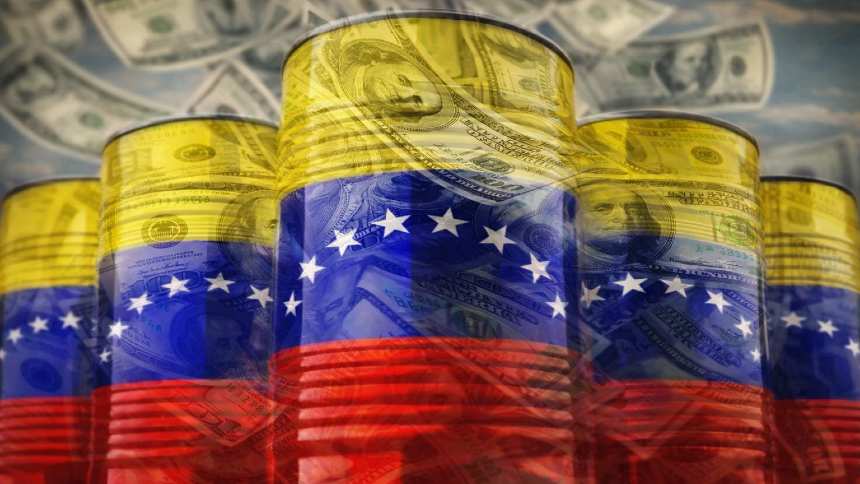

More than six months after invading Venezuela , capturing President Nicolás Maduro, and taking control of the country's oil exports, the United States government is maintaining a strange secrecy regarding the destination of most of the revenue from Venezuelan oil sales throughout the year.
In April, Michael Kozak, a senior State Department official, stated that approximately $3 billion in oil revenues had been sent to Venezuela and that KPMG was auditing the bank accounts.
Despite Kozak's promise to provide quarterly reports on the funds, the Democratic opposition on the U.S. Congressional Foreign Relations Committee has yet to receive any reports.
The mystery gained relevance on Wednesday, July 22nd, with the report in the British newspaper Financial Times (FT) that the Donald Trump administration collected more than US$13 billion in revenue from the sale of Venezuelan oil this year. In other words, the fate of at least US$10 billion remains uncertain.
The lack of transparency regarding the revenue from the sale of Venezuelan oil – which accounts for 25% of the country's Gross Domestic Product (GDP) – has become even more urgent after the two devastating earthquakes that struck Venezuela in June of this year.
The UN estimates that the cost of damage to buildings and infrastructure alone will consume US$37 billion. Following the earthquake, the US sent US$300 million in aid.
The Financial Times used price estimates from Argus Media, a pricing agency, for the price of Merey crude oil, a type of extra-heavy oil produced in Venezuela, as well as for Boscan and Hamaca, two less common types of Venezuelan crude oil, to arrive at the $13 billion figure.
However, the price data does not cover all types of Venezuelan oil and only began to be collected in February.
The Venezuelan government even created a website to track revenue from US-administered oil sales, but the website contains only one record — a $300 million transfer in March.
The White House has always been vague about how it would handle the money earned from Venezuelan oil exports. Formally, an executive order describes the role of the American government as "custodian," but President Trump admitted that the US was "making a lot of money" from Venezuelan oil.
In June, Trump said the U.S. recouped the cost of the military operation in Venezuela "28 times over" through oil: "It took us 48 minutes to win that war and we brought in millions of barrels of oil."
PDVSA , the Venezuelan state-owned oil and gas company, has not released data on its oil revenue since 2016, and the Trump administration has not publicly revealed the exact amounts it controls. It is also unclear who within the government oversees these funds, which are believed to have swelled with the increase in the price of oil on the international market due to the US war against Iran.
The American Congress no longer hides its discomfort with the lack of official information about Venezuelan oil money held by the Trump administration.
In a hearing this week, Republican Representative María Elvira Salazar of Florida called for the reports on the funds to be made public due to "the importance of transparency regarding the destination of the money."
Another representative, Democrat Joaquin Castro, complained that Congress was being "kept in the dark" about the amounts collected.
“Trump’s invasion of Venezuela was aimed at oil, power and corruption from the start, with billions of dollars in Venezuelan oil revenues being controlled by the Trump administration without transparency or safeguards,” Castro told the British newspaper.
Other mysteries
In addition to the lack of accountability regarding Venezuelan oil, the US government has come under scrutiny from analysts due to its opaque relationship with the Venezuelan regime.
Many economists predicted a strong economic recovery for Venezuela this year, given that, until January, the country was forced to sell oil at a significant discount on international markets to circumvent US sanctions.
The government introduced a new natural resources law to encourage investment in oil and gas, and production has shown a slight increase this year.
However, Francisco Rodríguez, a Venezuelan economist at the Center for Economic and Policy Research in Washington, admitted to the Financial Times that the official first-quarter growth rate of 2.5% was the lowest in almost five years.
"Venezuela probably didn't grow faster, despite the increase in oil revenues in the first quarter, because the US didn't transfer the entirety of that revenue increase to the Venezuelan government," he stated.
Mozak, the State Department official who revealed in April the transfer of $3 billion from oil to the Venezuelan government, admitted last week in a congressional hearing that the money belongs to the Venezuelans, "but they need our permission."
According to him, the funds were made available to pay for costs such as government salaries and equipment for the oil industry: "Financial monitoring is ongoing to ensure that the funds benefit the Venezuelan people."
The fact is that, seven months after Maduro's deposition, nothing has changed in practice regarding the ruling elites who remain in power in Venezuela. Notably, interim president Delcy Rodríguez maintains control over the various Chavista factions, fulfilling the strict economic concessions demanded by Washington.
Trump seems pleased with the agreement and praised Rodríguez for doing a “great job.” However, there is something Rodríguez wants but has not yet received: $5 billion in Special Drawing Rights (SDRs) from the International Monetary Fund (IMF), which Venezuela has not had access to since 2019.
The United States should condition this access on Venezuela adopting concrete steps toward a democratic transition. Ideally, this would be accompanied by a broader plan linking greater sanctions relief to political concessions—something the Trump administration has yet to present, despite Venezuela's urgent need to obtain funds to rebuild the country after the June earthquake.