


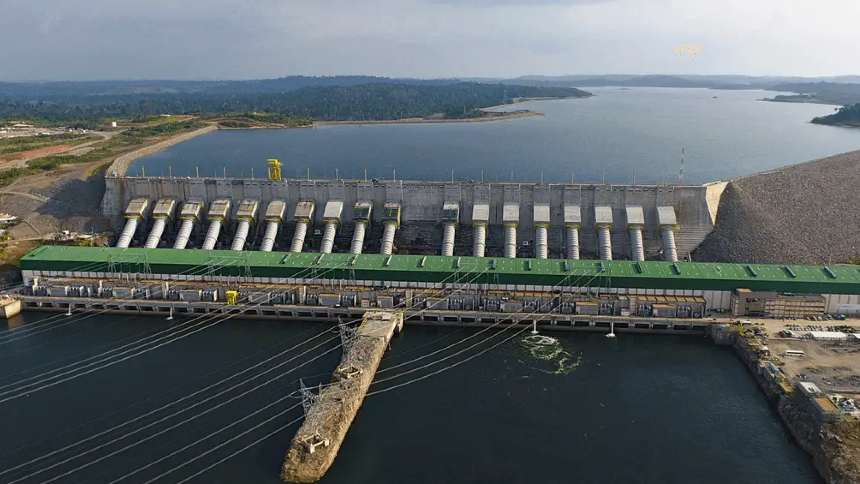
The name Axia still sounds unfamiliar to most Brazilians. That's because it refers to the largest renewable energy company in the Southern Hemisphere, with 44.4 GW of installed capacity – equivalent to more than 20% of Brazil's total generation capacity.
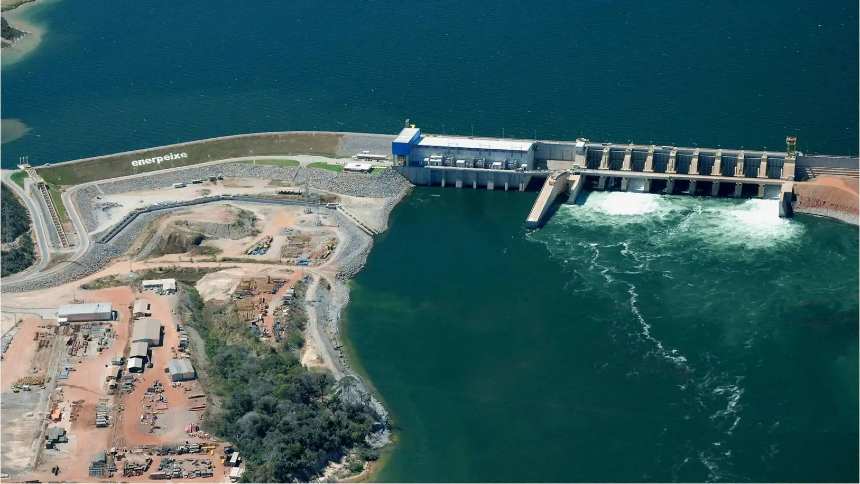
With a portfolio of 81 100% renewable power plants, including 47 hydroelectric, 33 wind, and one solar plant, spread across 20 states and the Federal District, Axia also manages more than 74,000 kilometers of transmission lines. Every time a Brazilian flips a light switch, the energy was likely generated or passed through the company's transmission lines.
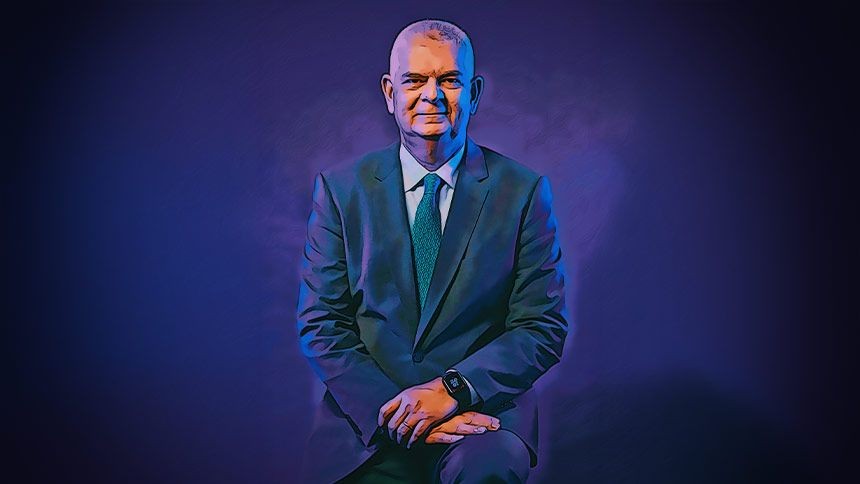
This contradiction between the unfamiliar name and its weight in the Brazilian electricity sector reflects the biggest challenge for Ivan Monteiro , CEO of Axia Energia – a company that was founded more than 60 years ago as Eletrobras , was privatized in 2022, and at the end of last year changed its name in a brand repositioning move that coincided with the end of the long transition process from state-owned to private company.
Monteiro, with a professional background in the public sector – he spent 32 years at Banco do Brasil and another 4 at Petrobras, where he even served as president for a brief period – is committed to putting Axia Energia's top priority into practice.
“The new strategy here is that we love the customer,” says Monteiro, with good humor, in this interview with NeoFeed , summarizing the changes in processes and internal culture that he has been leading at the company.
"Eletrobras, as a state-owned energy infrastructure manager, did not have this characteristic of being a customer-oriented company," he adds.
Monteiro states that the new focus is aligned with the opening of the energy market, which, according to him, will empower the consumer. The investments planned for 2026, of R$ 14 billion – 2.5 times greater than in 2022, the company's last year as a state-owned enterprise – reflect this trend.
Axia will use it to modernize equipment and is betting on capacity, battery storage, and transmission line auctions to expand its market share. Another niche, such as the boom in AI data centers, is viewed with caution.
"We are analyzing new demands, but what cannot happen is 'shutting down' a city in the interior of Ceará to install a data center in the Southeast," he says.
Monteiro leveraged his experience in the public sector – he left Petrobras in 2019, still under the effects of Lava Jato, which resulted in 44 lawsuits and burnout – to lead the transition from Eletrobras to Axia. Before taking over, he worked for private companies, most recently Credit Suisse , where he served as head of Investment Banking and Capital Markets and chairman.
In those three and a half years, Axia reduced its workforce by 27%, with an 18% decrease in operating costs and a reduction of R$ 14 billion in mandatory reserve requirements, which closed at R$ 11.72 billion in the third quarter of 2025 (the latest available balance sheet).
Another important step involved reviewing the portfolio to ensure it consisted of 100% renewable assets. This process included the sale of Eletrobras' gas-fired power plants to Âmbar , the energy arm of the J&F Group, for R$ 3.6 billion.
The former state-owned company also sold its stake in Eletronuclear , the government-owned nuclear energy company, to J&F for approximately R$ 535 million, generating an accounting loss of R$ 7 billion – which was considered a great deal for the company.
This is because it got rid of the investment commitment for the completion of the Angra 3 Nuclear Power Plant, valued at R$ 20 billion, not to mention the fact that Axia would have a minority stake in Eletronuclear, without being able to interfere in its management. As part of the agreement, the number of seats held by the federal government on Axia's Board of Directors increased from one to three. The government still holds 41.4% of the energy company's shares.
“Axia is a company that is only now dedicating itself to the business itself, to investment and to clients, focusing on what we can control,” says Monteiro, emphasizing that his work at Axia is a very long-term project. “It was this premise that made me accept the invitation to come here.”
For now, his management is yielding results. The company's market value jumped from R$ 87.5 billion at the time of privatization to R$ 147.5 billion in January.
Read below the main excerpts from the interview with the CEO of Axia:
The company is entering its fourth year since the privatization of Eletrobras. Can the transition process from state-owned to private company be considered complete?
It's difficult to say for sure; we're never satisfied. Initially, we followed a classic turnaround process. Eletrobras was a holding company with four completely autonomous subsidiaries, with entirely different standards and processes in every aspect. The company lacked proper management of its supplier relationships, wasn't customer-focused, and didn't have healthy commercial relationships with the market or regarding its energy shift towards renewables. All processes had significant deficiencies. Those initial measures—creating a voluntary redundancy plan, reviewing the portfolio and costs, etc.—have already been implemented. But ultimately, it's a process that never truly ends.
What's preventing a complete turnaround?
On the day of privatization, for example, everyone is happy, celebrates, goes to the Stock Exchange and rings the bell. But the next day I have to manage something that people forget: the legacy of contracts from the former state-owned company, including the collective bargaining agreement. We have to respect the contracts. This also applies, for example, to several other areas.
Which?
We still have a significant liability, which is the compulsory loan, but it's decreasing. What we did was: we chose a set of priorities and delivered on each one. However, along the way, a mega-priority emerged: the federal government's action before the Supreme Federal Court, questioning the corporate division clause. Fortunately, an agreement was ratified at the end of last year. In other words, Axia is a company that is only now dedicating itself to the business itself, focusing on what we can control.
"Only now is Axia dedicating itself to the business itself, focusing on what we can control."
Axia has just announced that it will invest R$ 14 billion in 2026 — almost three times more than in 2022, its last year as a state-owned company. What are the priorities for this year?
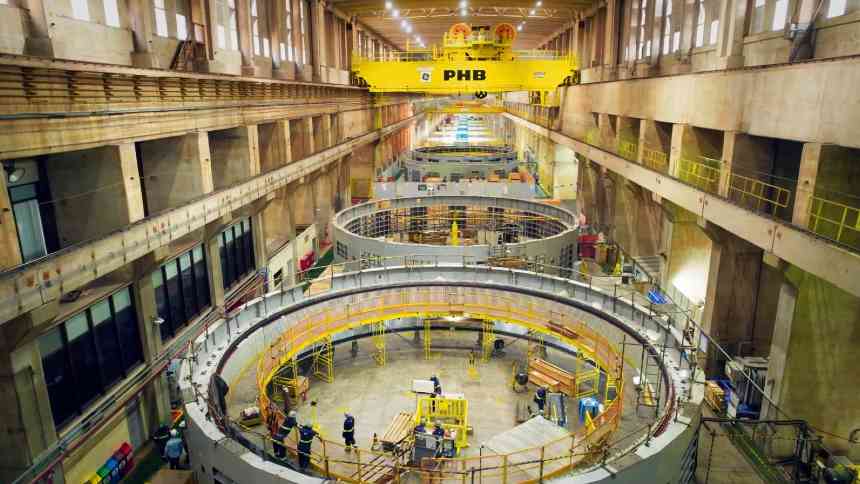
The 2026 budget was built with a business logic, of absurd growth in investment, which was divided into two aspects: an organic aspect, which is investing in the modernization of our assets, and an inorganic aspect, which is participating in auctions. Regarding assets, Axia currently has 90,000 pieces of equipment operating throughout the country, in rain, sun, wind, heat or intense cold.
Is the equipment outdated?
When we took over, the risks associated with this equipment had not been mapped due to the company's lack of investment capacity, because the state-owned company's budget was subject to the general federal budget, which is subject to several restrictions. Modernizing equipment is essential because we never want to be in a position to cause power outages.
How is that process going?
We have a risk criticality matrix to decide how to act. Security is a priority at Axia. And when you define security as a priority, everything else becomes easier, because security is linked to availability and reliability. This is a business where we can't afford to make mistakes; if that happens, there will be an immediate power outage somewhere. There's also a broader concept behind this: a change in the company's strategy.
And what is that strategy?
The new strategy here is that we love the customer. Our main focus is serving them. Eletrobras didn't have this characteristic of being a customer-oriented company.
How does a 60-year-old company like Eletrobras, which used to manage infrastructure, transform into a customer-focused company like Axia?
This implies creating a commercial area, with a large office in São Paulo, that maps opportunities. The energy market will change radically. If, from a macroeconomic point of view, there is a trend towards lower interest rates, the market response will be healthy investment growth, which implies growth in demand.
What's next?
We need to prepare the company to respond to the behavior of consumers, who will be empowered. We have the challenge of accelerating modernization and preparing the company in its various aspects to be able to meet customer demand – what kind of information or what kind of behavior can I adopt to serve them better and better? This is very relevant because it's a demand that comes from the outside in.
"We need to prepare the company to respond to the behavior of consumers, who will be empowered."
The free energy market will fully open in two years, reaching the average consumer. Does Axia plan to enter the retail energy market?
There are two ways to operate in the energy market. Until very recently, we only sold our own energy, the energy we produced. Now, we are also starting to buy energy from third parties and sell energy from third parties. This is very interesting because we now have a much greater capacity to operate in the market. We are a company focused on dealing with large clients; it was designed for that. But we are already talking to medium-sized clients. Are we ready to serve the retail market? Of course not, we've never done that and we will only do it when we are ready. I have been a Light customer for decades and have never received a phone call thanking me for my loyalty. That's what it's all about, but we are preparing ourselves.
Is it much longer?
That's possible. I'll give you the example of Nubank, which doesn't have branches and serves 110 million customers. So, the question is: do I need to be the person knocking on your door? No, if there's an app, something you feel comfortable with because of my name and my history, you'll usually trust me and buy energy from me.
What type of auction will Axia participate in?
We aim to be the most active company in all types of auctions – capacity, battery storage, and transmission lines. It's been a long time since a capacity auction took place, and the battery storage auction is unprecedented. We're mobilizing a large team here, even hiring people, to study these auctions.
What justifies Axia's appetite for auctions?
The auction delivers the returns we deem adequate to justify to our shareholders that, instead of paying higher dividends or repurchasing our shares, they should invest in that project. And these are projects that we consider very profitable.
Axia has prepared studies to act as an infrastructure and power provider for a large AI data center project, Rio AI City. Does this segment represent a window of opportunity for Axia?
Our greatest contribution to the client, in the case of data center projects, is intelligence, not just energy provision. We can help them determine where to install the data center, what type of access is needed, and if the infrastructure exists. It's necessary to know who is investing in the infrastructure, something that requires consultation with the regulator, who is the licensing provider. When this equation balances, we discuss the profitability of that specific project internally. What cannot happen is 'shutting down' a city in the interior of Ceará to install a data center in the Southeast.
"Our biggest contribution to data center projects is intelligence, where to install, and not just as a power provider."
But aren't data centers a promising market for Axia?
We are actively engaging in discussions and looking at these new demands. But there's no truth to the idea that dozens of AI data centers will be built. Accessing the grid today takes eight years in Germany, seven years in England. That's why we see agreements abroad every day to revive nuclear power plants, to do this, to do that. Because this energy source isn't available.
Brazil has ample energy supply, but we lack the infrastructure to keep up with the growing demand for AI data centers. How can we solve this?
I'll answer your question by drawing a parallel between Rio de Janeiro and São Paulo, the two largest cities in the country. What's the connection between them? A highway with two lanes going and two returning. Only after the privatization of the Via Dutra are they being doubled. The same logic should be applied to the electricity sector. Only now is the main infrastructure provider private – before, it was state-owned. As a state-owned company, it invested R$ 2.5 billion per year in terms of outlay. But we're going to invest R$ 14 billion this year and probably in the coming years. In other words, it would be great to install thousands of data centers, but we're not going to do that if the next day the resident of Baixada Fluminense doesn't have electricity.
Is it possible to do both, invest in infrastructure and build data centers?
It's possible, with a lot of study and a lot of investment. But a transmission line takes three years to be completed, and a new hydroelectric plant, eight. Again: I don't want to serve any data center if it's at the expense of the quality of service I provide to the energy distributor. Because millions of customers depend on the service of Enel or Light. So, I have to be absolutely sure that I'm doing the best possible job in relation to that distributor. We need to be realistic.
This bottleneck in the electrical system is reminiscent of a curtailment situation. How can this problem be mitigated?
We are completely opposed to subsidies that have no end date. Initially, they were valid to stimulate renewable energy sources, but currently there is no justification whatsoever. Curtailment , strictly speaking, is a management strategy carried out with great responsibility by the regulatory body in defense of the electrical system. The energy supply that existed in Brazil was based on hydroelectric power, but it has shifted to renewables. From the moment you increase solar and wind power, this brings significant operational challenges that cause the ONS ( National System Operator ), which is unique in Brazil and very competent, to react with the curtailment mechanism. We participate in all of Aneel's public hearings to help find solutions to the problems of the electrical system.
The Labor Court of Rio de Janeiro has ordered Axia to set aside R$ 750 million to guarantee the eventual payment of profit-sharing (PLR) to current and former Eletrobras employees from a reserve of R$ 30 billion accumulated over eight years. Approximately 30 unions filed two collective lawsuits demanding workers' participation in this amount. Is Axia contesting this claim?
There is no correlation between the non-classification of a judicial decision as a matter of relevant fact, under the terms of CVM Resolution No. 44, which governs the duty to inform the market, and the allegation contained in a judicial challenge aimed at reversing a precautionary measure that points to the damages caused to the company due to its maintenance, since not every judicial decision that may cause damage to the company has the power to affect the stock market's assessment of the company. In fact, the petitioners are deliberately attempting to mislead judicial and administrative authorities, which will be demonstrated in the appropriate forums by Axia.